Wicker – Film Review
Published November 7, 2026

Movie Details

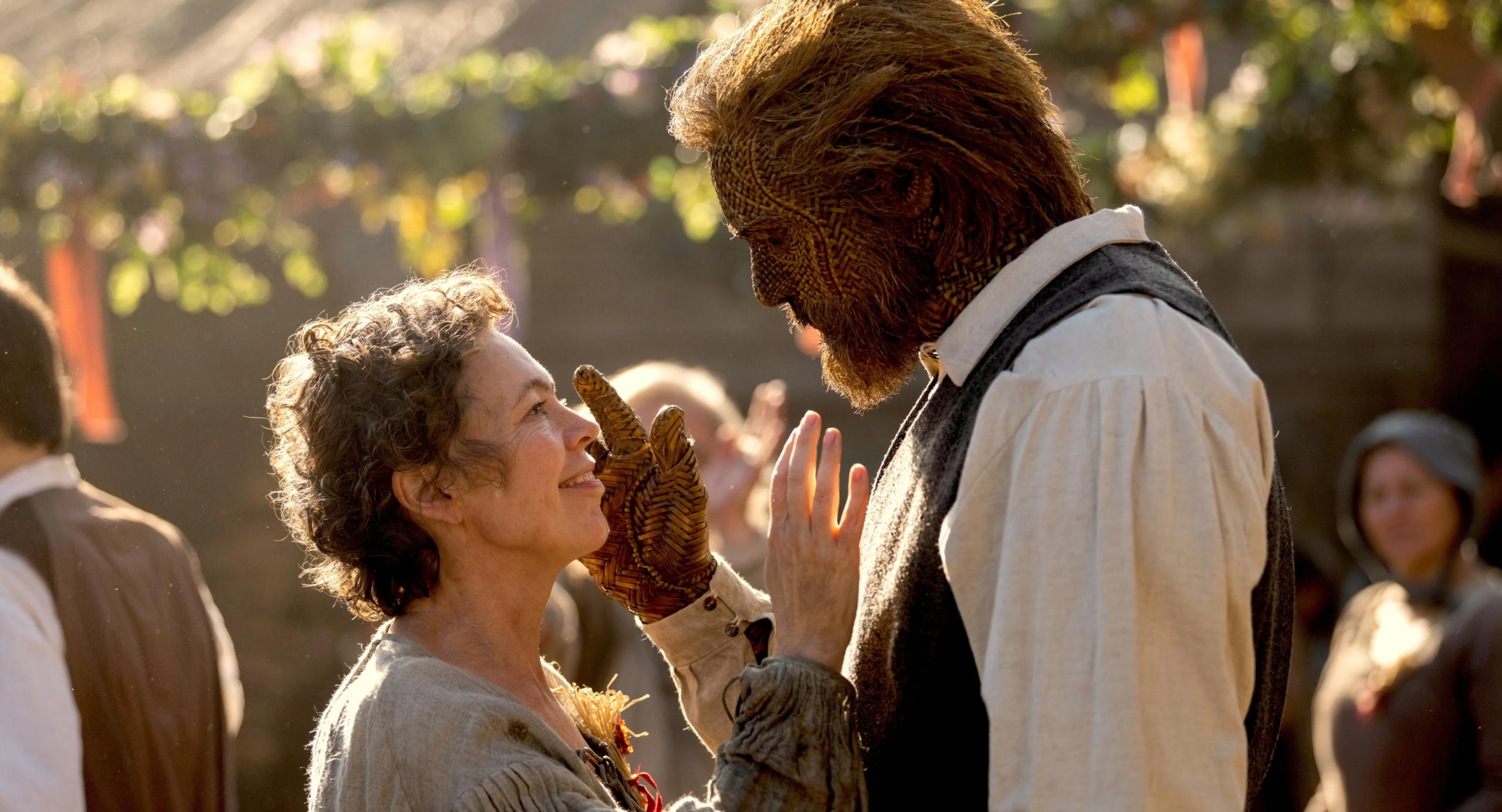
There is something wonderfully peculiar about a romantic fantasy that explores love, companionship, and the expectations of marriage through the relationship between a lonely fisherwoman and a husband made entirely out of wicker. Rather than relying on conventional romantic storytelling, Wicker embraces an unusual premise to explore the importance of kindness, emotional connection, and finding happiness in unexpected places. Written and directed by Alex Huston Fischer and Eleanor Wilson, and based on Ursula Wills’ short story “The Wicker Husband,” the film is an eccentric comedy-drama that combines fairy-tale sensibilities with surprisingly meaningful observations about human relationships. Anchored by terrific performances from Olivia Colman and Alexander Skarsgård, Wicker is a visually distinctive and frequently delightful experience, even if its storytelling occasionally struggles to maintain the emotional and narrative momentum necessary to make its more ambitious ideas resonate.
One of the film’s greatest strengths is its premise, which immediately establishes a fascinating foundation for its exploration of loneliness and social expectations. Colman plays a solitary fisherwoman who lives on the outskirts of a village, where she is routinely ridiculed and ostracized by the other residents because of her occupation, appearance, and unmarried status. Rather than accepting the village’s judgment of her circumstances, she decides to take an unconventional approach to finding companionship by commissioning a basket weaver to construct a husband for her. It is an inherently ridiculous situation, but the filmmakers approach it with enough sincerity that the central relationship becomes surprisingly believable. The contrast between the fisherwoman’s isolation and the affection she eventually discovers provides the narrative with an engaging emotional foundation.
Colman is undoubtedly one of the film’s biggest assets, delivering a performance that balances vulnerability, awkwardness, frustration, and warmth. The fisherwoman is someone who has spent much of her life being treated as an outsider, and Colman communicates the emotional consequences of that rejection without making the character unnecessarily miserable or difficult to sympathize with. There is an understated sadness to her portrayal, particularly in the way she approaches interactions with the other villagers. She has become accustomed to being judged, and that experience has clearly influenced how she perceives herself and the possibility of being loved.
What makes Colman’s performance especially effective is her ability to communicate the fisherwoman’s gradual transformation. Initially, she approaches her marriage with a combination of excitement and uncertainty, seemingly unfamiliar with the experience of being appreciated by someone else. As her relationship develops, however, she begins to discover a level of happiness that she previously believed was unavailable to her. Colman makes these emotional developments feel authentic, giving the character enough complexity to remain compelling even when the screenplay occasionally leans into broader comedic situations. Her expressive acting also helps communicate the character’s insecurities without requiring excessive dialogue.
Alexander Skarsgård is equally entertaining as the Wicker Husband, bringing an appealing combination of gentleness, sincerity, and understated humor to a character who could easily have become a one-note novelty. His performance is particularly effective because he never treats the character’s unusual physical existence as something inherently comedic. Instead, he approaches the role with the same romantic sincerity that someone playing a conventional human husband might bring to the material. His enthusiasm for helping his wife, whether through repairing their home, tending to the garden, or simply making her feel appreciated, gives the character an endearing personality.
The chemistry between Colman and Skarsgård is another significant highlight. Their relationship gradually becomes the emotional centerpiece of the film, and their contrasting performances complement one another beautifully. Colman’s guarded and occasionally anxious fisherwoman works wonderfully alongside Skarsgård’s consistently affectionate husband. Their romantic interactions are frequently amusing, but there is also a genuine sweetness to their connection that makes it easy to become invested in their marriage. The film understands that romance does not necessarily require grand gestures or extravagant declarations. Sometimes, simply making another person’s life a little easier can communicate more affection than anything else.
The supporting performances also contribute considerably to the film’s overall appeal. Peter Dinklage is particularly memorable as the Basket Weaver, the eccentric craftsman responsible for creating the Wicker Husband. Dinklage brings a mischievous quality to the character, making him an intriguing presence whenever he appears. There is something amusing about the matter-of-fact manner in which he approaches his extraordinary creations, and his performance helps establish the whimsical atmosphere that defines the film.
Elizabeth Debicki also makes an impression as the Tailor’s Wife, a character whose involvement in the fisherwoman’s personal affairs introduces additional tension into the narrative. Debicki effectively conveys the character’s judgmental personality, although the screenplay occasionally makes her motivations feel somewhat simplistic. Marli Siu is similarly engaging as the Tailor’s Wife’s Sister, providing an important supporting presence in the village’s various interpersonal conflicts.
Richard E. Grant and Nabhaan Rizwan help round out the ensemble, contributing to the film’s colorful collection of village personalities. Although not every supporting character receives enough development to become particularly memorable, the performances collectively create an entertaining social environment. The village itself feels like a place governed by outdated expectations, petty gossip, and an unwillingness to accept anything that challenges established traditions.
The screenplay’s most interesting achievement is its examination of how relationships can challenge conventional expectations. The Wicker Husband’s behavior is particularly significant because he demonstrates an understanding of marriage that many of the supposedly ordinary husbands in the village seem incapable of recognizing. He genuinely wants his wife to be happy, and his willingness to contribute to their household without expecting anything in return gradually becomes a source of fascination among the villagers.
The film uses this contrast to explore the different ways people approach romantic relationships. While several of the village’s husbands appear more interested in maintaining authority over their wives than developing meaningful partnerships, the Wicker Husband approaches marriage as an opportunity to demonstrate affection and consideration. His actions are not motivated by social expectations or a desire to impress other people. He simply enjoys making his wife happy.
There is an appealing simplicity to this message, although the screenplay occasionally makes its observations somewhat too obvious. Some of the village’s male characters are portrayed so negatively that the contrast between them and the Wicker Husband becomes less nuanced than it could have been. Nevertheless, the underlying commentary about emotional labor, mutual respect, and the importance of appreciating one’s partner remains effective.
Another particularly interesting aspect of the story is its examination of jealousy, insecurity, and the difficulty of maintaining trust. The fisherwoman’s previous experiences of rejection have understandably influenced her ability to feel secure in her marriage. Although her relationship initially provides her with a sense of belonging, outside pressures eventually threaten that happiness. These developments introduce a more emotionally complicated dimension to the narrative, demonstrating how even seemingly perfect relationships can be affected by suspicion and misunderstandings.
From a visual perspective, Wicker does an excellent job establishing its fairy-tale atmosphere. The village’s rustic architecture, surrounding countryside, and seasonal changes create an environment that feels removed from the modern world. There is a deliberately old-fashioned quality to the production design, which complements the story’s unusual premise and gives the film an almost storybook-like appearance.
The wicker creations are particularly important to the film’s visual identity. The Wicker Husband’s physical construction is central to the character’s appeal, and the filmmakers make effective use of his unusual appearance without allowing it to overwhelm his personality. His movements and interactions are integrated into the film’s world in a manner that makes his existence feel surprisingly natural.
The cinematography also deserves recognition for capturing the beauty of the surrounding environment. The transition between different seasons provides the story with a visual sense of progression, while the village’s interiors and outdoor locations contribute to the film’s distinctive atmosphere. The production design and costumes further reinforce the impression that audiences are watching an unconventional fairy tale rather than a straightforward romantic comedy.
The film’s musical and tonal choices complement this approach, helping establish an atmosphere that moves comfortably between whimsical comedy and more serious emotional territory. Although the fantasy elements are occasionally understated, they provide enough visual personality to distinguish Wicker from more conventional romantic dramas.
Despite its many strengths, Wicker is not entirely successful in translating its interesting premise into a consistently engaging narrative. The biggest issue is that certain developments feel more convenient than organically established. While the central relationship is compelling, some of the surrounding village conflicts lack the complexity necessary to make their eventual consequences particularly impactful.
The screenplay also occasionally struggles to balance its comedic and dramatic elements. There are moments when the humor feels wonderfully understated, allowing the absurdity of the premise to speak for itself. However, other sequences feel overly exaggerated, making it difficult for the emotional developments to carry the same weight. The film’s supporting characters also sometimes function more as representations of particular attitudes than fully realized individuals.
Additionally, although the central romance is genuinely sweet, certain portions of the story could have benefited from more time exploring the relationship between the fisherwoman and her husband. Their chemistry is one of the film’s strongest qualities, making the occasional diversion into less interesting village conflicts somewhat disappointing.
Nevertheless, these shortcomings do not completely undermine what the filmmakers accomplish. The story remains entertaining, the performances are consistently strong, and its unusual approach to romantic fantasy gives it a personality that is difficult to dismiss.
Ultimately, Wicker is a charming, imaginative, and occasionally moving romantic fantasy that benefits enormously from the performances of Olivia Colman and Alexander Skarsgård. Its unconventional premise provides an entertaining framework for exploring loneliness, marriage, acceptance, and the importance of treating others with kindness. Although its screenplay occasionally struggles with pacing, characterization, and tonal consistency, the film’s whimsical atmosphere and sincere emotional intentions make it an enjoyable experience.
Colman delivers another terrific performance, Skarsgård makes an unexpectedly endearing romantic lead, and Peter Dinklage adds plenty of personality to the proceedings. More importantly, the central relationship provides the film with a genuinely appealing message about recognizing the value of companionship beyond conventional appearances and societal expectations.
While Wicker never quite reaches the emotional heights its premise suggests it could achieve, there is plenty to appreciate about its unusual storytelling and heartfelt approach to romance. It is a peculiar little fairy tale with a good deal of charm, even if some of its narrative elements could have been developed more effectively.