Club Kid – Film Review
Published November 26, 2026

Movie Details

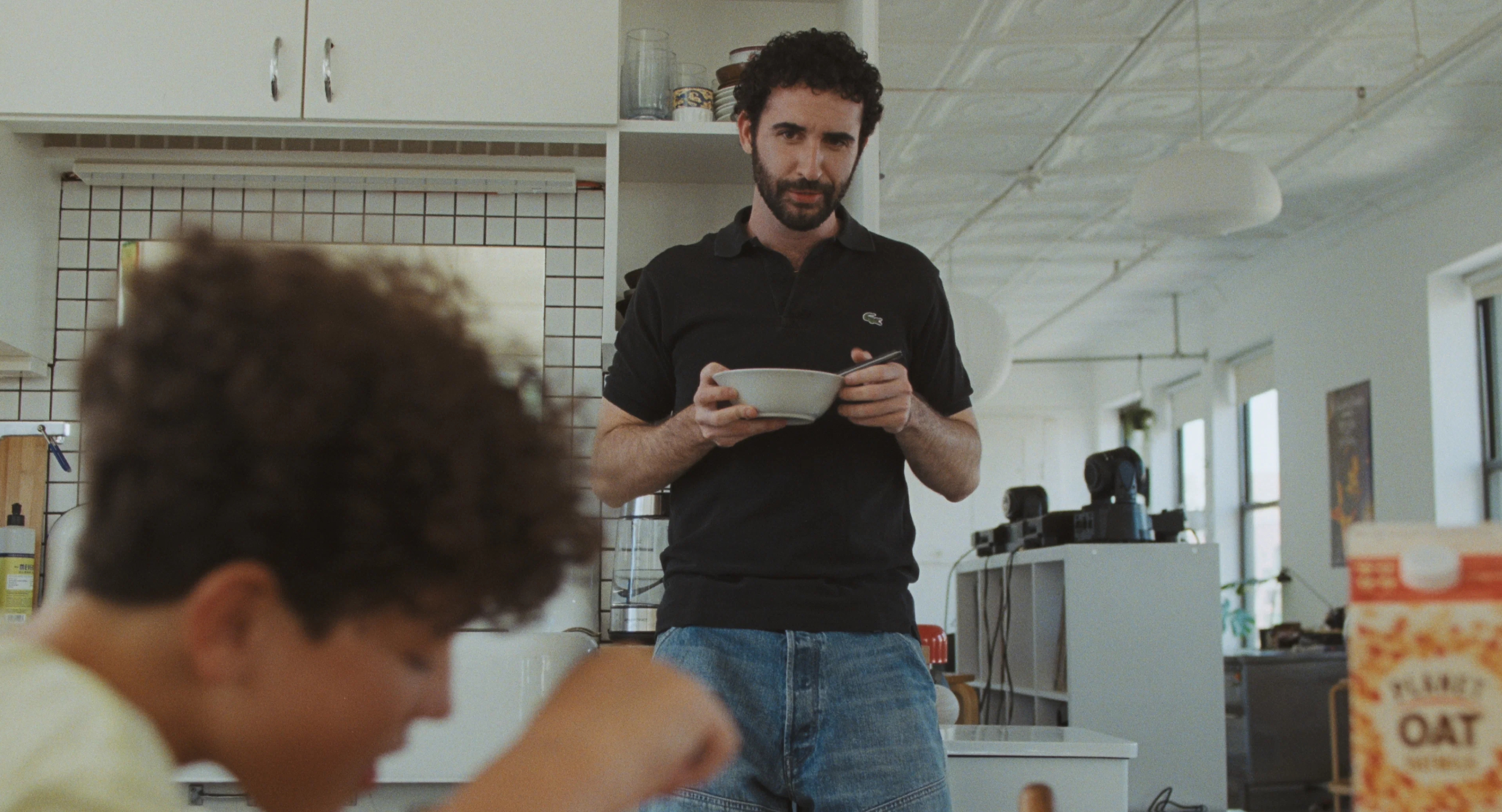
Jordan Firstman makes an ambitious feature directorial debut with Club Kid, a comedy-drama that explores the complicated transition from a carefree, hedonistic lifestyle to the unexpected responsibilities of adulthood. Set against the vibrant nightlife of New York City, the film examines themes of parenthood, personal growth, friendship, and the difficult process of leaving behind the habits that once defined someone. Although its narrative occasionally struggles to balance its comedic sensibilities with its more emotionally demanding subject matter, Club Kid ultimately delivers an entertaining and surprisingly affecting story about an individual being forced to reconsider the direction of his life.
Firstman stars as Peter Green, a gay party promoter whose existence revolves around nightlife, casual relationships, and the seemingly endless pursuit of another unforgettable evening. Peter has built an identity around his ability to bring people together, organize extravagant parties, and immerse himself in the excitement of New York City’s club scene. However, beneath his confident exterior is someone who has become increasingly comfortable avoiding responsibility. His lifestyle might have worked when he was younger, but the consequences of his decisions become considerably more difficult to ignore as he enters his thirties.
The film’s central premise introduces an interesting complication into Peter’s otherwise predictable existence. After years of living without many meaningful obligations, he unexpectedly discovers that he has a ten-year-old son named Arlo (Reggie Absolom). Suddenly, Peter must confront a responsibility he never anticipated having, forcing him to reconsider everything he previously believed about himself. This unexpected development gives the screenplay an engaging foundation, allowing the film to explore how becoming responsible for another person can fundamentally change someone’s priorities.
One of Club Kid‘s greatest strengths is its exploration of parenthood from the perspective of someone who initially appears completely unequipped to handle it. Peter is not introduced as an especially responsible or emotionally mature individual. Instead, he is someone who has spent years prioritizing immediate gratification over long-term stability. Consequently, watching him gradually become more invested in Arlo’s well-being provides the narrative with some of its most satisfying developments.
The relationship between Peter and Arlo is particularly enjoyable because neither character immediately understands how to navigate their new circumstances. Peter must learn how to become a parental figure, while Arlo is suddenly expected to adjust to an unfamiliar environment and establish a relationship with someone he barely knows. Their interactions provide several opportunities for humor, particularly when Peter’s unconventional lifestyle clashes with the expectations associated with raising a child.
However, what makes their relationship effective is the gradual development of genuine affection between them. Rather than immediately transforming Peter into a completely different person, the screenplay allows their connection to develop through smaller interactions and shared interests. Their mutual appreciation for music becomes an especially effective storytelling device, giving them something meaningful through which to communicate and understand one another.
Arlo also benefits from being portrayed as an individual with his own personality rather than simply functioning as a convenient narrative device for Peter’s development. His enthusiasm for music and growing interest in DJing provide him with an engaging identity, while his circumstances introduce an emotional dimension that prevents the film from becoming an entirely lighthearted parenting comedy.
Firstman delivers a strong central performance, demonstrating an appealing understanding of Peter’s contradictions. He captures the character’s outgoing personality, impulsiveness, and tendency to prioritize having fun while also revealing the insecurities and emotional limitations beneath his larger-than-life persona. Peter is frequently frustrating, particularly when his decisions demonstrate how little consideration he gives to the consequences of his actions. Nevertheless, Firstman makes him sufficiently entertaining and sympathetic that his gradual development remains compelling.
What makes the performance particularly effective is Firstman’s ability to communicate Peter’s transformation without making it feel entirely artificial. His character does not suddenly abandon every undesirable habit simply because he becomes a father. Instead, the process of changing his behavior is complicated by financial difficulties, professional disagreements, and the expectations placed upon him. This makes Peter’s development feel considerably more believable than a conventional redemption storyline.
As a first-time feature director, Firstman also demonstrates a promising understanding of the material. He establishes an energetic atmosphere that reflects the chaotic nightlife surrounding Peter while gradually introducing quieter, more intimate sequences as the protagonist’s priorities begin to change. His approach gives the film a recognizable personality, even when certain storytelling decisions prevent it from reaching its full potential.
The supporting cast contributes considerably to the experience. Reggie Absolom is particularly enjoyable as Arlo, bringing an appealing mixture of curiosity, enthusiasm, and vulnerability to the character. His chemistry with Firstman is essential to the film’s emotional effectiveness, and their scenes together provide some of its most memorable moments.
Cara Delevingne also makes an impression as Sophie, Peter’s business partner. Their professional relationship introduces another dimension to the protagonist’s character, particularly through the disagreements surrounding his increasingly irresponsible behavior. Delevingne brings an appropriately confrontational energy to the role, although the character occasionally feels more like a narrative obstacle than a fully developed individual.
Kirby Howell-Baptiste provides another welcome addition as Edison, whose unexpected arrival sets the central narrative into motion. Meanwhile, Diego Calva brings warmth and sincerity to Oscar, giving Peter an opportunity to explore a more emotionally grounded relationship. Their developing connection adds another interesting dimension to the story, although the romance sometimes feels underdeveloped compared with the more substantial relationship between Peter and Arlo.
The screenplay’s biggest accomplishment is its ability to find humor in circumstances that could otherwise become overwhelmingly dramatic. Peter’s lifestyle provides plenty of opportunities for amusing situations, particularly when his unconventional social circle intersects with the practical responsibilities of parenthood. The contrast between extravagant nightlife and everyday family obligations gives the film an appealing comedic foundation.
However, Club Kid is not exclusively interested in making audiences laugh. Beneath its colorful presentation is a considerably more serious examination of personal accountability and the consequences of refusing to mature. Peter’s circumstances become increasingly complicated as he attempts to balance his responsibilities as a father with his professional ambitions and lingering attachment to his previous lifestyle.
The film also deserves credit for examining how personal growth is not necessarily a straightforward process. Peter makes mistakes, encounters setbacks, and occasionally demonstrates that he has not completely overcome his previous tendencies. His financial difficulties and questionable professional decisions create legitimate complications, preventing the narrative from presenting parenthood as an effortless solution to his problems.
New York City’s nightlife is another important component of the film’s identity. The clubs, parties, and surrounding social environments establish a lively atmosphere that reflects Peter’s personality. The contrast between these environments and the quieter moments he shares with Arlo reinforces the changes occurring throughout his life.
Music is particularly important to the film’s storytelling. It functions as both an expression of Peter’s identity and a means of connecting with his son. Their shared appreciation for music provides some of the narrative’s most charming moments, while the DJ performances contribute to the energetic atmosphere that distinguishes the film from more conventional comedy-dramas.
Despite its considerable strengths, Club Kid is not without shortcomings. Its biggest weakness is the unevenness of its storytelling, particularly when attempting to transition between its comedic and dramatic elements. Certain developments feel rushed, while others receive considerably more attention than their narrative importance warrants. As a result, the film occasionally struggles to maintain a consistent emotional rhythm.
Some of the supporting characters also deserve additional development. Although Sophie serves an important purpose in Peter’s professional and personal journey, her motivations could have been explored more thoroughly. Similarly, the romantic relationship between Peter and Oscar is enjoyable but does not receive quite enough attention to become as emotionally involving as the screenplay seemingly intends.
There are also moments when the film relies too heavily on familiar comedy-drama conventions. The unexpected arrival of a child who completely changes an irresponsible adult’s life is a recognizable premise, and Club Kid does not always find particularly surprising ways to explore it. Although Firstman’s screenplay introduces enough personality to distinguish the experience, certain narrative developments feel predictable.
Additionally, the film’s treatment of some of its more serious subject matter occasionally lacks the depth necessary to make its emotional moments as powerful as they could be. The circumstances surrounding Arlo’s previous family life introduce considerable dramatic weight, but the screenplay sometimes moves past these developments rather quickly to return its attention to Peter’s personal journey.
Nevertheless, these shortcomings do not completely undermine the experience. There is enough sincerity in the central performances and enough personality in Firstman’s direction to make the film consistently watchable.
Ultimately, Club Kid is an entertaining and heartfelt directorial debut from Jordan Firstman, even if its ambitions occasionally exceed what its screenplay can comfortably accomplish. Its exploration of unexpected parenthood, personal responsibility, and the difficulty of moving beyond an established lifestyle provides an engaging foundation for a comedy-drama that balances humor with genuinely emotional moments.
Firstman’s performance is a particular highlight, successfully capturing the contradictions of someone who must learn to become a more responsible individual without completely losing the personality that makes him who he is. Reggie Absolom is equally effective, and the chemistry between the two performers gives the film its emotional foundation. The supporting cast, energetic nightlife atmosphere, and emphasis on music further contribute to its appeal.
What makes Club Kid especially worthwhile is its understanding that growing up does not necessarily mean abandoning everything associated with one’s former identity. Instead, it involves recognizing when certain behaviors are no longer sustainable and learning to make decisions that account for the people who depend on you. Peter’s journey is not always particularly original, but its emotional sincerity makes it rewarding.
Although the screenplay could benefit from more consistent pacing, stronger supporting-character development, and a deeper exploration of some of its dramatic themes, there is plenty to appreciate about Firstman’s feature directorial debut. It is an occasionally uneven but ultimately charming comedy-drama that finds meaningful entertainment in an unlikely transition from New York City’s party scene to the responsibilities of parenthood.