Focker In-Law – Film Review
Published November 28, 2026

Movie Details

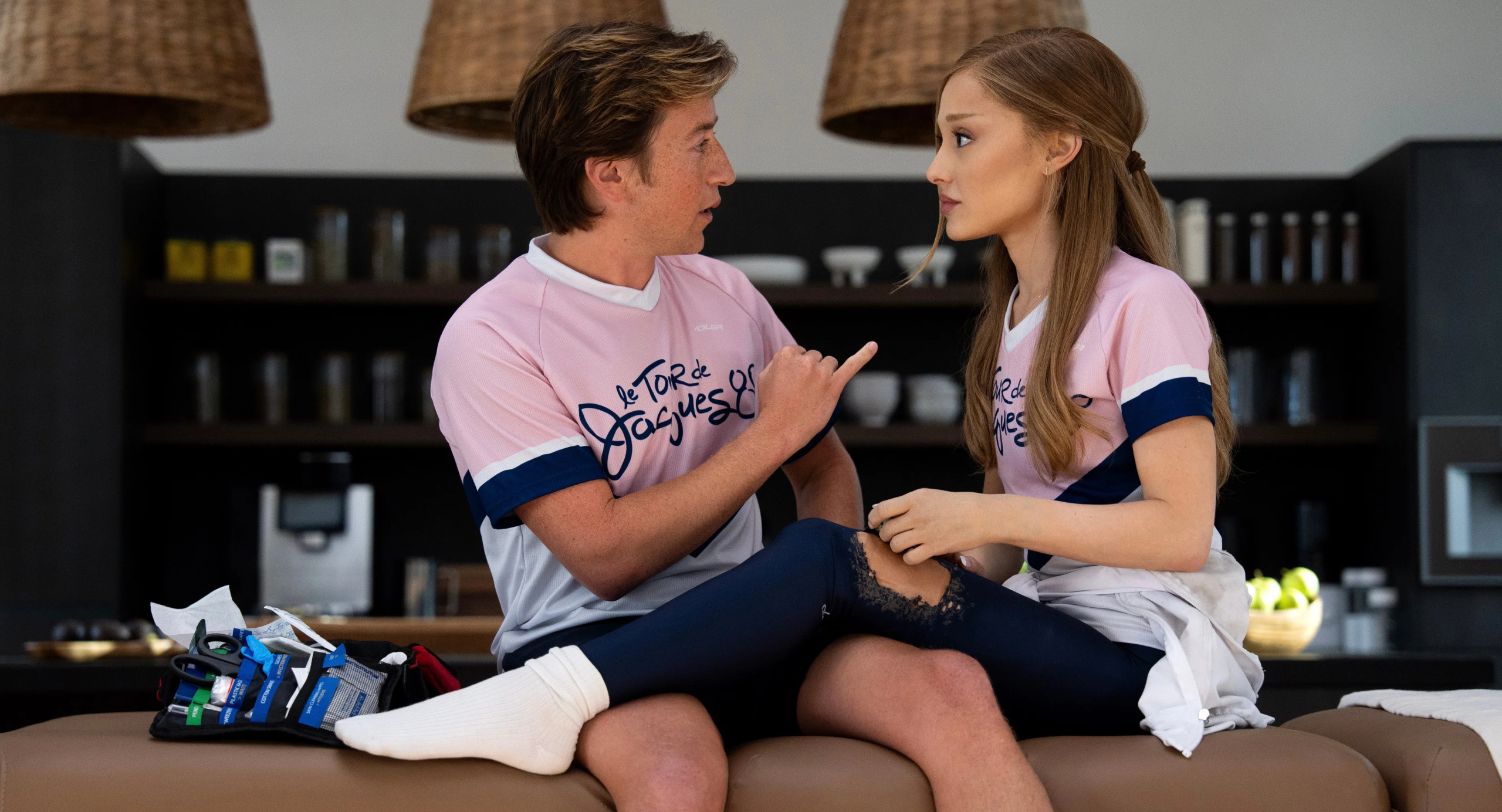
There is something undeniably familiar about returning to the dysfunctional family dynamics of the Focker family. Since Meet the Parents first introduced audiences to the wonderfully uncomfortable relationship between Greg Focker and his intimidating father-in-law, Jack Byrnes, the franchise has built much of its comedy around awkward misunderstandings, overprotective parenting, and the seemingly endless complications of bringing two families together. Unfortunately, Focker In-Law, the fourth installment in the franchise and the long-awaited follow-up to 2010’s Little Fockers, struggles to justify its existence. Although the film benefits from the return of several familiar faces and introduces an entertaining new presence through Ariana Grande, it ultimately feels like an unnecessary continuation of a series that has already exhausted most of its comedic possibilities.
Written and directed by John Hamburg, who returns to the franchise after working on the previous installments, Focker In-Law attempts to introduce a new generation of family-related complications by shifting the attention toward Greg and Pam Focker’s adult children. The central premise provides an opportunity to explore how the family dynamics have evolved over the years, particularly now that Greg finds himself in the uncomfortable position of becoming the overprotective parent he once resented. Unfortunately, while there are some amusing observations about generational differences and parental interference, the screenplay frequently struggles to transform those ideas into consistently entertaining comedy.
The story follows Greg and Pam as they travel from Chicago to Long Island to celebrate Jack Byrnes’s 80th birthday. Their visit becomes considerably more complicated when their son, Henry, introduces his new girlfriend, Olivia Jones, who immediately makes an excellent impression on practically everyone in the family. However, Greg develops suspicions about her intentions, particularly after discovering that she previously worked as an FBI hostage negotiator. As Henry begins considering a significant commitment to Olivia, Greg’s increasingly protective instincts threaten to create another uncomfortable family situation.
The premise is perfectly appropriate for another Meet the Parents installment. Watching Greg gradually recognize similarities between his own behavior and Jack’s famously overbearing parenting provides a natural continuation of the franchise’s central character dynamic. However, the execution leaves considerably more to be desired. Rather than finding genuinely fresh ways to explore these relationships, the screenplay frequently relies on predictable misunderstandings, exaggerated reactions, and familiar comedic situations that feel recycled from earlier entries. There is a noticeable sense that the filmmakers are revisiting established territory without bringing enough new material to make the journey worthwhile.
One of the biggest problems is the film’s uneven sense of humor. The original Meet the Parents succeeded because its comedy emerged naturally from Greg’s uncomfortable circumstances, with seemingly ordinary situations gradually escalating into wonderfully awkward disasters. Here, the humor feels considerably more manufactured. Several jokes are telegraphed well before their eventual punchlines, while other comedic sequences continue long after their initial amusement has disappeared. The screenplay also struggles to maintain a consistent rhythm, frequently moving between broad physical comedy and relatively conventional family drama without making either particularly memorable.
Ben Stiller remains an agreeable presence as Greg Focker, bringing back the nervous energy and expressive reactions that helped establish the character as such an entertaining comedic protagonist. His performance demonstrates that he still understands what makes Greg amusing, particularly when he finds himself desperately attempting to control situations that are rapidly slipping beyond his grasp. However, there is only so much that Stiller can accomplish with material that repeatedly places his character in familiar circumstances. Greg’s transition into an overprotective father offers some interesting possibilities, but the screenplay rarely explores those possibilities with the emotional complexity they deserve.
Robert De Niro also returns as Jack Byrnes, once again bringing his recognizable intimidating presence to the proceedings. His relationship with Greg remains one of the franchise’s most dependable comedic ingredients, and their interactions provide a handful of entertaining moments. Nevertheless, Jack’s characterization feels somewhat diminished by the film’s reliance on familiar jokes and recycled personality traits. Rather than discovering particularly interesting new dimensions to their relationship, the screenplay mostly uses their established dynamic as a shortcut to recognizable comedy.
Teri Polo and Blythe Danner provide welcome familiarity as Pam and Dina, respectively, although neither character receives enough substantial material to make a particularly meaningful impression. Owen Wilson also returns as Kevin Rawley, providing some additional comedic energy whenever he appears. Unfortunately, the supporting cast frequently feels underutilized, with several familiar characters seemingly present primarily because the franchise would feel incomplete without them.
The newcomers provide some of the film’s more interesting elements. Skyler Gisondo makes an appealing addition as Henry Focker, successfully portraying someone attempting to establish independence from his parents while navigating an increasingly complicated romantic relationship. Beanie Feldstein also brings an enjoyable personality to Samantha, although the character could have benefited from considerably more screen time. Eduardo Franco contributes some amusing moments as Eduardo Villalobos, offering another source of awkwardness within the increasingly crowded family dynamic.
However, Ariana Grande is unquestionably the best part of the film. Her performance as Olivia Jones provides the movie with a much-needed injection of personality, confidence, and comedic enthusiasm. Grande demonstrates an impressive understanding of the character’s assertive personality, particularly when Olivia finds herself navigating Greg’s growing suspicions. Her experience as a performer translates into an entertaining screen presence, and she consistently manages to make Olivia interesting even when the surrounding material becomes predictable.
What makes Grande particularly enjoyable is the contrast between Olivia’s confident demeanor and Greg’s increasingly irrational concerns. She brings a refreshing energy to their interactions, creating some of the film’s most entertaining exchanges. Her character’s background as a former FBI hostage negotiator also provides an amusing opportunity for Grande to demonstrate a different comedic personality. Rather than simply functioning as another romantic addition to the Focker family, Olivia becomes an important presence capable of challenging the established family hierarchy.
Grande’s performance also benefits from her natural comedic timing. She understands how to deliver a line with just the right amount of confidence and playfulness, frequently making otherwise ordinary exchanges more entertaining. While the screenplay does not always give her enough material to work with, she makes the most of the opportunities available. It is difficult not to wish that the film had devoted even more attention to her character, particularly considering how effectively she elevates the material whenever she appears.
Unfortunately, the screenplay’s treatment of Olivia occasionally undermines the effectiveness of the character. Her professional background is introduced as a major source of suspicion, but the resulting conflict rarely develops into anything particularly surprising or compelling. The movie repeatedly teases the possibility of more interesting psychological games between Olivia and Greg without fully capitalizing on that potential.
Thematically, Focker In-Law attempts to examine the difficulties of allowing adult children to make their own decisions. Greg’s increasingly controlling behavior creates an opportunity to explore how parental love can sometimes become suffocating when it prevents children from developing independence. There is a worthwhile emotional foundation underneath the comedy, especially considering how Greg’s relationship with Jack has evolved over the years. Unfortunately, the screenplay approaches these ideas with a heavy-handedness that prevents the emotional material from feeling especially affecting.
Hamburg’s direction is similarly functional without being particularly inspired. The movie maintains a familiar visual presentation that fits comfortably within the franchise, but there is little evidence of a distinctive creative approach. The cinematography and editing do their jobs, although neither contributes much personality to the overall experience. The production feels polished enough, but its presentation lacks the energy and inventiveness necessary to make the film feel like an exciting return to this cinematic universe.
The pacing is another considerable weakness. Certain sequences feel unnecessarily extended, while potentially entertaining character interactions are frequently interrupted by jokes that fail to land. The movie also struggles to balance its various family relationships, resulting in a narrative that occasionally feels more interested in checking familiar franchise boxes than developing a compelling story.
Ultimately, Focker In-Law is a disappointing continuation of a comedy franchise that once understood how to make ordinary family interactions hilariously uncomfortable. There are moments of genuine amusement, some enjoyable performances, and an especially entertaining contribution from Ariana Grande, who emerges as the movie’s strongest asset. However, these positives cannot entirely compensate for the recycled humor, underdeveloped supporting characters, predictable storytelling, and lack of creative inspiration.
The original Meet the Parents established a wonderfully effective comedic formula, but subsequent installments have increasingly struggled to find meaningful ways to expand upon it. Unfortunately, this latest chapter does little to change that trajectory. Although revisiting these characters occasionally produces a welcome sense of familiarity, familiarity alone is not enough to sustain an entire feature film.
Focker In-Law has a few worthwhile moments, and Grande provides a compelling reason to pay attention, but the overall experience feels more obligatory than entertaining. Rather than delivering a memorable new chapter in the Focker family’s history, it offers a largely forgettable collection of recycled jokes and predictable family complications. For a franchise built around making audiences laugh through uncomfortable situations, this latest installment is surprisingly short on genuinely hilarious moments.