The Cat in the Hat – Film Review
Published November 12, 2026

Movie Details

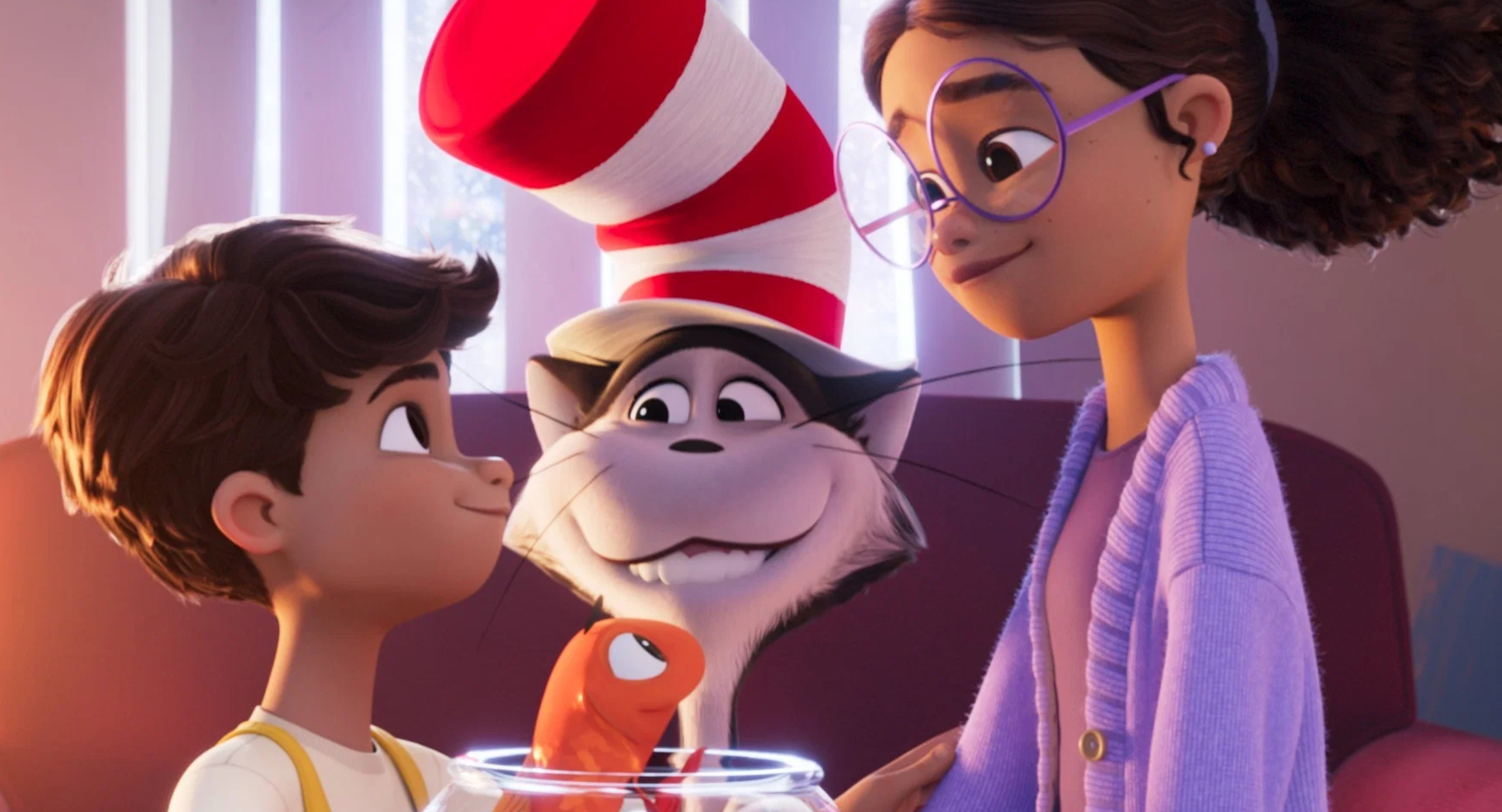
Rather than directly recreating the relatively straightforward premise of the original book, this latest adaptation expands the mythology considerably, introducing an entirely new backstory for the Cat and an elaborate organization responsible for sending fantastical creatures into the human world to entertain children. The result is an adventure that attempts to give the character a more substantial narrative foundation while introducing audiences to an assortment of imaginative environments and eccentric personalities. There are certainly some worthwhile ideas scattered throughout the screenplay, but the execution frequently feels overcomplicated, with an abundance of unnecessary storytelling complications preventing the movie from maintaining the simplicity and spontaneity that should make this character so entertaining.
One of the more interesting decisions involves establishing the Cat as an employee of the Institute for the Institution of Imagination and Inspiration, LLC. This organization provides an explanation for his unusual abilities while introducing an additional workplace comedy storyline involving his employment status. Although the concept occasionally produces amusing moments, it also creates a strange disconnect between the whimsical world audiences presumably want to explore and the comparatively mundane corporate environment surrounding the character. The movie spends considerable time developing this mythology when its most appealing qualities are ultimately found in the interactions between the Cat and the children he encounters.
Bill Hader takes on the considerable responsibility of voicing the titular character, and his performance is easily one of the production’s more entertaining components. Hader possesses an unmistakable comedic sensibility, demonstrating an appreciation for the character’s eccentric personality and mischievous tendencies. His vocal performance frequently captures the Cat’s playful confidence, exaggerated enthusiasm, and unpredictable behaviour, making him an enjoyable presence whenever the screenplay gives him an opportunity to embrace the character’s ridiculousness.
However, despite Hader’s considerable comedic abilities, the characterization occasionally feels somewhat underdeveloped. The Cat is supposed to be an unpredictable force of imagination, someone whose arrival transforms an otherwise ordinary afternoon into an extraordinary experience. Unfortunately, the screenplay seems more interested in establishing his professional circumstances and personal frustrations than exploring what makes him such an immediately captivating character. There are moments when his personality shines through, but the movie rarely allows those moments to develop into anything particularly memorable.
The supporting voice cast provides several additional highlights. Matt Berry brings his distinctive comedic delivery to Waffles, the children’s talking goldfish, providing the character with an amusing personality that helps distinguish him from the surrounding ensemble. Berry’s unmistakable vocal presence makes Waffles an entertaining addition, particularly when his dialogue introduces some unexpected humour into otherwise predictable situations. Quinta Brunson also makes a welcome impression as Sherrie from HR, contributing an appropriately exaggerated performance that complements the movie’s more absurd workplace-oriented sequences.
Xochitl Gomez provides Gabby with an emotional foundation that helps anchor the increasingly ridiculous adventure. Her character’s difficulty adjusting to a new home gives the narrative a recognizable emotional conflict, establishing a motivation that audiences can understand even when the surrounding storytelling becomes unnecessarily complicated. Tiago Martinez similarly contributes to the sibling dynamic through Sebastian, whose relationship with Gabby provides some of the movie’s more personable moments. Meanwhile, Giancarlo Esposito brings his familiar commanding vocal presence to Mr. Hoogeboom, although the character’s antagonistic motivations occasionally feel more cartoonishly convenient than genuinely interesting.
Visually, The Cat in the Hat is considerably more successful than its storytelling. The animation embraces the exaggerated aesthetic associated with Dr. Seuss’s illustrations, incorporating unusual character designs, vibrant colour combinations, unconventional environments, and imaginative visual transformations. There is an appealing sense of playfulness throughout the production, with the filmmakers clearly understanding that this particular property benefits from an artistic approach that doesn’t necessarily need to follow conventional visual rules.
The various pocket dimensions contained within the family’s belongings provide some of the movie’s most visually interesting sequences. Each environment offers opportunities to introduce unusual creatures, unexpected landscapes, and imaginative interpretations of familiar household objects. These sequences demonstrate the potential of translating Dr. Seuss’s distinctive artistic sensibilities into contemporary computer-generated animation. The filmmakers occasionally come remarkably close to capturing the wonderfully unpredictable atmosphere that audiences associate with the author’s illustrations.
The character designs are similarly entertaining, particularly when the movie introduces its collection of strange creatures. The Things provide an obvious connection to the original literary material, while the mysterious Something introduces an additional fantastical element that helps create some visual variety. Unfortunately, although the animation frequently looks colourful and appealing, its visual imagination isn’t consistently matched by the writing. There are several sequences that feel designed primarily to showcase increasingly elaborate imagery rather than meaningfully advance the narrative.
The pacing also becomes problematic as the adventure progresses. Rather than allowing its individual environments and comedic situations sufficient room to develop, the screenplay frequently rushes between different locations and conflicts. This creates an occasionally exhausting viewing experience in which one elaborate sequence follows another without necessarily allowing audiences to appreciate what makes each situation distinctive. The abundance of visual activity becomes somewhat overwhelming, particularly when the humour relies on constant movement, exaggerated reactions, and increasingly ridiculous circumstances.
Beneath its colourful presentation, The Cat in the Hat attempts to explore themes involving family, creativity, personal expression, and adjusting to unfamiliar circumstances. Gabby’s difficulty accepting her family’s relocation provides the narrative with its primary emotional motivation, creating an opportunity to examine how children process significant changes in their lives. Her desire to return to her previous home is understandable, and the relationship between her and Sebastian provides a reasonably effective foundation for the movie’s more heartfelt moments.
The screenplay also attempts to establish a connection between creativity and the importance of bringing happiness to others. This is an appropriate thematic direction for a story involving a character whose entire existence revolves around entertaining children. Unfortunately, the messaging occasionally becomes too obvious, with certain emotional developments feeling more like obligatory lessons than naturally integrated components of the adventure. The movie clearly wants to communicate something meaningful about imagination and personal expression, but its relentless comedic distractions sometimes undermine those intentions.
Carmen’s characterization also contributes to the movie’s exploration of family relationships, particularly through the suggestion that adults can sometimes lose touch with the imaginative qualities that once defined their childhoods. It is a worthwhile idea, and one that could have provided the narrative with considerably more emotional depth. However, the screenplay doesn’t always give these relationships the attention they deserve, instead prioritizing its increasingly elaborate adventure mechanics.
The comedy is similarly inconsistent. Some jokes work because of the sheer absurdity of the situations, while others demonstrate an enjoyable appreciation for physical humour and exaggerated cartoon behaviour. Hader’s delivery occasionally elevates material that might otherwise feel relatively ordinary, and Berry provides several amusing moments through Waffles. Nevertheless, the movie frequently struggles to distinguish between genuinely clever comedy and simply throwing as many jokes as possible into a scene.
There is also an unfortunate tendency for certain comedic sequences to overstay their welcome. Rather than trusting a funny visual gag or amusing character interaction to speak for itself, the movie frequently extends the joke until its initial appeal disappears. This becomes particularly noticeable during some of the more chaotic sequences, where the constant barrage of exaggerated reactions and increasingly ridiculous situations begins to feel repetitive.
Ultimately, the biggest problem with The Cat in the Hat is that it doesn’t seem entirely certain what kind of movie it wants to be. Its workplace comedy elements, family-oriented emotional storytelling, fantastical adventure sequences, and references to the original literary material occasionally feel like separate creative directions competing for attention. There is nothing inherently wrong with expanding the mythology of an established character, but the additional storytelling material needs to justify its existence by making the overall experience more compelling.
The original book succeeds because of its straightforward premise, memorable imagery, and wonderfully mischievous central character. This adaptation attempts to expand those qualities into something considerably larger, but the additional complexity doesn’t necessarily translate into a more satisfying experience. In fact, the movie occasionally feels as though it has forgotten that the Cat’s greatest appeal comes from his ability to make ordinary situations extraordinary.
That doesn’t mean the production is without merit. The animation is colourful, the voice cast is talented, and there are enough entertaining moments to prevent the experience from becoming an outright disappointment. Hader’s interpretation of the character provides several highlights, while the movie’s exploration of creativity and family relationships occasionally produces some genuinely appealing emotional material.
Nevertheless, these positive qualities are ultimately overshadowed by an inconsistent screenplay, repetitive comedy, uneven pacing, and an overcomplicated narrative that struggles to maintain its momentum. There is a more entertaining movie buried somewhere beneath all the unnecessary complications, one that embraces the character’s mischievous personality and allows its imaginative storytelling to take centre stage.
The Cat in the Hat is a perfectly serviceable animated adventure that occasionally demonstrates the creative potential of its source material without ever fully realizing it. Although younger audiences may find plenty to appreciate in its colourful environments, eccentric characters, and energetic presentation, older viewers might find themselves wishing the filmmakers had placed greater emphasis on storytelling rather than constantly escalating the spectacle.