The Breadwinner – Film Review
Published May 31, 2026

Movie Details

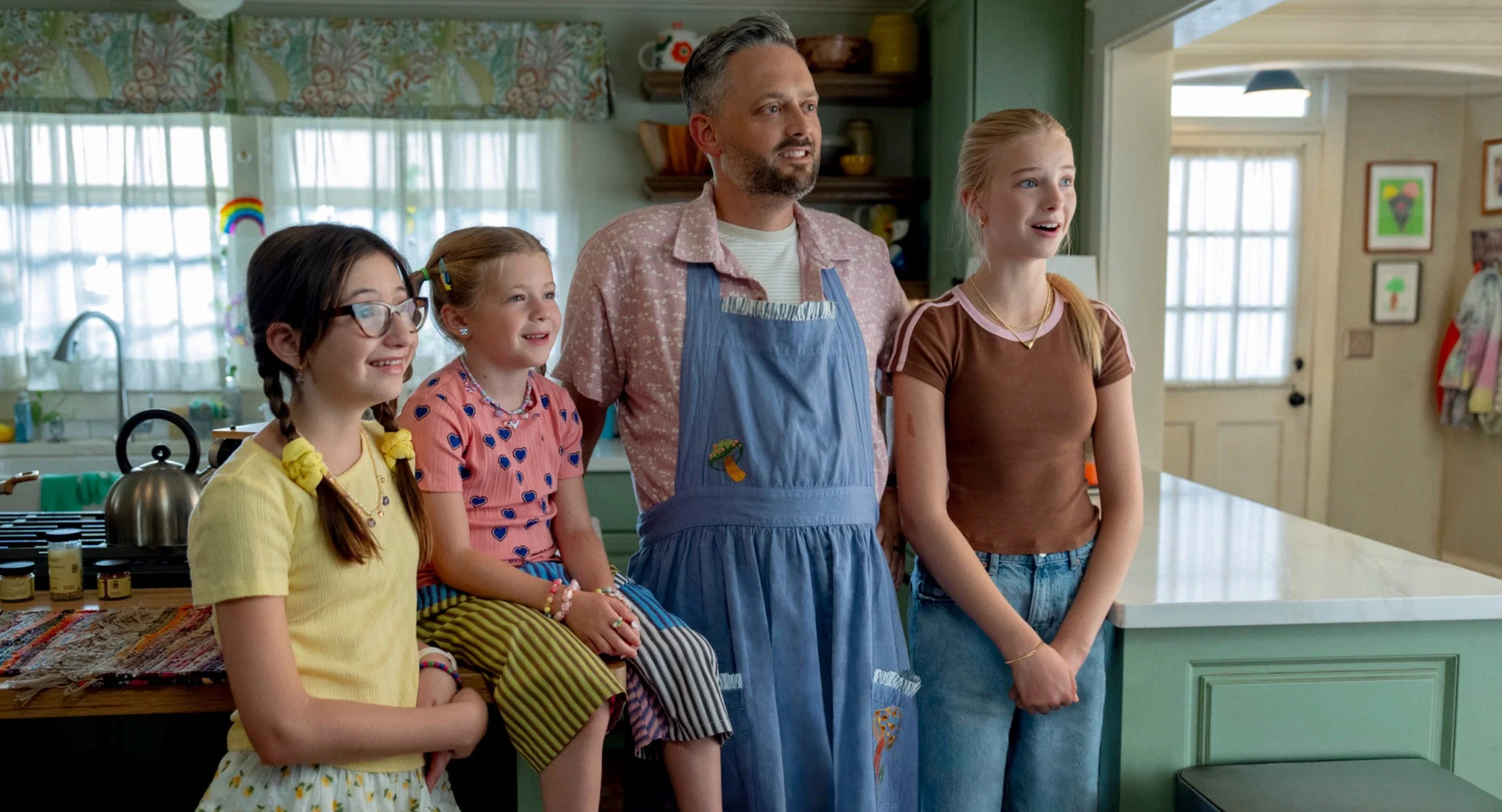
Eric Appel‘s The Breadwinner arrives with a simple goal: provide a family-friendly comedy vehicle for stand-up comedian Nate Bargatze. Following the success of his clean, observational comedy and growing mainstream popularity, Bargatze’s feature film debut feels like a natural next step. Unfortunately, while The Breadwinner benefits from the comedian’s inherently likable screen presence and a handful of charming performances, the film struggles to build a compelling story around him. What emerges is an occasionally pleasant but largely forgettable comedy that relies on an outdated premise, weak jokes, and a surprisingly corny central storyline involving Shark Tank.
The film follows Nate Wilcox (Nate Bargatze), a father of three whose comfortable routine is disrupted when his wife Katie (Mandy Moore) lands a major business deal after appearing on Shark Tank. With Katie suddenly required to travel for work, Nate is forced into the role of full-time stay-at-home parent while juggling the chaos of raising three children. The setup is designed to create fish-out-of-water comedy as Nate attempts to navigate school functions, household responsibilities, and parenting challenges that he previously left largely to his wife.
The premise feels like it belongs to a different era of comedy filmmaking. Movies about fathers learning how difficult parenting can be have existed for decades, and The Breadwinner rarely finds a fresh angle on the formula. Instead, the screenplay from Bargatze and Dan Lagana leans heavily on predictable misunderstandings, exaggerated parenting mishaps, and lessons that viewers can see coming from the opening scenes. The result is a film that often feels less like a modern comedy and more like a recycled sitcom stretched to feature length.
One of the film’s biggest problems is the Shark Tank storyline that serves as the catalyst for the entire plot. The concept of Katie becoming an entrepreneurial sensation after securing an investment deal sounds like something pulled from a television comedy sketch rather than a feature film narrative. The execution only amplifies that feeling. Every scene connected to Katie’s sudden business success feels overly broad and cartoonish, creating a disconnect between the relatively grounded family dynamics and the exaggerated corporate subplot.
The film repeatedly returns to this storyline as though it is inherently funny, but the joke never really lands. The audience is expected to accept that a single appearance on a reality television show dramatically transforms the family’s circumstances, and the screenplay builds major story developments around that premise. Instead of feeling satirical or insightful, the entire plot thread comes across as corny and artificial. It often feels like the writers needed a quick excuse to get Katie out of the house and settled on the first idea that came to mind.
This issue becomes even more apparent as the film progresses. Rather than exploring realistic family adjustments, the screenplay continually falls back on increasingly contrived situations that stem from Katie’s business obligations. These moments rarely feel earned and often exist solely to push the story toward its inevitable emotional conclusion.
The humor fares little better. Given Bargatze’s reputation as one of the most successful stand-up comedians working today, expectations for the comedy are understandably high. Yet surprisingly few jokes generate genuine laughs. The screenplay often mistakes awkward situations for actual comedy, creating scenes that feel mildly amusing at best rather than consistently funny.
Many of the jokes rely on familiar parenting stereotypes. Nate struggles with household chores. Nate misunderstands school expectations. Nate embarrasses himself around other parents. The film cycles through these scenarios with little variation, making much of the humor feel repetitive. There are occasional chuckles throughout, but very few moments that stand out as memorable comedic set pieces.
Supporting players such as Will Forte, Colin Jost, Zach Cherry, Martin Herlihy, and Kumail Nanjiani attempt to inject additional energy into the proceedings. Forte, in particular, embraces the film’s goofy tone and delivers several of the stronger comedic moments. However, even talented performers can only do so much with material that rarely rises above sitcom-level humor. Several scenes feel like they were designed around broad concepts rather than fully developed jokes, leaving the cast working hard to elevate underwritten material.
Where The Breadwinner finds some success is through its performances. Bargatze may not be a naturally dynamic screen actor yet, but he possesses an undeniable likability that keeps the film watchable. His understated delivery, which has become his trademark as a comedian, translates reasonably well to the role of Nate. Even when the material isn’t working, audiences are likely to remain invested simply because Bargatze comes across as sincere and relatable.
His performance is particularly effective during quieter moments with his children. Rather than forcing emotional scenes, Bargatze allows them to unfold naturally. These interactions reveal a warmth that the screenplay often lacks elsewhere. While he may not completely carry a feature film at this stage of his acting career, he demonstrates enough potential to suggest future projects could better utilize his strengths.
Birdie Borria delivers one of the film’s strongest performances as Hadley Wilcox. She brings genuine personality and charm to her role, often stealing scenes from the adults around her. Borria’s natural screen presence helps several family sequences feel authentic, and her chemistry with Bargatze creates some of the film’s most enjoyable moments.
Mandy Moore also provides a steady presence despite being sidelined for large portions of the story. She brings credibility to a character who could have easily become a one-dimensional plot device. Moore’s performance helps ground some of the more exaggerated narrative developments, even if the screenplay doesn’t give her enough material to fully shine.
The film’s lighthearted nature ultimately becomes its most redeeming quality. Despite its shortcomings, The Breadwinner remains largely inoffensive and easygoing. It never aims for edgy comedy or cynical humor, opting instead for a family-friendly tone that many viewers may appreciate. The stakes remain relatively low throughout, creating a relaxed viewing experience that can occasionally be comforting even when the jokes miss their mark.
There is something refreshing about a comedy that simply wants to entertain without relying on shock value or mean-spirited humor. The problem is that good intentions alone cannot compensate for weak writing. While the film’s pleasant atmosphere helps soften some of its flaws, it cannot fully overcome a script that feels dated from the moment it begins.
Perhaps the biggest disappointment is that the movie never capitalizes on what makes Bargatze unique. His stand-up success stems from his observational perspective and ability to find humor in everyday situations. The Breadwinner instead places him inside a generic comedy framework that could have starred almost anyone. Rather than feeling specifically tailored to Bargatze’s comedic voice, the film often feels like a collection of familiar family-comedy tropes searching for a stronger identity.
By the time the predictable finale arrives, The Breadwinner has exhausted most of its ideas. The emotional beats land softly, the comedy remains inconsistent, and the central premise never evolves beyond its initial setup. While Bargatze and Borria provide enough charm to keep the film from becoming a complete misfire, they cannot fully rescue a screenplay built on stale concepts and underwhelming humor.
The Breadwinner isn’t aggressively bad, but it rarely justifies its existence beyond serving as Nate Bargatze’s feature film debut. Fans of the comedian may find enough pleasant moments to make the journey worthwhile, but viewers seeking a sharp comedy or a fresh take on family dynamics are likely to leave disappointed. It’s a lightweight, mildly entertaining effort that never rises above average and quickly fades from memory once the credits roll.