They Fight – Film Review
Published July 19, 2026

Movie Details

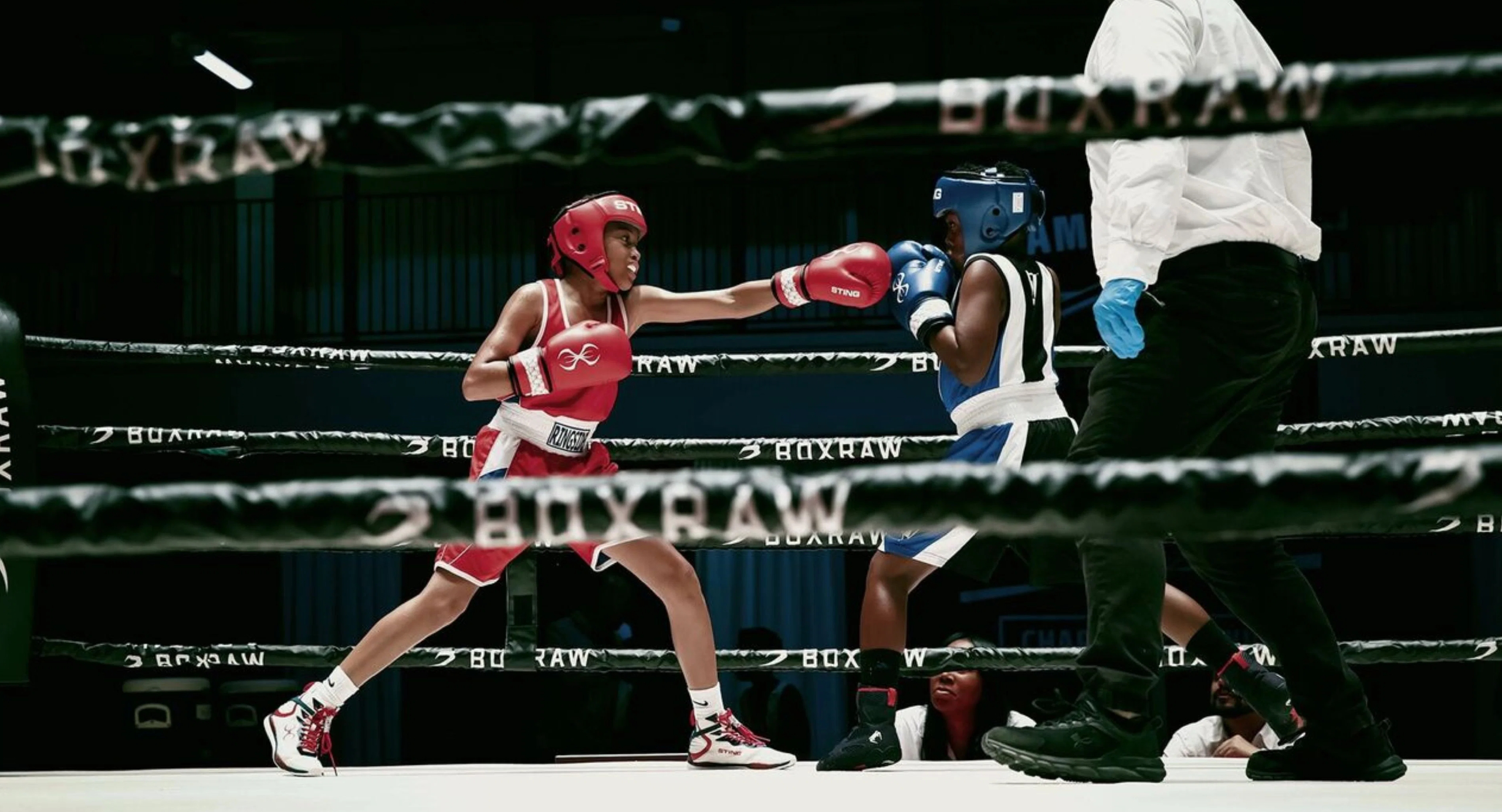
Sports dramas have always thrived on familiar formulas. Audiences expect stories about redemption, underdogs overcoming impossible odds, and mentors finding purpose through guiding the next generation. Those conventions aren’t inherently a problem—some of the greatest films in the genre, from Rocky to Coach Carter, prove that familiar storytelling can still feel emotionally powerful when supported by compelling characters and authentic performances. They Fight, directed by Sheldon Candis and based on the acclaimed 2018 documentary of the same name, certainly has its heart in the right place. It tackles issues of incarceration, community violence, mentorship, and hope through the lens of youth boxing. Unfortunately, while its intentions are admirable, the finished product rarely rises above being an overly conventional and emotionally muted sports drama.
The film follows Walt Manigan (André Holland), a recently released inmate who begins coaching troubled teenagers at a neighborhood boxing gym. Working alongside veteran trainer Slim (Wendell Pierce), Walt hopes to steer a group of young fighters—including Peanut (Anthony B. Jenkins) and Quincey (Toissaint Francois Battiste)—toward a national championship while helping them avoid the violence and instability surrounding them. The premise carries enormous dramatic potential, drawing inspiration from real-life events that already proved compelling in documentary form. Yet somewhere between reality and fiction, much of that authenticity becomes diluted by predictable storytelling choices and familiar genre beats.
Perhaps the biggest disappointment is how safe the screenplay feels. Written by Andrew Renzi and Sheldon Candis, the script checks nearly every expected box without finding fresh perspectives. Every emotional revelation arrives exactly when anticipated. Every setback feels manufactured to create tension rather than emerging naturally from the characters themselves. By the halfway point, it’s surprisingly easy to predict not only the broad direction of the narrative but also individual scenes, emotional confrontations, and inspirational speeches. Instead of surprising the audience with nuanced storytelling, They Fight repeatedly settles for clichés that have appeared in countless sports movies before it.
Fortunately, the cast does their best to elevate the material, beginning with André Holland. Holland once again demonstrates why he’s one of the most consistently engaging dramatic actors working today. His portrayal of Walt is quiet, restrained, and deeply human. Rather than portraying his character as an instantly inspirational coach, Holland allows Walt’s uncertainty and emotional scars to remain visible throughout much of the film. His performance communicates years of regret without requiring excessive dialogue, making Walt one of the few genuinely believable figures in the story.
Unfortunately, the screenplay doesn’t always reward Holland’s subtle work. Walt’s personal journey never receives the depth it deserves. His past incarceration is treated as an important aspect of his identity, but the emotional consequences are explored only in broad strokes. Instead of examining the complicated realities of reentering society or rebuilding trust, the film repeatedly pushes Walt toward predictable mentor scenes. As a result, his redemption arc feels simplified rather than earned, limiting what could have been a fascinating central character study.
Wendell Pierce brings his usual warmth and gravitas to Slim, the veteran boxing coach whose experience grounds the gym’s daily operations. Pierce possesses an effortless screen presence that immediately makes every scene more believable. His chemistry with Holland often provides the film’s strongest moments, particularly when the two quietly discuss responsibility, forgiveness, and the challenges facing young people in their community. Sadly, Slim often feels more like a supporting source of wisdom than a fully developed individual with his own motivations and struggles.
The younger cast delivers uneven results. Anthony B. Jenkins gives Peanut an appealing vulnerability that makes his character easy to root for, while Toissaint Francois Battiste injects Quincey with enough charisma to leave a lasting impression. However, neither teenager receives sufficient development beyond familiar coming-of-age conflicts. Their personalities frequently become defined by whichever obstacle the current scene requires instead of evolving organically over the course of the story. The film asks audiences to become emotionally invested in their championship aspirations, but never spends enough time establishing who these young men truly are outside the boxing ring.
Samira Wiley delivers a sincere performance as Ketta, bringing empathy and emotional intelligence whenever she appears. However, like several members of the supporting cast, she’s underserved by the screenplay. Ketta functions primarily as emotional support for Walt rather than existing as a fully realized character. Wiley certainly makes the most of her limited material, but viewers may leave wishing the film had devoted greater attention to her perspective and relationships.
Visually, They Fight adopts a grounded, naturalistic style that reflects its documentary origins. Sheldon Candis avoids flashy camera movements or overly stylized editing, instead emphasizing realism through handheld cinematography and intimate close-ups. The neighborhood gym feels authentic, worn-in, and lived-in, while the surrounding community is depicted with respect rather than sensationalism. The boxing sequences themselves are competently staged without becoming especially memorable. They communicate physical effort and determination but lack the exhilarating choreography or visceral intensity that distinguishes truly great boxing films.
One surprising weakness lies in the pacing. Despite running at a fairly standard length for the genre, the film often feels considerably longer. Many scenes linger without adding meaningful emotional or narrative progression, while others rush through important turning points that deserve greater attention. The result is an awkward rhythm that struggles to maintain momentum. Several training montages blend together, emotional conversations become repetitive, and the championship storyline lacks the escalating excitement needed to sustain audience investment through the final act.
The adaptation also raises an unavoidable comparison with the documentary that inspired it. Real-life stories often carry a complexity that fictional adaptations inadvertently smooth over in pursuit of broader accessibility. Here, many of the difficult social realities surrounding incarceration, poverty, and youth violence feel simplified into inspirational movie moments. While the film clearly respects its real-life subjects, it rarely captures the unpredictability or emotional messiness that likely made the documentary so compelling in the first place.
That isn’t to say They Fight lacks emotional sincerity. Several individual scenes genuinely resonate, particularly quieter conversations between Walt and his young boxers. The film consistently argues that mentorship can alter lives and that positive role models remain essential in underserved communities. Those themes never feel cynical or manipulative, and Candis approaches the material with obvious compassion. The problem is that sincerity alone cannot compensate for storytelling that feels dramatically underdeveloped.
The climax illustrates this issue perfectly. Rather than delivering an emotionally overwhelming conclusion, the championship sequences feel oddly restrained. The audience understands what’s at stake intellectually, but the emotional investment never fully materializes. Victory and defeat alike land with less impact than intended because the narrative hasn’t sufficiently deepened the characters’ internal journeys. Instead of leaving viewers inspired or emotionally exhausted, the ending feels merely satisfactory.
Ultimately, They Fight is a frustrating film because so many of its individual ingredients are promising. It boasts a talented ensemble led by the always-excellent André Holland, treats its subject matter respectfully, and embraces themes worth exploring. Yet it rarely finds the dramatic specificity or emotional complexity necessary to distinguish itself from countless other inspirational sports dramas. Rather than delivering the powerful character-driven story its premise suggests, it settles for familiar formulas and predictable storytelling that never fully capitalize on its exceptional cast or meaningful real-life inspiration.
For viewers seeking a heartfelt, conventional sports drama, They Fight offers enough solid performances and positive messaging to remain watchable. Those hoping for something that meaningfully expands the genre—or captures the raw authenticity that likely defined its documentary predecessor—may leave disappointed. Despite its admirable intentions and occasional flashes of genuine emotion, this is one boxing drama that spends too much time pulling its punches instead of delivering the knockout it promises.