Street Fighter – Film Review
Published October 20, 2026

Movie Details

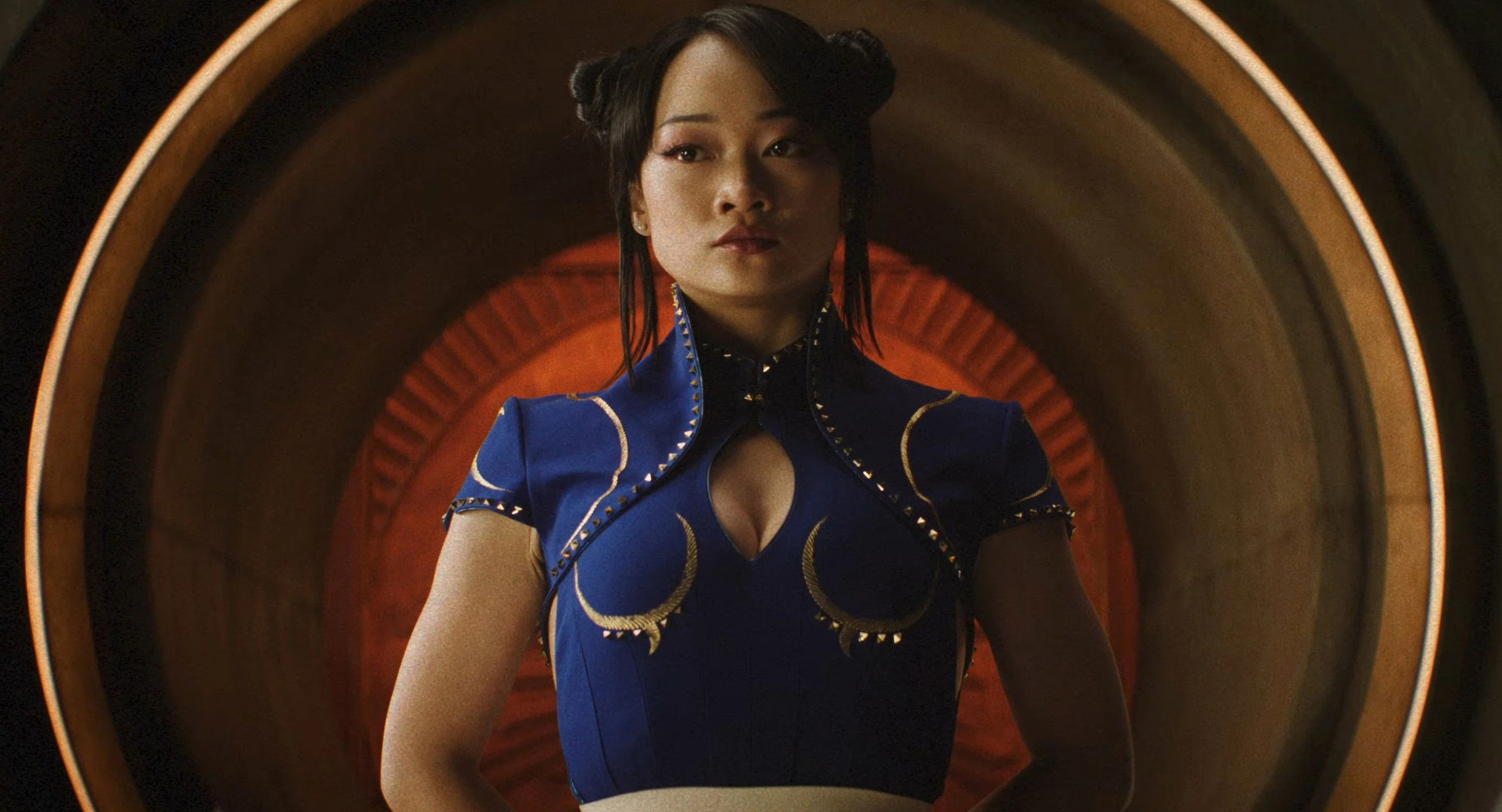
The Street Fighter franchise has all the ingredients necessary for an entertaining cinematic adaptation. With its colorful cast of memorable characters, spectacular martial arts, exaggerated personalities, and over-the-top special moves, Capcom’s beloved fighting game series seems perfectly suited to a big-screen spectacle. Unfortunately, translating the appeal of an interactive experience into a compelling narrative requires more than recognizable costumes, familiar character names, and a succession of elaborate fights. Directed by Kitao Sakurai, Street Fighter attempts to deliver a martial arts comedy that embraces the eccentricity of its source material while telling a story about brotherhood, revenge, and the dangers of unchecked power. Although the film occasionally captures the energetic spirit that makes the games so enduring, its uneven humor, underdeveloped characters, and inconsistent storytelling prevent it from becoming the adaptation fans deserve.
One of the movie’s biggest problems is its struggle to establish a consistent identity. The Street Fighter games are inherently theatrical, featuring fighters with distinctive personalities, outrageous abilities, and dramatic rivalries. A successful adaptation should recognize that these qualities are strengths rather than obstacles to overcome. Sakurai’s film understands the importance of spectacle, but its approach to comedy and action frequently feels disjointed. Instead of allowing the characters’ personalities and relationships to generate organic humor, the screenplay often relies on the absurdity of the situations themselves. The result is an experience that can feel more interested in reminding audiences that its source material is ridiculous than demonstrating why that ridiculousness is entertaining.
The narrative follows Ryu, a gifted martial artist whose traumatic experiences have driven him away from the fighting world. Six years after a devastating personal tragedy, he becomes entangled in another World Warrior tournament organized by M. Bison, the ruthless dictator of Shadaloo. Chun-Li, an undercover Interpol agent pursuing justice for her father, recruits Ryu and his estranged adoptive brother, Ken Masters, to participate in the competition. What initially appears to be a straightforward fighting tournament gradually reveals a more sinister purpose, forcing the characters to confront their pasts while facing a dangerous conspiracy.
There is considerable potential in this premise. Ryu and Ken have a longstanding relationship that offers opportunities for emotional complexity, particularly when their different personalities and approaches to martial arts put them at odds. Ryu’s introspective nature contrasts with Ken’s confidence and exuberance, creating a natural foundation for a story about resentment, jealousy, and reconciliation. Unfortunately, the screenplay by Sakurai and T. J. Fixman, based on a story by Dalan Musson and Gary Dauberman, does not always give these ideas sufficient room to develop.
The film moves between tournament confrontations, personal revelations, and the larger threat posed by Bison without consistently establishing satisfying connections between them. Important character motivations sometimes feel more like convenient devices for moving the plot forward than the consequences of carefully developed relationships. While the underlying themes are appropriate for the franchise, the execution lacks the emotional depth necessary to make them resonate. Viewers can understand what the characters are experiencing without necessarily feeling invested in their struggles.
Ryu and Ken are among the franchise’s most recognizable characters, and their relationship should provide the film with its strongest emotional anchor. Their contrasting temperaments create opportunities for both comedy and drama, while their shared history offers a meaningful reason for them to work together despite their disagreements. The movie recognizes the importance of their relationship, but its treatment of their estrangement can feel underdeveloped.
Andrew Koji brings a physical intensity to Ryu, conveying the discipline and determination expected of a character who has dedicated his life to martial arts. He is a natural fit for the role’s demanding physical requirements, and his performance helps communicate Ryu’s internal conflict. However, the material does not consistently provide Koji with enough nuanced character development to make the warrior’s emotional journey as compelling as it should be. Ryu’s struggles with his past and his fear of losing control are promising ideas, but they occasionally feel secondary to the next major confrontation.
Noah Centineo’s Ken provides a contrasting presence. Ken’s confidence and more outgoing personality make him a natural source of lighter moments, and Centineo brings an accessible charm to the character. Nevertheless, the film sometimes mistakes personality for characterization. Ken’s humor and bravado are recognizable traits, but they are not substitutes for a fully developed emotional arc. His complicated relationship with Ryu deserves more attention, particularly when the narrative asks the audience to accept significant developments in their relationship.
The two performers have the foundation for an entertaining partnership, but the screenplay does not consistently capitalize on their contrasting energies. Their relationship is recognizable without becoming especially moving, leaving one of the film’s most important storylines less effective than it could have been.
Callina Liang’s Chun-Li is another character who deserves more substantial development. As an undercover Interpol agent seeking justice for her father, Chun-Li has a clear personal motivation that distinguishes her from the tournament’s other participants. Her investigative role also gives the narrative an opportunity to explore the criminal organization behind the competition. Unfortunately, her personal mission frequently competes with the larger story rather than seamlessly integrating with it.
Liang brings determination to the role, and Chun-Li remains an important presence whenever the story shifts toward Bison’s operations. Still, the character occasionally feels more like a plot facilitator than a fully realized protagonist in her own right. Given her significance to the franchise, it is disappointing that the film does not always make better use of her perspective.
David Dastmalchian’s M. Bison offers another opportunity for the production to embrace the franchise’s heightened sensibilities. Bison is an intimidating antagonist whose ambition and appetite for power should make him a compelling threat. Dastmalchian possesses the eccentric screen presence necessary to portray a villain who operates on an exaggerated scale. However, the film’s approach to characterization makes it difficult for the antagonist to achieve the consistent menace or memorable theatricality the role demands.
The broader ensemble includes performers such as Joe Anoa’i, Cody Rhodes, Eric André, Andrew Schulz, Vidyut Jammwal, Don Lee, and Jason Momoa. Their presence contributes to the sense that this is a large-scale celebration of the franchise’s diverse fighting roster. Yet assembling recognizable personalities does not automatically create an engaging ensemble. With so many characters competing for attention, several struggle to leave a meaningful impression. Some feel as though they exist primarily to establish another familiar face or set up another confrontation.
Martial arts action should be the film’s greatest asset. The source material practically demands inventive choreography, distinctive fighting styles, and spectacular finishing moves that translate the games’ exaggerated combat into cinematic entertainment. The movie understands the importance of physical spectacle, and its tournament framework creates numerous opportunities to showcase different approaches to fighting.
Unfortunately, the action does not consistently deliver the excitement the premise promises. Individual confrontations can be entertaining, but the larger sequence of battles lacks the momentum necessary to make the tournament feel like an escalating competition. Fights need more than impressive movements; they require clear stakes, interesting tactical choices, and a sense that the outcome matters to the characters involved.
The supernatural abilities associated with the franchise also present a challenge. Techniques such as Ryu’s Hadouken can be thrilling when integrated into a fight with appropriate visual impact and dramatic buildup. However, spectacular powers become less impressive when the surrounding scenes have not established sufficient tension. The film occasionally prioritizes the recognition factor of these abilities over their effectiveness as dramatic moments.
There is still enjoyment to be found in seeing the franchise’s martial arts traditions translated to live action. The physical performances and varied fighting styles offer glimpses of what the adaptation could accomplish with more focused choreography and stronger storytelling. Unfortunately, these positive elements are not enough to make the action consistently memorable.
As a martial arts comedy, Street Fighter also needs its humor to complement the action rather than undermine it. The games have always embraced a heightened sense of theatricality, and their colorful characters provide plenty of opportunities for amusing interactions. A film willing to lean into that playful spirit could distinguish itself from more solemn video game adaptations.
The problem is that the comedy does not always feel naturally connected to the characters or situations. Some exchanges have the potential to provide welcome levity, but others interrupt the narrative without adding much personality or insight. The screenplay occasionally seems uncertain about whether audiences should take the dramatic stakes seriously or simply enjoy the absurdity of the proceedings.
This inconsistency affects the film’s pacing. Dramatic developments struggle to establish lasting emotional significance when the surrounding material repeatedly shifts toward broad comedy without sufficient tonal control. Conversely, the jokes can feel less effective when the narrative pauses to emphasize the seriousness of its conflicts. Neither approach is inherently incompatible with the other, but the balance needs to be more carefully managed.
A more confident screenplay could have used the franchise’s inherent absurdity as a foundation for character-driven humor. Instead, the comedy often feels like another element competing for attention.
Visually, the film has an appealing foundation in the colorful world of Street Fighter. The international tournament, distinctive characters, and larger-than-life combat provide opportunities for an energetic cinematic presentation. The franchise’s identity is unmistakable, and its collection of fighters offers a wealth of material for future adaptations to explore.
However, recognizable references cannot compensate for weaknesses in storytelling. The film’s attempts to balance an ensemble adventure, personal drama, martial arts spectacle, and broad comedy leave it feeling less cohesive than it should. Its most promising elements repeatedly suggest a better movie struggling to emerge from beneath the uneven execution.
The central conflict surrounding Ryu, Ken, and Bison has the potential to support a satisfying adventure, while Chun-Li’s investigation provides an additional source of tension. Yet these threads do not consistently reinforce one another, and the supporting cast is too crowded to give every character meaningful development. The result is a film that understands what makes Street Fighter recognizable without fully understanding what would make its story compelling.
Ultimately, Street Fighter is a disappointing adaptation that squanders much of the potential inherent in Capcom’s legendary fighting game franchise. Andrew Koji and Noah Centineo provide a workable foundation for Ryu and Ken, Callina Liang brings determination to Chun-Li, and the colorful ensemble occasionally captures the source material’s larger-than-life personality. Nevertheless, inconsistent comedy, underwhelming character development, uneven pacing, and action that rarely reaches its full potential keep the film from becoming a satisfying experience.
There are flashes of entertainment here, particularly for viewers who appreciate the franchise’s eccentric characters and extravagant fighting techniques. Unfortunately, those moments are surrounded by too many missed opportunities. Rather than delivering a thrilling, funny, and emotionally engaging martial arts adventure, the film settles for a scattered collection of familiar faces and franchise references.