La Bola Negra – Film Review
Published November 14, 2026

Movie Details

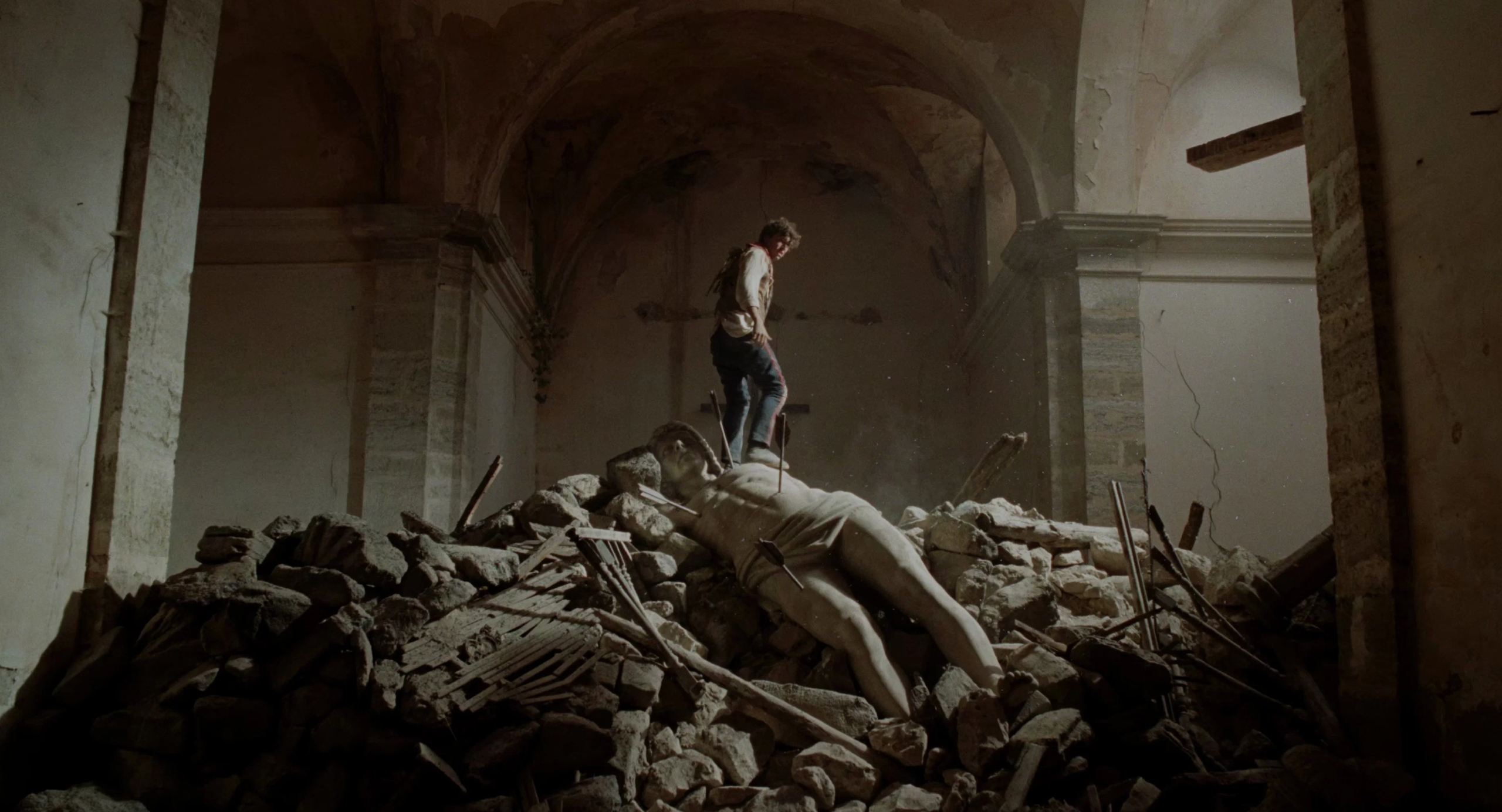
Javier Calvo and Javier Ambrossi‘s La Bola Negra is an extraordinarily ambitious and emotionally resonant cinematic achievement that explores the intersections of sexuality, identity, history, and the importance of preserving stories that society has attempted to silence. Inspired by the unfinished work of celebrated Spanish poet and playwright Federico García Lorca, the film weaves together three narratives spanning several decades, examining the experiences of gay men whose lives are connected by a shared history of discrimination, longing, and the desire to exist freely. Rather than simply presenting a historical account of queer oppression, Calvo and Ambrossi construct an expansive, deeply personal examination of what it means to live in a world that refuses to accept you. Beautifully written, thoughtfully directed, and enriched by compelling performances, La Bola Negra is a remarkable piece of filmmaking that leaves a lasting emotional impression.
One of the film’s greatest strengths is its ambitious narrative structure. Moving between 1932, 1937, and 2017, the screenplay gradually establishes connections between three different generations of gay men, each navigating a society with its own expectations, prejudices, and limitations. Although their circumstances are considerably different, their experiences are united by the same fundamental struggle: finding the freedom to express themselves without fear of rejection. The three timelines complement one another remarkably well, creating a broader portrait of queer history while allowing each storyline to develop its own emotional identity. The transitions between periods also reinforce how certain prejudices can persist across generations, even as society gradually changes.
The 1932 storyline introduces Carlos, a young man whose privileged upbringing cannot protect him from the consequences of being suspected of homosexuality. His experiences demonstrate the particularly complicated relationship between social standing and personal freedom. Despite having access to opportunities that many others could only dream of, Carlos discovers that wealth and family connections offer little protection when society considers someone’s identity unacceptable. His struggle to gain acceptance within an exclusive social environment becomes an effective representation of the suffocating expectations placed upon individuals who do not conform to conventional standards.
What makes this storyline especially compelling is how effectively it explores the psychological consequences of concealment. Carlos is surrounded by people who expect him to behave according to their understanding of masculinity and respectability, leaving him with limited opportunities to embrace his authentic identity. His circumstances are heartbreaking without the screenplay needing to exaggerate their emotional impact. Instead, the film finds considerable power in the quieter moments, particularly those involving family relationships, social expectations, and the uncomfortable compromises people make to maintain their positions within society.
The 1937 narrative introduces a different perspective through Sebastián, whose experiences during the Spanish Civil War place him in an increasingly dangerous environment. His relationship with Rafael provides the film with some of its most emotionally significant material, particularly through their conversations about art, literature, and personal identity. The connection between these characters develops against an atmosphere of political hostility and uncertainty, creating an effective contrast between the tenderness of human connection and the cruelty of the surrounding world. Their storyline also gives Lorca’s artistic legacy a particularly meaningful presence, demonstrating how creative expression can offer comfort, understanding, and a sense of belonging.
The contemporary storyline involving Alberto provides an important counterbalance to the historical narratives. Living in a considerably different social environment, Alberto has opportunities for personal expression that the previous generations could scarcely imagine. Nevertheless, his experiences demonstrate that progress does not automatically eliminate the emotional consequences of historical discrimination. His investigation into his family’s past becomes an exploration of inherited silence, unresolved relationships, and the importance of understanding where previous generations came from. The contrast between Alberto’s circumstances and those of Carlos and Sebastián gives the narrative additional depth.
The screenplay deserves considerable credit for bringing these three stories together without making their connections feel entirely dependent on narrative convenience. Each timeline contributes something meaningful to the larger thematic conversation, and the gradual accumulation of information makes the film increasingly affecting. Its treatment of family history is particularly effective, emphasizing how personal experiences can become obscured by shame, secrecy, and the passage of time. There is something deeply moving about the idea that understanding the past can help people reconsider their relationships with the present.
Federico García Lorca’s influence is another essential component of the film’s storytelling. Rather than treating his unfinished play as merely a historical curiosity, Calvo, Ambrossi, and co-writer Alberto Conejero use it as an artistic and thematic foundation for examining queer representation. The relationship between literature and lived experience becomes particularly significant as the characters encounter works of art that reflect feelings they have struggled to communicate themselves. The film understands that creative expression can preserve experiences that official histories frequently overlook. Its appreciation for artistic legacy gives the narrative an additional layer of significance.
The performances are another major reason La Bola Negra succeeds as effectively as it does. Guitarricadelafuente makes a particularly strong impression as Sebastián, bringing vulnerability, sensitivity, and emotional complexity to a character whose circumstances require considerable internal conflict. His performance communicates the uncertainty of someone discovering parts of himself while living in an environment that offers very little room for personal freedom. He also establishes an affecting connection with Miguel Bernardeau, whose portrayal of Rafael provides the film with an important emotional anchor. Their interactions are among the narrative’s most compelling elements, benefiting from an understated approach that allows their relationship to develop naturally.
Milo Quifes also contributes meaningfully as Carlos, capturing the character’s complicated relationship with his family and the expectations surrounding his social position. His portrayal helps establish the emotional foundation of the earliest storyline, making Carlos’s personal struggles feel intimate rather than simply representative of a broader historical experience. Carlos González brings a different sensibility to Alberto, effectively conveying the curiosity and emotional uncertainty of someone attempting to understand a family history that has remained largely inaccessible to him.
Lola Dueñas delivers an especially effective performance as Teresa, adding considerable emotional weight to the contemporary storyline’s exploration of family relationships. Her character’s complicated feelings about her father provide an important perspective on how unresolved experiences can influence subsequent generations. Penélope Cruz and Glenn Close further strengthen the ensemble, bringing additional presence to an already impressive collection of performers. Even when the narrative shifts between characters and periods, the acting maintains a consistent emotional sincerity that helps hold the film together.
Calvo and Ambrossi’s direction is equally impressive. Their approach demonstrates a clear understanding of how visual storytelling can communicate emotions that dialogue alone cannot adequately express. The historical settings are presented with considerable attention to atmosphere, while the contrasting environments help distinguish the different periods without making the transitions feel unnecessarily disruptive. There is a strong sense of visual intentionality throughout the film, with its imagery frequently reinforcing the characters’ emotional isolation, vulnerability, and longing for acceptance.
The cinematography deserves particular recognition for contributing to the film’s distinctive atmosphere. The visual presentation captures both the beauty and hostility of its environments, creating an effective contrast between moments of personal intimacy and the larger historical circumstances surrounding the characters. The production design and costumes also help establish the different periods, giving each timeline a recognizable identity while maintaining a cohesive visual language. The result is a film that feels carefully constructed without sacrificing the emotional immediacy of its storytelling.
The musical elements and sound design further strengthen the experience. Music frequently functions as an extension of the characters’ emotions, particularly when words prove insufficient to communicate what they are experiencing. The incorporation of Spanish cultural and artistic traditions also gives the film a distinctive identity, connecting its personal narratives to a broader cultural history. These elements help establish an immersive atmosphere that complements the screenplay’s more introspective qualities.
If there is one aspect that prevents La Bola Negra from achieving absolute perfection, it is that its considerable ambition occasionally works against its pacing. With three timelines, numerous characters, and several interconnected thematic ideas, the screenplay has an enormous amount of material to accommodate. Certain narrative developments consequently receive less breathing room than they deserve, while some transitions could benefit from a little more time to establish their emotional significance. The film’s deliberate pacing may also require patience from viewers who prefer more conventional narrative structures. Nevertheless, these are relatively minor shortcomings within an otherwise remarkably accomplished production.
Ultimately, La Bola Negra is a beautiful celebration of identity, artistic expression, and the importance of remembering those whose experiences have been overlooked. Its exploration of queer history is particularly meaningful because it recognizes that the freedom enjoyed by subsequent generations is connected to the sacrifices, struggles, and experiences of those who came before them. The film also makes an important distinction between simply surviving and genuinely being allowed to live as oneself.
Javier Calvo and Javier Ambrossi have crafted something genuinely special with La Bola Negra. Its ambitious storytelling, thoughtful screenplay, exceptional performances, striking cinematography, and emotionally powerful themes combine to create an experience that is both intellectually engaging and deeply moving. Although its sprawling narrative occasionally affects the pacing, the film’s individual stories remain compelling, and its broader exploration of queer identity and historical remembrance is handled with remarkable sensitivity.
More than simply a period drama or a celebration of Federico García Lorca’s artistic legacy, La Bola Negra is a poignant reminder of why personal stories deserve to be preserved. It recognizes the importance of acknowledging the past while celebrating the possibilities of a more accepting future. Beautifully realized and consistently affecting, this is an outstanding cinematic achievement that deserves to be experienced and remembered.