Other Mommy – Film Review
Published October 10, 2026

Movie Details

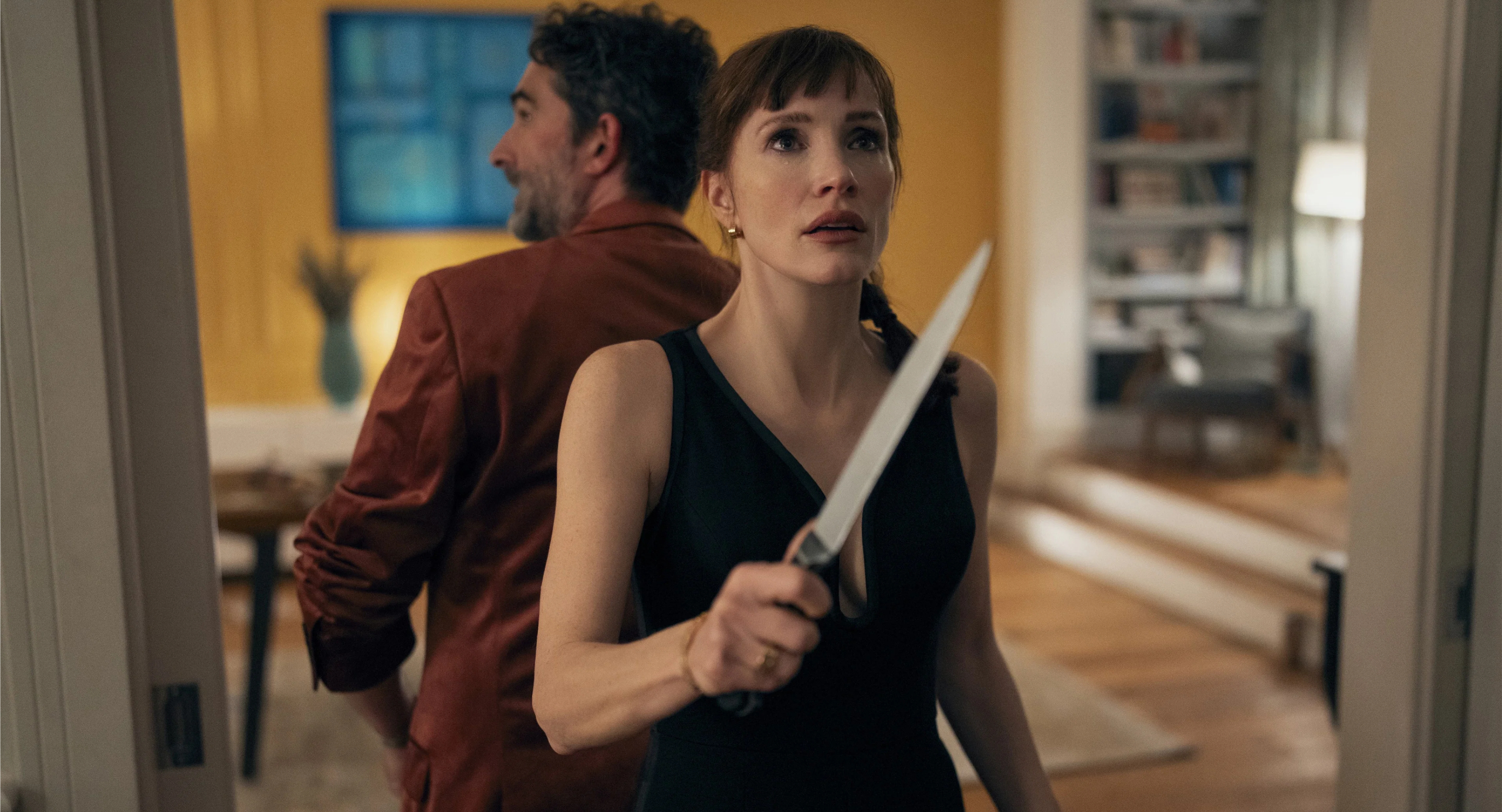
Supernatural horror can be an effective way to explore childhood fears, fractured families, and the terrifying feeling that something familiar has become threatening. When handled well, the genre can transform ordinary domestic spaces into places of genuine unease, using unsettling imagery and psychological tension to create an experience that lingers long after the credits roll. Unfortunately, Other Mommy struggles to make those possibilities work in its favor. Despite featuring a committed performance from Jessica Chastain and a premise that initially promises some deeply disturbing moments, director Rob Savage‘s supernatural horror film is an underwhelming experience that relies too heavily on familiar genre conventions without developing a sufficiently compelling identity of its own.
Based on Josh Malerman‘s 2024 novel Incidents Around the House, the film follows seven-year-old Isabela “Bela” Martin (Arabella Olivia Clark), a young girl who begins experiencing frightening encounters with a supernatural entity that resembles her mother, Ursula (Chastain). Calling the creature Other Mommy, Bela finds herself increasingly threatened by its persistent attempts to gain access to her heart. As the entity’s appearances become more disturbing, her family must confront the possibility that something genuinely dangerous has entered their lives.
Although this setup provides a solid foundation for psychological horror, Other Mommy never fully realizes its potential. Its storytelling is frustratingly slow, its supernatural mythology feels overly familiar, and its visual effects frequently undermine the atmosphere it attempts to establish. Rather than delivering an especially frightening or emotionally devastating experience, the film becomes an exhausting collection of recycled ideas and uneven sequences that struggle to justify their existence.
One of the biggest problems with Other Mommy is how little originality it brings to its central concept. A child encountering a mysterious supernatural presence that adults initially struggle to understand is hardly an unfamiliar premise, but the film does very little to distinguish itself from previous stories exploring similar territory. Its most obvious point of comparison is Coraline, the 2009 animated dark fantasy film that similarly revolves around a young girl confronted by a sinister alternative maternal figure.
The similarities are difficult to ignore. Both stories feature a child targeted by an entity that adopts a motherly appearance, offers an alternative to an imperfect family life, and attempts to draw the child into a dangerous relationship. Both also explore the vulnerability of children who struggle to understand the complicated emotions and shortcomings of the adults responsible for them. While Other Mommy approaches these ideas through live-action supernatural horror rather than stop-motion fantasy, its central conceit feels disappointingly derivative.
The problem is not simply that the film shares similarities with an earlier work. Horror has always borrowed and reinterpreted familiar ideas, and successful genre filmmaking often depends on finding fresh perspectives on established concepts. The problem is that Other Mommy does not develop its premise with enough imagination, emotional complexity, or visual inventiveness to overcome those similarities. Its supernatural antagonist feels more like a collection of familiar horror ideas than a genuinely distinctive creation.
The screenplay by Nathan Elston also struggles to establish a satisfying narrative rhythm. Although the increasingly dangerous encounters provide opportunities for escalating tension, the story repeatedly circles around the same basic conflict without generating enough meaningful development. The result is a film that feels considerably longer than it needs to be, particularly when its central mystery remains less compelling than the filmmakers appear to believe.
Rob Savage previously demonstrated an ability to construct effective tension through confined settings and unsettling supernatural encounters. Unfortunately, Other Mommy rarely maintains that level of effectiveness for long enough to justify its deliberately measured approach.
The film takes considerable time establishing Bela’s home life, her parents’ strained relationship, and the growing sense that something is wrong. These elements are relevant to the story, but their presentation becomes repetitive. Instead of allowing the domestic drama to deepen the supernatural horror, the screenplay frequently interrupts its own momentum with scenes that contribute relatively little to the overall experience.
Slow pacing is not inherently a problem for horror. Some of the genre’s most effective films build dread through extended silences, gradual revelations, and the anticipation of something terrible happening. However, those techniques require careful execution. The audience must feel that every moment is bringing it closer to an unsettling discovery. In Other Mommy, the stretches between major developments too often feel like empty space rather than deliberate suspense-building.
The repetitive structure becomes especially frustrating as the film progresses. The supernatural threat becomes more aggressive, the family grows increasingly desperate, and the danger intensifies, yet the storytelling struggles to translate these developments into consistently engaging drama. Scenes that should feel increasingly terrifying instead become predictable variations on the same basic encounter.
Consequently, the film’s more dramatic moments lack the impact they desperately need. By the time the story reaches its later confrontations, the audience may already be too familiar with its rhythms to experience the intended level of fear.
Jessica Chastain is easily one of the film’s most valuable assets. As Ursula, she portrays a mother struggling with complicated feelings about parenthood, personal freedom, and her responsibilities toward her daughter. The character is deliberately imperfect, and Chastain attempts to communicate the emotional contradictions underlying Ursula’s behavior without reducing her to a straightforward villain.
Her performance benefits from the ambiguity surrounding Ursula’s relationship with Bela. The character’s emotional distance creates genuine discomfort, particularly because the film understands that a parent can love a child while simultaneously struggling with the circumstances that shaped their family life. Chastain brings some much-needed emotional credibility to these scenes, helping to ground the story’s more fantastical elements.
She also portrays the supernatural entity, giving the production an opportunity to contrast the familiar warmth of a mother with something deeply unsettling. Unfortunately, the film does not consistently capitalize on that contrast. The visual presentation and execution of the creature frequently do more to distract than frighten, limiting the effectiveness of what should be one of the film’s strongest elements.
Arabella Olivia Clark deserves credit for carrying much of the narrative as Bela. Playing a frightened seven-year-old confronting something she cannot fully understand requires a delicate balance between vulnerability and determination. Clark makes a sincere effort to communicate the character’s fear and confusion, providing the audience with a recognizable emotional perspective amid the increasingly bizarre supernatural developments.
Jay Duplass contributes to the family drama as Russell, while Dichen Lachman and Arian Moayed fill out the supporting cast. However, the screenplay gives the supporting characters limited opportunities to leave a lasting impression. Even when the performances are competent, the writing rarely develops these individuals beyond their immediate narrative functions.
The film’s visual effects represent another significant disappointment. Supernatural horror depends on creating images that feel disturbing, uncanny, or impossible to comfortably process. When a production introduces an entity capable of changing its appearance and distorting its surroundings, the visual presentation must be convincing enough to sustain the illusion.
Unfortunately, Other Mommy frequently struggles in this department. Some of its supernatural imagery looks artificial, undermining the sense of physical reality that the film needs to establish. Instead of making the creature feel genuinely unnatural, the CGI sometimes draws attention to the filmmaking itself, making the intended scares less effective.
This is particularly frustrating because the basic idea of a sinister figure resembling a child’s mother is inherently unsettling. The familiar face should provide a source of psychological discomfort, creating a disturbing contrast between the security associated with parental affection and the danger represented by the entity. Yet the film’s effects do not consistently communicate that contradiction with the necessary precision.
There are moments when the creature’s presence generates some unease, but the overall visual execution is too inconsistent to make those moments especially memorable. The film appears more interested in showing increasingly elaborate supernatural phenomena than in establishing the restrained, carefully constructed atmosphere that might have made them frightening.
The title card reveal is another particularly awkward creative decision. Rather than delivering a striking visual moment that reinforces the film’s unsettling atmosphere, the reveal feels clumsy and poorly judged. It is the kind of presentation that should establish the production’s identity immediately, but instead creates an unfortunate first impression that the subsequent filmmaking struggles to overcome.
Beneath its supernatural premise, Other Mommy attempts to explore difficult questions about motherhood, childhood insecurity, and the emotional consequences of family dysfunction. Ursula’s complicated feelings about parenthood provide the narrative with an opportunity to examine how children interpret the behavior of adults they depend on.
Bela’s vulnerability is central to this approach. As a young child, she cannot fully comprehend the complexities of her parents’ relationship or the emotional struggles that influence their decisions. She must interpret their behavior using the limited understanding available to her, leaving her susceptible to a supernatural presence that exploits her fears and insecurities.
These ideas could have supported a genuinely affecting psychological horror film. Unfortunately, the screenplay struggles to integrate its emotional themes with its supernatural mythology. The family drama often feels like an obligatory component of the plot rather than an organic extension of the horror.
The result is a story that gestures toward meaningful emotional territory without exploring it with enough depth. The film wants viewers to care about Bela’s family and understand the complicated dynamics shaping her life, but its uneven pacing and repetitive storytelling prevent these relationships from developing as naturally as they should.
The supernatural conflict ultimately feels more elaborate than the emotional ideas supporting it. Rather than allowing the family drama to make the horror more frightening, the film repeatedly shifts between the two without establishing a consistently effective balance.
Other Mommy is a disappointing supernatural horror film that wastes a promising premise, a talented lead actress, and opportunities for genuinely unsettling psychological storytelling. Jessica Chastain delivers a committed performance, and Arabella Olivia Clark provides a sympathetic emotional anchor, but neither can compensate for the film’s derivative narrative, sluggish pacing, unconvincing CGI, and uneven execution.
Its similarities to Coraline are particularly difficult to overlook, especially because the film fails to offer enough original ideas to distinguish its central conflict. The supernatural mythology never becomes as compelling as it needs to be, while the psychological themes remain underdeveloped and the visual presentation repeatedly diminishes the intended scares.
There are glimpses of a more effective film buried beneath these problems. The concept of a threatening entity exploiting a child’s complicated relationship with her mother has considerable potential, and Chastain’s performance occasionally hints at the emotional complexity the story could have achieved. Unfortunately, those strengths are overshadowed by uninspired storytelling and an approach to horror that too often mistakes prolonged anticipation for genuine suspense.
Ultimately, Other Mommy is an unnecessarily drawn-out and frustrating experience that fails to make its familiar ideas feel fresh or frightening. It may appeal to viewers who are particularly interested in supernatural stories about children and their families, but those expecting an inventive, visually convincing, or psychologically sophisticated horror film will likely come away disappointed.