Beware Boiúna – Film Review
Published October 3, 2026

Movie Details

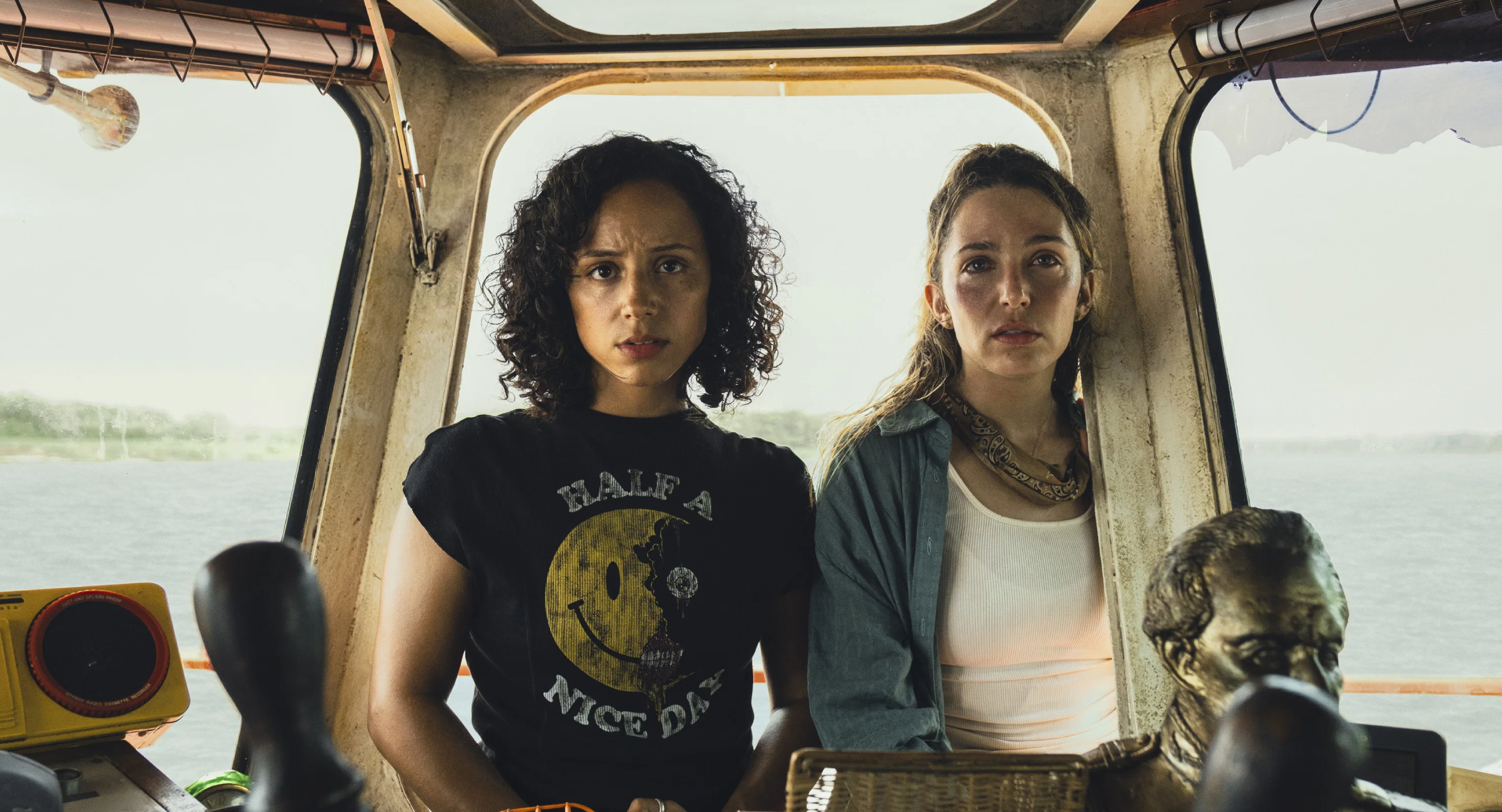
Beware Boiúna has all the ingredients of a potentially terrific creature feature: a remote location, an enormous mythical serpent, a group of vulnerable characters, and a story that drops its protagonists into an environment where danger can come from virtually anywhere. Directed by Mike P. Nelson and written by Alan B. McElroy from a story by Tony Giglio and McElroy, the film follows a humanitarian medical mission traveling deep into the Amazon rainforest along the Curuçá River. What begins as a mission intended to help others quickly becomes a fight for survival after the group’s presence awakens Boiúna, a colossal ancient serpent determined to reclaim its territory.
The premise is immediately appealing because it taps into one of the most reliable formulas in horror: humans entering an environment they don’t fully understand and discovering that they are hopelessly outmatched by something much larger and more dangerous than themselves. The Amazon provides Beware Boiúna with an inherently atmospheric setting, while the mythology surrounding the titular creature gives the movie an opportunity to build something that feels distinctive within the creature-feature genre. Unfortunately, while the film has several impressive ingredients, it doesn’t always know how to combine them effectively.
Kiana Madeira leads the film as Lena, bringing a grounded quality to a protagonist who is increasingly forced into extraordinary circumstances. Madeira does a good job communicating Lena’s determination without turning her into an invincible action heroine. There is a believable vulnerability to her performance, particularly when the situation begins spiraling beyond anyone’s control. Lena’s journey works best when the movie keeps things simple: she is trying to survive, protect the people around her, and understand what exactly is hunting them.
The absolutely phenomenal performance by Jessica Rothe is easily one of the film’s greatest strengths. Rothe brings an extraordinary amount of energy and personality to Allison, giving the character a presence that frequently makes her scenes more compelling than the material itself. Whether she is dealing with the escalating danger or interacting with Lena, Rothe makes Allison feel like a fully realized human being rather than merely another potential victim waiting for the monster to attack.
Rothe’s performance is particularly effective because she understands the tonal balance that this kind of movie requires. Beware Boiúna can occasionally lean toward heightened genre territory, but Rothe never seems confused about what kind of movie she is in. She commits completely to the material, whether the scene requires fear, determination, frustration, or emotional vulnerability. Her work gives the film a dramatic dimension that it doesn’t always earn through the screenplay.
Unfortunately, Logan Marshall-Green‘s Brennan Malloy represents one of the screenplay’s weaker elements. The character is positioned as a villainous human threat alongside the supernatural one, but his character arc never becomes particularly satisfying. There is nothing inherently wrong with having a human antagonist in a monster movie; in fact, the combination can be extremely effective. The problem is that Brennan’s development feels insufficiently explored, making his presence feel more functional than dramatically meaningful.
One of the film’s strongest technical achievements is Nick Junkersfeld‘s cinematography. The Amazon rainforest is an outstanding setting for a horror movie, and Junkersfeld’s photography takes full advantage of its dense vegetation, waterways, and overwhelming sense of isolation. The environment frequently feels like a character in its own right, with the lush scenery simultaneously providing beauty and danger.
There is an impressive visual contrast between the tranquility of the rainforest and the violence that erupts within it. Calm stretches of water can suddenly become threatening, while seemingly ordinary sections of jungle can conceal an enormous predator. The cinematography gives the film a sense of scale that is essential for selling the idea of a colossal mythical serpent. When Beware Boiúna allows its environment to dominate the frame, it becomes considerably more effective.
The creature sequences are another major positive. Boiúna is exactly the kind of monster that benefits from being treated as a physical presence rather than simply an unseen force. The film understands that there is excitement in seeing characters confronted with something that is overwhelmingly larger than they are. Some of the strongest moments come when the characters are forced to recognize just how enormous the creature actually is.
There is also a nice sense of escalation to several of these sequences. The serpent isn’t simply introduced and repeatedly used in identical attacks. Instead, the movie finds different ways to place its characters in danger, making the surrounding environment increasingly hostile. When the creature is given enough screen time to make its presence felt, Beware Boiúna can be a genuinely entertaining monster movie.
Unfortunately, the film’s visual strengths are frequently undermined by an unbelievably bad shaky-cam technique. There is a difference between using unstable camerawork to communicate panic and simply making the image difficult to follow. Beware Boiúna too often falls into the latter category. During some of its most important action and horror sequences, the camera moves so aggressively that it becomes difficult to appreciate the staging or understand exactly what is happening.
This is especially frustrating because the movie actually has a fantastic monster to showcase. The cinematography proves that the production can create compelling imagery, yet the shaky camera repeatedly gets in the way of that work. Instead of intensifying the fear, the technique can create distance from it. Horror is generally more effective when the audience understands the physical geography of a scene and can anticipate where danger might come from. Excessive camera movement makes that considerably harder.
The movie also occasionally chooses to show some kills off-screen, which is disappointing in a creature feature with such a potentially entertaining monster. Not every death needs to be graphic, and restraint can certainly be effective. However, when the film has spent so much time establishing Boiúna as a terrifying physical threat, cutting away at crucial moments can feel like a missed opportunity.
This is particularly noticeable because creature features thrive on memorable kills. The best monster movies understand that each encounter can reveal something new about the creature’s abilities. By keeping some deaths away from the audience, Beware Boiúna occasionally sacrifices the visceral payoff that viewers are likely expecting from this premise.
The screenplay is similarly inconsistent. There are genuinely strong ideas here, particularly the concept of a humanitarian mission inadvertently disturbing an ancient creature’s territory. That premise creates a natural conflict between human activity and the mythology of the environment. The movie could have explored that relationship more deeply, especially considering how much potential exists within the Boiúna mythology.
Instead, the story sometimes settles for familiar monster-movie conventions. Characters make questionable decisions because the plot needs them to be in danger, and Brennan’s storyline adds another layer of conflict without fully justifying its presence. The human villain material could have complemented the serpent beautifully, but the character arc doesn’t receive enough development to make Brennan as interesting as the movie seems to believe he is.
Still, Beware Boiúna has enough strengths to prevent it from becoming a disappointment. Madeira and Rothe give the movie an emotional foundation, with Rothe in particular delivering a performance that deserves to be remembered. Junkersfeld’s cinematography gives the Amazon an impressive visual identity, while the creature sequences occasionally deliver exactly the kind of large-scale monster spectacle that the premise promises.
Ultimately, Beware Boiúna is a moderately entertaining creature feature that never quite reaches the heights of its fantastic premise. The Amazon setting is gorgeous, the titular serpent is an exciting monster, and Jessica Rothe is absolutely phenomenal, but the screenplay’s weaker character work and the unbelievably bad shaky cam repeatedly hold the film back. The decision to take some kills off-screen also leaves the movie feeling less satisfying than it could have been.
There is enough here for monster-movie enthusiasts to enjoy, particularly when Boiúna is unleashed and the filmmaking embraces the scale of the creature. However, the film needed stronger character development, a more compelling arc for Brennan, and considerably more disciplined camerawork to become the memorable jungle horror experience its premise suggests. Beware Boiúna is ultimately a decent but uneven monster movie: visually impressive in places, occasionally thrilling, and anchored by a terrific Jessica Rothe performance, but too frequently held back by its own filmmaking choices.