Mayday – Film Review
Published September 7, 2026

Movie Details

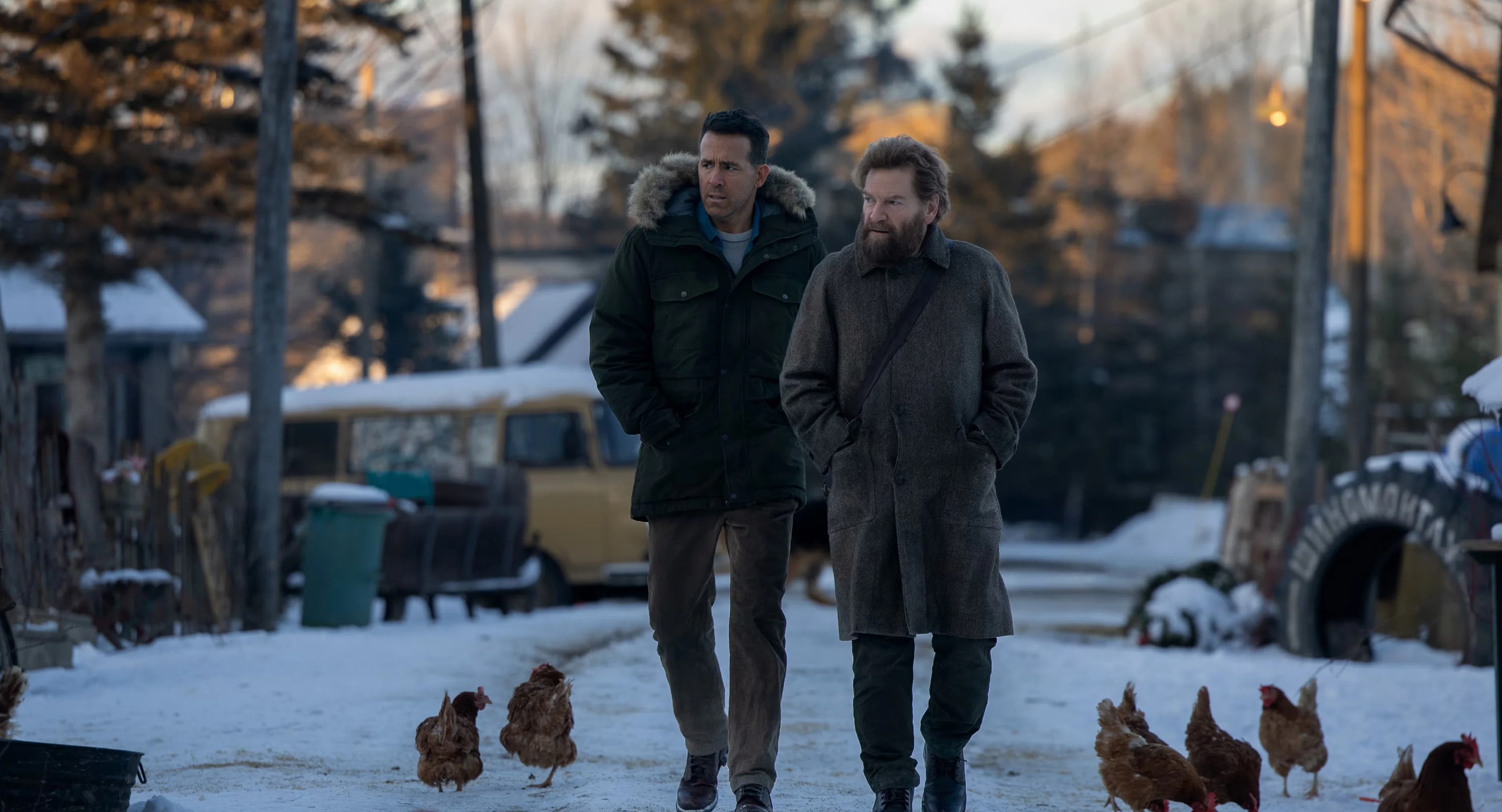
There is something inherently appealing about Mayday. An action comedy involving fighter jets, Cold War espionage, a disgraced KGB officer, an American pilot stranded behind enemy lines, and a stolen aircraft sounds like the sort of unapologetically entertaining blockbuster that could thrive on sheer momentum. Add Ryan Reynolds and Kenneth Branagh to the equation, put Dungeons & Dragons: Honor Among Thieves filmmakers John Francis Daley and Jonathan Goldstein behind the camera, and the ingredients seem almost impossible to resist.
Unfortunately, Mayday is a case where the ingredients are considerably more exciting than the finished meal. It is an enjoyable, frequently funny and occasionally thrilling adventure, but it struggles to find the tonal balance necessary to make its story feel as substantial as its premise suggests. The film has enough charm to remain watchable throughout, yet it rarely feels as inventive, emotionally resonant or consistently exhilarating as it wants to be.
Set largely against the backdrop of the late Cold War, Mayday follows U.S. Navy Lieutenant Troy “Assassin” Kelly, played by Ryan Reynolds, after a dangerous encounter in the skies leaves him stranded in Soviet territory. His unlikely savior is Nikolai Ustinov, a former KGB officer portrayed by Kenneth Branagh, who has become disillusioned with the organization and dreams of experiencing the American life he has admired from afar. Their relationship becomes the film’s central source of comedy, conflict and, eventually, heart.
The setup is promising because the characters occupy such dramatically different worlds. Kelly is the quintessential American military hero, while Ustinov is an eccentric former Soviet operative whose fascination with American culture makes him an amusingly unexpected companion. Their journey across Soviet territory gives Mayday the opportunity to become a buddy movie wrapped inside a Cold War thriller.
And, for stretches, it works.
The biggest reason Mayday remains enjoyable is the chemistry between Reynolds and Branagh. Reynolds is playing within familiar territory here, delivering the sarcastic, wisecracking persona that has become one of his trademarks. That can sometimes make his performances feel interchangeable, but the approach works reasonably well in this particular context. Kelly is supposed to be confident, cocky and quick with a joke, and Reynolds clearly understands the rhythm required to make those moments land.
Branagh, meanwhile, gets the more unusual role. Ustinov is an inherently eccentric character, and Branagh embraces the opportunity to make him simultaneously ridiculous and sympathetic. His fascination with American pop culture provides some of the film’s lighter moments, but Branagh also gives the character enough vulnerability to prevent him from becoming merely comic relief.
Their dynamic is predictable, but it is effective. The relationship follows the familiar trajectory of two men who initially distrust each other, gradually discover their similarities and eventually develop genuine respect. Mayday does not reinvent the buddy-movie formula, but Reynolds and Branagh are charismatic enough to make the formula work.
The supporting cast is solid as well. Marcin Dorociński brings an appropriately menacing presence to Alexander Volkov, the KGB operative pursuing the pair. He represents the more serious side of the film and provides a necessary threat amid all the jokes. Maria Bakalova, as Anna Ustinov, brings warmth to the story, while David Morse makes an impression in his supporting role.
Still, most of these characters are given relatively little room to develop. The movie is much more interested in keeping Kelly and Ustinov moving than in exploring the people surrounding them.
If there is one area where Mayday should theoretically excel, it is action. The movie opens with a sequence involving aircraft carriers and aerial combat, immediately establishing the scale of its ambitions. The presence of the SR-71 Blackbird also gives the movie an inherently cinematic quality, and the filmmakers clearly understand the appeal of Cold War-era aviation.
The aerial sequences are exciting enough, particularly when the film emphasizes the speed and danger of the aircraft. There is a satisfying physicality to some of the set pieces, and the movie generally maintains a quick pace. Once Kelly and Ustinov are forced to flee, the story becomes a series of escapes, confrontations and increasingly desperate improvisations.
Yet the action rarely becomes genuinely spectacular.
The problem is not that the sequences are poorly constructed. Rather, they often feel like variations on things audiences have seen before. Mayday moves from one chase to another without discovering a distinctive visual identity of its own. The Cold War setting should give the action a unique flavor, but the film occasionally treats its environment as little more than scenery.
This is especially disappointing because the premise provides so many opportunities for creative action filmmaking. The contrast between American military technology and Soviet-era infrastructure could have been used to create more distinctive set pieces. Instead, the film tends to settle for competent spectacle.
The film’s biggest weakness is its tone.
Daley and Goldstein have previously demonstrated an impressive ability to balance comedy, adventure and genuine stakes, but Mayday does not always achieve the same equilibrium. Some scenes play like broad buddy comedy, while others suddenly shift into much darker Cold War thriller territory.
Neither side is inherently wrong. The problem is that the transitions can feel abrupt.
The movie wants viewers to laugh at the absurdity of Kelly and Ustinov’s circumstances while simultaneously taking their danger seriously. Occasionally, those two goals complement one another beautifully. At other times, a joke undercuts a moment that might otherwise have carried real dramatic weight.
The humor itself is similarly inconsistent. There are amusing exchanges between Reynolds and Branagh, particularly when their personalities clash, but not every joke feels as sharp as the filmmakers clearly intend. Some comedic beats feel designed specifically around Reynolds’ established persona rather than emerging naturally from the characters.
Consequently, Mayday is funny without being consistently hilarious. One of the film’s more interesting qualities is the way it gradually introduces themes beyond its initial action-comedy premise. The story touches upon loyalty, political disillusionment, friendship and the consequences of institutions abusing their power.
The material involving the U.S. Navy’s treatment of shipyard workers and asbestos exposure adds a surprisingly serious dimension to Kelly’s story. It gives his eventual conflict with the institution he served a sense of moral purpose and prevents the film from being purely about escaping Soviet agents.
However, this material also illustrates another problem: Mayday sometimes feels like it is trying to contain several different movies at once.
There is the Cold War escape thriller. There is the buddy comedy. There is the military aviation adventure. There is the political drama. There is even a story about cultural fascination and the idealized image of America.
Any one of these ideas could support an entire movie. Trying to combine them all is ambitious, but the result is occasionally uneven. The more serious ideas are intriguing but underdeveloped, while the lighter material receives considerably more attention.
Even when the screenplay becomes uneven, the performances provide enough personality to keep Mayday engaging.
Reynolds knows exactly how to play Kelly, and while his performance is familiar, it suits the character. Branagh is the standout because he brings an eccentricity that feels different from his usual screen presence. Their contrasting energies give the movie its strongest scenes.
Dorociński is also effective as Volkov, although the character is written more conventionally. He is primarily there to pursue the protagonists and represent the dangers closing in around them, rather than emerge as a particularly complicated antagonist.
The cast therefore does a lot of the heavy lifting. Whenever the movie threatens to become overly familiar, the actors inject enough personality to keep it moving.
Ultimately, Mayday is difficult to dislike, but it is equally difficult to love.
It has a terrific premise, charismatic stars and a talented directing duo who clearly understand how to keep an audience entertained. The Cold War setting gives the movie an appealing sense of adventure, while the relationship between Kelly and Ustinov provides a dependable emotional and comedic anchor.
But the film never fully capitalizes on its potential. Its action is entertaining without being unforgettable, its humor is amusing without being consistently sharp, and its more serious ideas are introduced without being explored as deeply as they could be. The story moves quickly enough that there is rarely time for the quieter material to breathe.
That makes Mayday feel like a perfectly pleasant blockbuster rather than a standout one.
There is plenty to enjoy here. Reynolds and Branagh make a likable team, the premise is inherently entertaining, and the film delivers enough action and comedy to justify its runtime. It is the kind of movie that can make for an enjoyable evening, particularly for viewers who appreciate old-fashioned adventure films with a modern comedic sensibility.
But there is always the sense that Mayday could have been something much better. Its ingredients are stronger than its execution, and its ambitions occasionally exceed the screenplay’s ability to bring them together.
As a result, Mayday lands somewhere comfortably in the middle: entertaining, energetic and occasionally charming, but too familiar and tonally uneven to soar.