Verity – Film Review
Published October 5, 2026

Movie Details

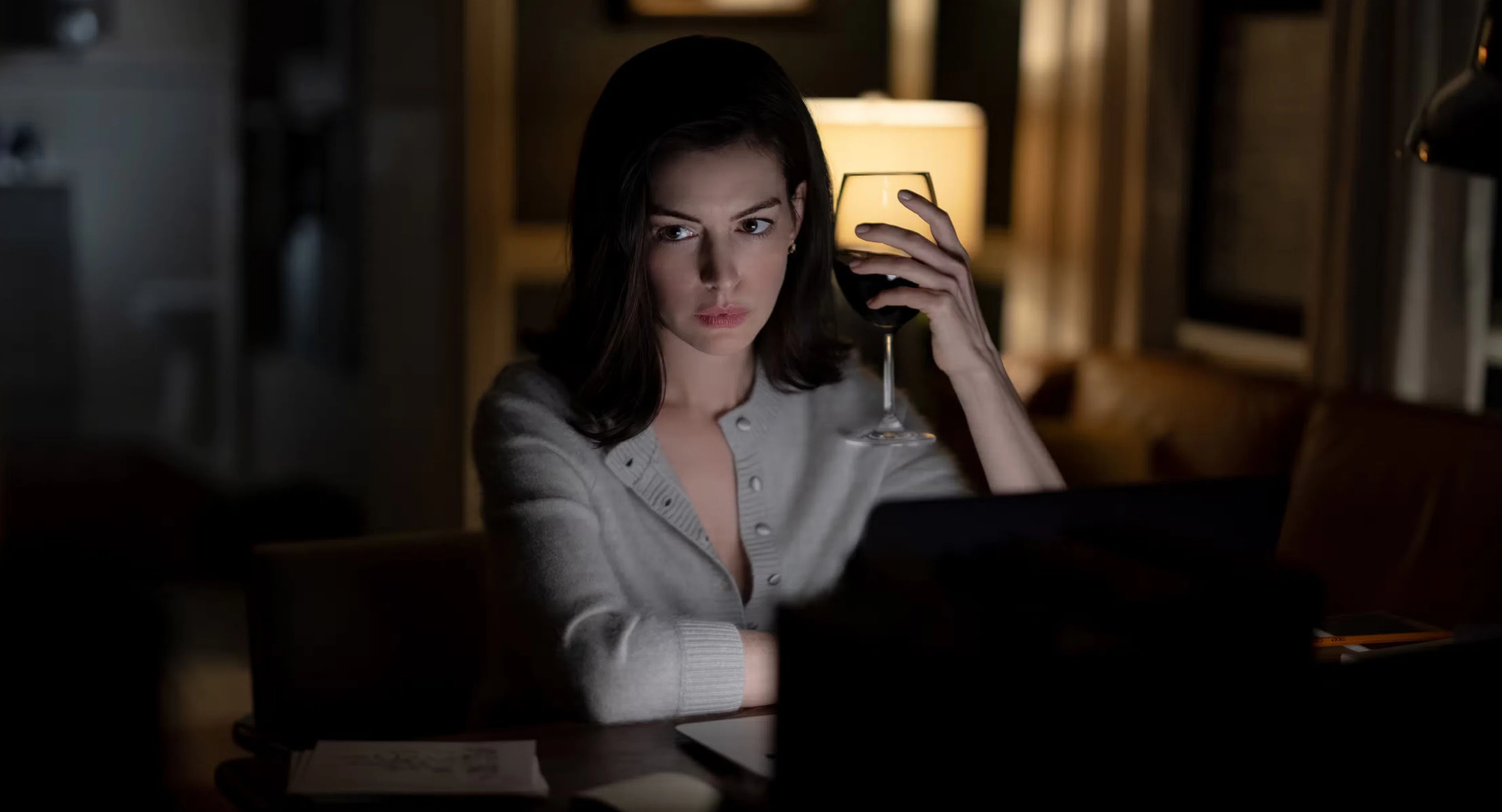
There is something almost fitting about Verity being such a miserable viewing experience. Colleen Hoover‘s novel has already inspired plenty of debate over whether its deliberately provocative blend of eroticism, psychological manipulation, domestic horror, and sensationalistic twists qualifies as compelling storytelling or simply lurid melodrama. Having now been translated to the screen by director Michael Showalter and screenwriter Nick Antosca, the material has somehow become even less convincing. Verity wants to be an erotic psychological thriller filled with ambiguity, danger, sexual tension, and shocking revelations, but it instead becomes a sluggish, tonally confused adaptation that mistakes increasingly outrageous developments for genuine suspense.
The book is also awful, so the movie being awful isn’t surprising at all. There is only so much that Michael Showalter, Nick Antosca, Anne Hathaway, Dakota Johnson, and Josh Hartnett can do with material this fundamentally ridiculous. The decision to keep adapting Colleen Hoover’s novels for the screen is becoming increasingly baffling. Rather than demonstrating why these stories have become popular, Verity mostly demonstrates how difficult it is to transform Hoover’s particular brand of sensationalism into something that works as cinema. Please stop making Colleen Hoover film adaptations.
Dakota Johnson plays Lowen Ashleigh, a struggling author who receives an opportunity that initially seems almost too good to be true. She is hired to continue a bestselling series belonging to Verity Crawford, a hugely successful writer who has been left unable to communicate following a catastrophic accident. Lowen moves into Verity’s Vermont home to study her notes and research the books she is supposed to finish, placing her in close proximity to Verity’s husband, Jeremy, and their surviving son, Crew.
There is plenty of potential in that setup. A writer entering the home of another writer, attempting to understand the mind behind an enormously successful series while becoming increasingly suspicious of the woman lying seemingly helpless nearby, could make for an excellent psychological thriller. The house itself could become a labyrinth of secrets, with Lowen gradually realizing that practically everyone around her might be hiding something.
Unfortunately, Verity has very little interest in subtlety. Instead of allowing its atmosphere to generate suspense, the screenplay continually throws new pieces of melodrama at the audience. The characters behave according to whatever the next plot twist requires, while the dialogue frequently sounds like it exists primarily to explain the story rather than develop believable human beings.
Dakota Johnson gives the film more effort than the screenplay deserves. Lowen is supposed to be the audience’s entry point into this bizarre household, and Johnson does her best to communicate the character’s growing discomfort and uncertainty. There are moments when she effectively sells Lowen’s uneasiness, particularly when the character starts questioning whether what she is experiencing is real.
The problem is that the screenplay doesn’t give Johnson enough material to transform Lowen into a compelling protagonist. Her decisions increasingly feel dictated by the requirements of the plot rather than by a recognizable personality. The character moves from professional opportunity to personal danger to romantic entanglement with such convenience that the emotional progression becomes difficult to take seriously.
Anne Hathaway, meanwhile, is clearly having fun with the opportunity to play a character who exists somewhere between glamorous literary celebrity and potentially terrifying presence. Hathaway is charismatic enough that her scenes have an energy the rest of the movie often lacks. Yet the film never quite figures out how to utilize her properly. Much of Verity’s appeal depends on uncertainty, but the screenplay treats ambiguity as an excuse to withhold information rather than as an opportunity to build psychological complexity.
Josh Hartnett is similarly underused. Jeremy is supposed to be the emotional center of the Crawford household, a grieving husband and father caught between his love for his family and the horrifying circumstances surrounding them. Hartnett brings some sincerity to the role, but the character is ultimately too thinly written to support the enormous amount of emotional weight the film places on him.
Calling Verity an erotic thriller creates certain expectations, but the movie doesn’t particularly excel as one. The sexual relationship between Lowen and Jeremy is obviously important to the story, yet the film struggles to make their attraction feel organic. Their romance is supposed to become increasingly complicated by the circumstances surrounding them, but it frequently feels like the screenplay is checking off another requirement from the novel.
There is a potentially fascinating idea underneath this relationship: Lowen is becoming emotionally involved with a man whose wife is still physically present in the house, while that same wife may or may not be aware of everything happening around her. That could produce an uncomfortable sense of voyeurism and guilt. Instead, Verity often treats the affair as conventional romantic drama before suddenly remembering that it is supposed to be a disturbing psychological thriller.
This tonal inconsistency is one of the film’s biggest problems. One scene wants to be erotic, another wants to be horrifying, another wants to be a domestic drama, and another wants to deliver a giant mystery-box revelation. These elements aren’t impossible to combine, but Verity rarely finds a rhythm that allows them to coexist naturally.
The central mystery should be the movie’s strongest weapon. Is Verity really incapable of communicating? What happened to her children? What does Jeremy know? Can Lowen trust the people around her? Those questions should gradually intensify until the audience feels trapped inside the same uncertainty as the protagonist.
Instead, the movie becomes increasingly dependent on twists that are designed to shock rather than resonate. The revelations are so extreme that they begin to undermine one another. Every time the story introduces another horrifying possibility, the previous development becomes less meaningful because the audience is simply waiting for the next outrageous piece of information.
That makes the movie feel less like a psychological thriller and more like an extended attempt to win a game of “what if we made this even crazier?” The characters are repeatedly placed in situations where a more believable person would react very differently, but the screenplay needs them to continue following the plot.
The result is suspense without tension. Verity constantly tells us that something terrible could be happening, but it rarely makes us genuinely afraid of what that something might be.
Michael Showalter has demonstrated elsewhere that he can balance comedy, romance, drama, and emotional material effectively, but Verity requires a much more controlled approach. The film needs an atmosphere of uncertainty from beginning to end. Instead, its presentation can feel strangely polished and detached from the ugliness of its subject matter.
The Vermont setting offers opportunities for claustrophobia and isolation, but the movie doesn’t fully exploit them. The house should feel increasingly oppressive as Lowen discovers more about the Crawford family. Instead, it often feels like an attractive backdrop for a series of increasingly ridiculous events.
Nick Antosca’s screenplay also struggles to make the characters’ psychology convincing. Psychological thrillers work when audiences understand why people behave irrationally, even when they disagree with their decisions. Here, too many choices feel like narrative conveniences.
Without spoiling the ending, Verity eventually embraces the kind of enormous reversal that makes the entire story deliberately uncertain. In theory, this is exactly the sort of conclusion that could elevate a psychological thriller. A good ambiguous ending can force audiences to rethink everything they have seen and leave them debating the characters’ motives long after the credits. Unfortunately, Verity hasn’t earned that ambiguity.
The problem isn’t that the ending refuses to provide a definitive answer. The problem is that the film hasn’t constructed a sufficiently convincing psychological foundation for either possibility to carry much weight. Ambiguity is only effective when both interpretations feel plausible and emotionally satisfying. Here, the uncertainty feels more like a way to avoid having to resolve the increasingly absurd plot. The ending therefore doesn’t make the film more interesting so much as underline how flimsy the entire narrative has been.
Perhaps the most frustrating thing about Verity is that there are talented people involved. Hathaway, Johnson, Hartnett, Showalter, and Antosca are all capable of considerably better work. There are interesting ideas buried somewhere underneath the lurid material, particularly concerning authorship, obsession, grief, marriage, manipulation, and the stories people tell about themselves. But Verity never transforms those ideas into anything substantial.
Instead, it relies on shock, sexual tension, melodrama, and increasingly implausible twists. The performances occasionally hint at a more interesting film, but the screenplay keeps dragging everything back toward sensationalism. The result is a psychological thriller that doesn’t generate enough psychological complexity, an erotic thriller that doesn’t generate enough chemistry, and a mystery that isn’t particularly mysterious.
And, yes, the source material deserves much of the blame. The book is also awful. Its reputation for controversy and outrageousness does not automatically make it compelling, and the film adaptation only reinforces the problems that were already present. If anything, Verity makes the case that some bestselling novels are popular for reasons that don’t necessarily translate to the cinema.
Verity is another disappointing Colleen Hoover adaptation that offers plenty of scandal but very little substance. Anne Hathaway and Dakota Johnson deserve better material, and audiences deserve psychological thrillers that understand that genuine suspense comes from character and atmosphere rather than simply stacking twist after twist.
Please stop making Colleen Hoover film adaptations.