Toy Story 5 – Film Review
Published June 19, 2026

Movie Details

There is a certain risk that comes with making a fifth Toy Story film. Every entry since the original has carried the weight of feeling like a conclusion, only to find another meaningful place to go. After the bittersweet farewell of Toy Story 4, the obvious question hanging over Toy Story 5 was whether this franchise still had something emotionally honest left to say—or whether it was simply revisiting familiar shelves and toy boxes because audiences would show up. Surprisingly, Toy Story 5 answers that question with confidence.
Directed by Andrew Stanton and written by Stanton with Kenna Harris, this newest chapter feels less like a victory lap and more like a thoughtful continuation of ideas the series has always explored: childhood changing shape, toys redefining purpose, and the uncomfortable realization that growing up doesn’t happen all at once—it happens in tiny moments that leave everyone scrambling to adapt.
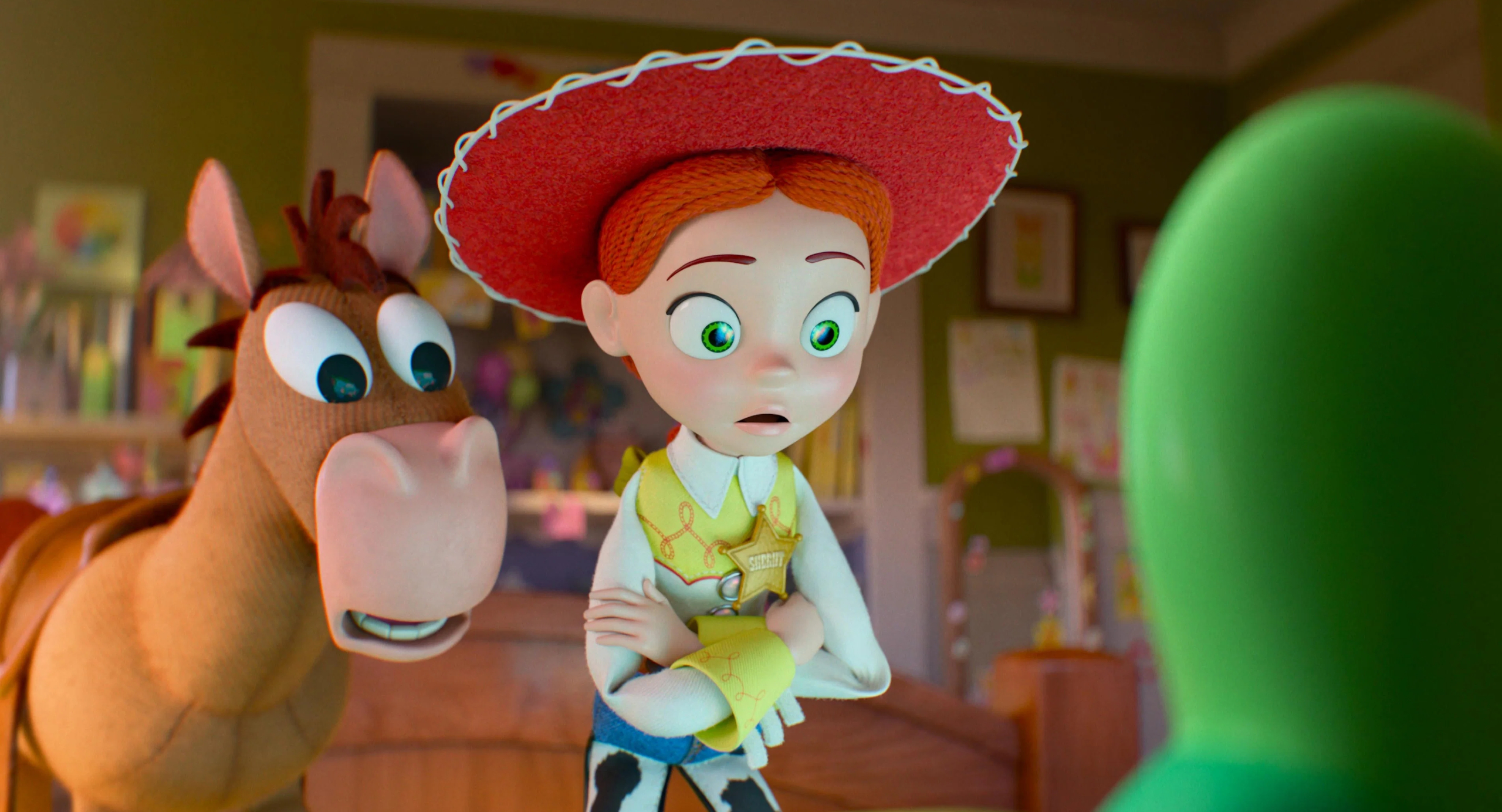
What makes this installment stand out is its decision to shift emotional focus toward Jessie. For years, she has been one of Pixar’s strongest supporting characters, but Toy Story 5 finally gives her the spotlight she deserves.
Two years after Woody’s departure, Bonnie is older and entering a stage that feels frighteningly recognizable: discovering technology, worrying about fitting in, and becoming increasingly aware of what other kids think. The introduction of Lilypad—“Lily,” a cheerful but misguided frog-themed tablet—could have easily become a simplistic “technology bad, toys good” storyline. Thankfully, the film is smarter than that.
Lily is not presented as evil. Instead, she is designed to help Bonnie connect with others and misunderstands what friendship actually means. Her attempts to optimize Bonnie’s social life become increasingly invasive and controlling, creating one of the franchise’s more interesting conflicts. Rather than making screens the enemy, Toy Story 5 argues that connection cannot be automated.
That thematic choice gives Jessie enormous emotional weight. Now acting as Bonnie’s sheriff, she feels responsible not only for protecting the toys but also for preserving Bonnie’s sense of imagination. Joan Cusack delivers perhaps her best performance in the franchise here—funny, energetic, vulnerable, and deeply sincere.
Jessie’s journey becomes one of self-worth. As Bonnie becomes distant and external pressures mount, Jessie starts questioning whether she still matters. That emotional uncertainty gives the movie some unexpectedly moving moments.
One of the film’s greatest strengths is that it remembers how to make feelings emerge naturally.
There are several sequences throughout Toy Story 5 that land with surprising force—not because they are overly dramatic, but because they understand nostalgia without exploiting it. The screenplay repeatedly returns to the idea that being forgotten is not the same thing as being meaningless.
Without getting into spoilers, Jessie’s encounters outside Bonnie’s world lead to some of the film’s strongest scenes and create a moving reflection on how people carry childhood experiences forward in ways they may never consciously recognize.
These moments feel distinctly Toy Story: emotional without becoming sentimental. Woody’s return is handled with similar care.
Tom Hanks immediately slips back into the role with effortless warmth. Rather than undoing the ending of the previous film, Woody’s presence reinforces how relationships evolve. He isn’t reclaiming leadership—he’s supporting someone else through uncertainty.
Tim Allen’s Buzz also gets stronger material than he did previously. His interactions with the stranded Buzz unit provide some of the film’s funniest and most unexpectedly thoughtful moments. The story mines comedy from their demo-mode confusion while also using them to revisit questions about identity and purpose.
Technically, Toy Story 5 is stunning. Pixar continues to push stylized realism in ways that feel invisible until you stop and notice them.
The textures throughout Bonnie’s room, the softness of outdoor lighting, reflective surfaces on Lily, and the weathered details of older environments create an incredible sense of place. The contrast between tactile, worn-in toys and sleek modern devices visually supports the story’s themes without drawing attention to itself. The animation of facial expressions deserves special mention.
Jessie’s emotional shifts are rendered with extraordinary subtlety. Tiny movements in her eyes and posture communicate disappointment, hope, embarrassment, and determination in ways animation rarely attempts.
The movie also understands scale better than many recent family films. Action scenes remain readable and playful instead of chaotic. Backing all of this is another beautiful score from Randy Newman.
Newman’s music continues to define the emotional identity of Toy Story. His themes here lean softer and more reflective than previous installments, but when the score swells during the film’s biggest emotional moments, it reminds you why his work remains inseparable from this series.
Greta Lee gives Lily a surprisingly layered performance. Lily could have been a one-note antagonist, but Lee injects enough curiosity and sincerity into the role that the character becomes sympathetic even while making increasingly questionable decisions.
Craig Robinson’s Atlas and Shelby Rabara’s Snappy are enjoyable additions, bringing personality without overwhelming the established cast. Mykal-Michelle Harris also leaves a strong impression as Blaze, helping the film avoid reducing childhood friendship to a simple lesson.
There is, however, one notable weak point. Conan O’Brien’s Smarty Pants never fully comes together.
Despite arriving with the promise of eccentric comic relief, the character feels underwritten compared to the rest of the newcomers. Several jokes land, but Smarty Pants rarely develops beyond delivering quirky interruptions and exposition. In a movie where even a tablet receives meaningful emotional complexity, this character feels oddly unfinished. It is not enough to derail the film, but it stands out more because nearly everything else works so well.
What ultimately makes Toy Story 5 succeed is that it does not chase bigger stakes. It stays focused on emotions children and adults both understand: feeling replaced, trying too hard to help, worrying that growing up means leaving parts of yourself behind.
Instead of repeating old endings, it finds a new angle on what it means to keep moving forward. Few franchises reach a fifth installment and still feel capable of surprising people emotionally. Toy Story 5 does.
It is funny, visually extraordinary, emotionally satisfying, and anchored by exceptional voice performances—especially Joan Cusack’s standout turn as Jessie. Pixar has made sequels that felt unnecessary before. This is not one of them.