Don’t Say Good Luck – Film Review
Published August 17, 2026

Movie Details

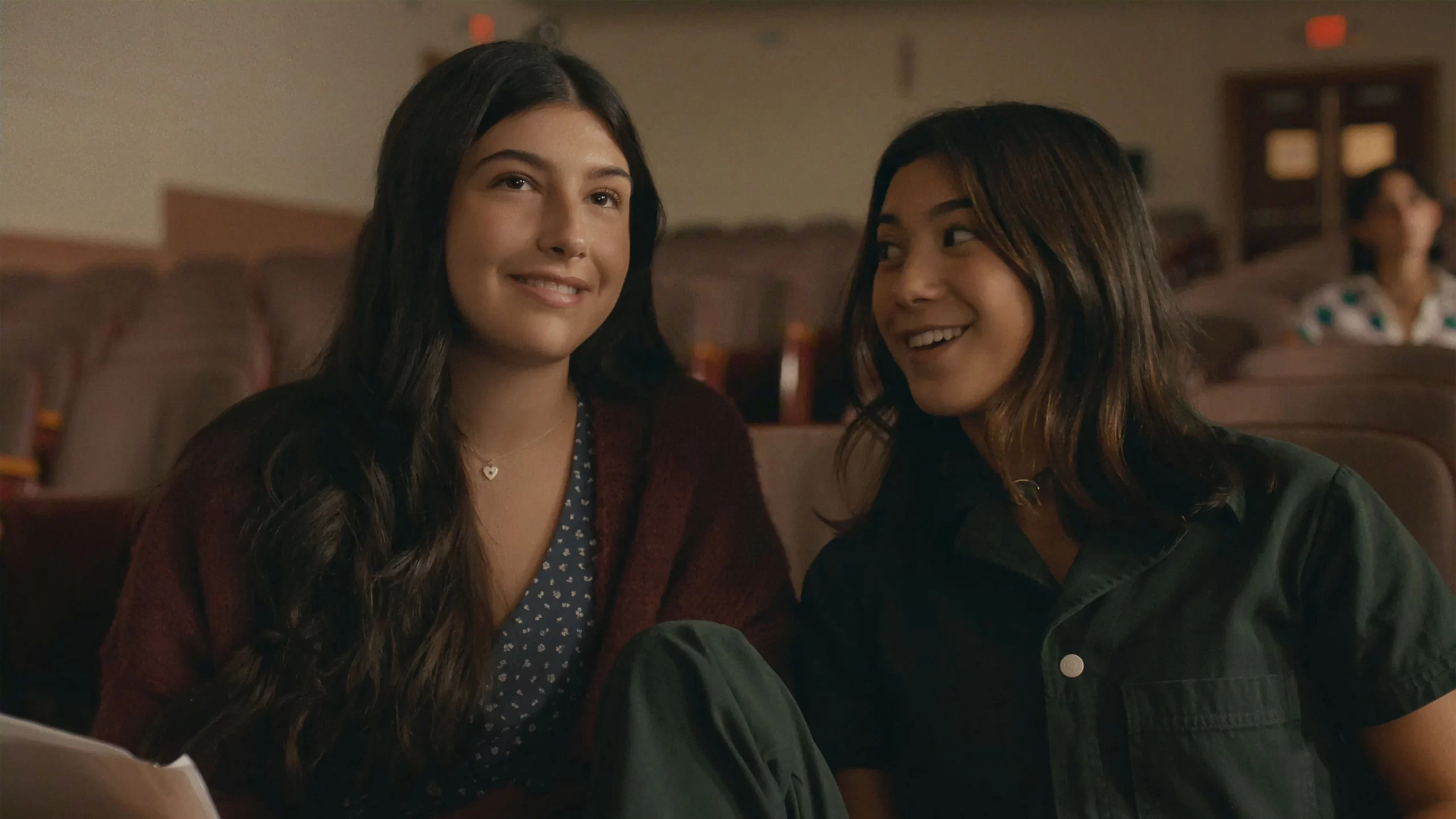
There is something inherently powerful about a coming-of-age story that understands growing up is not always a gradual process. Sometimes, childhood disappears in an instant, replaced by circumstances that force someone to confront adulthood before they are ready. Julia Hart‘s Don’t Say Good Luck captures that painful transition with remarkable sensitivity, using the world of high school theater as a backdrop for a story about family, grief, ambition, and the terrifying realization that the people you love most are not going to be around forever. It is a musical teen drama that knows exactly how to balance youthful exuberance with devastating sadness, and while it occasionally leans a little too heavily into familiar emotional territory, the sincerity of the filmmaking makes it difficult to resist.
The film follows Sophie Birenbaum (Sunny Sandler), a 16-year-old theater kid who is preparing to take on the leading role in her high school’s production of Waitress. For Sophie, the musical is supposed to be the biggest thing happening in her life. She is focused on rehearsals, choreography, singing, friendships, and the exhilarating possibility of finally getting the spotlight she has dreamed about. Then her mother, Elizabeth (Melanie Lynskey), is diagnosed with terminal cancer, and suddenly the stage drama feels insignificant compared with what is happening at home.
What makes the premise work so well is that Don’t Say Good Luck does not treat Sophie’s theater ambitions as trivial simply because something more serious has entered her life. Instead, it understands that both things can matter simultaneously. Sophie can be devastated by her mother’s illness and still desperately want to nail her big musical number. She can feel guilty about being excited about something while her family is suffering. She can be angry, frightened, selfish, loving, and confused all at once. That emotional contradiction gives the movie much of its authenticity.
The biggest surprise is Sunny Sandler, who carries the film with an impressive combination of vulnerability and charisma. Sophie could easily have been written as the standard “theater kid” stereotype: overly dramatic, relentlessly enthusiastic, and incapable of discussing anything without relating it to Broadway. Instead, Sandler gives her an interiority that makes her feel like a genuine teenager.
There is a fascinating awkwardness to Sophie’s attempts to process what is happening. She does not suddenly become mature because the plot demands it. She remains sixteen. She makes mistakes. She sometimes says the wrong thing. She gets frustrated with her father, Ted (Max Greenfield), and struggles to communicate with Elizabeth. Sandler understands that grief does not automatically make someone wiser; sometimes it simply makes them confused.
Her singing voice is another major strength. Sandler has a remarkably expressive vocal presence, and the musical sequences are among the film’s highlights. Her performances do not feel like interruptions to the narrative but extensions of Sophie’s emotional state. When she sings confidently, we understand the exhilaration she gets from performing. When that confidence begins to crack, the musical numbers become considerably more intimate. There is a lovely contrast between the polished spectacle of the stage and the messy emotions happening behind the curtain.
The supporting cast is equally excellent. Melanie Lynskey brings tremendous warmth to Elizabeth, resisting the temptation to turn the dying mother into nothing more than a source of sadness. Her chemistry with Sandler is particularly affecting. Their relationship feels lived-in, which makes the prospect of losing it so painful. Max Greenfield is similarly effective, bringing a mixture of nervous humor and genuine heartbreak to Ted.
Stephanie Beatriz makes an impression as Ms. Parker, Sophie’s teacher, while Jack Champion gives the teenage side of the story some welcome energy. The adult ensemble, including Bebe Neuwirth and Steve Buscemi, adds personality without overwhelming the central family narrative.
One of the smartest things about Don’t Say Good Luck is its willingness to be funny. A movie about a teenager watching her mother die could become relentlessly miserable, but Hart understands that real families do not stop joking simply because something terrible has happened.
The comedic moments are often wonderfully awkward. Sophie’s theatrical personality naturally creates opportunities for humor, particularly when her passion for performing clashes with the emotional reality of her home life. Some of the funniest scenes come from the tension between the absurdity of high school theater and the seriousness of what Sophie is experiencing outside rehearsal.
That humor is essential because it gives the emotional moments room to breathe. If every scene were designed to make the audience cry, the movie would eventually become exhausting. Instead, the laughs make the sadness hit harder.
And yes, I cried. More than once.
Hart understands that the most emotionally powerful moments do not necessarily require enormous speeches. Sometimes a glance, a pause, or a familiar interaction between mother and daughter can do more damage than a dramatic monologue. The film builds emotional resonance gradually, allowing the audience to become invested in these people before asking us to confront the possibility of losing one of them.
Bryce Fortner‘s cinematography is another standout. The film has a warm, intimate visual style that beautifully contrasts the bright artificiality of the theater with the quieter spaces of Sophie’s home life. The stage sequences have an energetic theatricality, while the family scenes are often more restrained and naturalistic.
That contrast is important. The theater represents the world Sophie wants to control. There are rehearsals, scripts, blocking, costumes, lighting cues, and predetermined endings. Her mother’s illness represents precisely the opposite: something frightening and unpredictable that cannot be rehearsed.
Fortner’s camera frequently emphasizes this distinction without becoming overly showy. The imagery is emotionally expressive but never feels like it is begging the audience to notice how beautiful it is. There is a gentle visual intimacy throughout the film that complements Hart’s storytelling.
The staging of the musical numbers is particularly effective. Rather than simply presenting songs as standalone performances, Hart uses them to reveal Sophie’s changing emotional state. The music becomes another language through which she processes things she cannot articulate in conversation.
The strongest thematic idea in Don’t Say Good Luck is the relationship between performance and reality. Sophie spends so much of her life pretending to be someone else that she eventually has to figure out how to simply be herself.
That idea gives the Waitress production additional significance. Sophie is playing a character whose life is shaped by difficult circumstances, while simultaneously dealing with circumstances that she cannot escape once the curtain closes. Theater becomes both an escape and a coping mechanism.
The film also explores the complicated emotions that accompany anticipatory grief. Sophie does not simply mourn her mother. She has to watch her mother change, while simultaneously trying to preserve ordinary teenage experiences. That creates an emotional conflict that the screenplay handles with surprising maturity.
If there is a weakness, it is that the movie occasionally relies on familiar beats from the “terminal illness” drama playbook. Certain emotional developments are predictable, and some supporting characters feel less developed than they could have been. A few scenes also push the sentimentality slightly too far. The movie is at its best when it trusts its characters rather than when it emphasizes the intended emotional response.
Nevertheless, these flaws are relatively minor compared with the strength of the overall execution.
The final stretch of Don’t Say Good Luck is where everything comes together. Sophie’s journey is not about discovering some magical lesson that makes grief easier. It is about learning that love and loss can exist alongside one another.
The movie recognizes that growing up sometimes means accepting things you desperately wish you could change. Sophie cannot control what happens to her mother. She cannot make her family situation normal again. What she can do is continue living, continue performing, continue loving, and eventually understand that moving forward is not the same thing as leaving someone behind.
That is what makes the film’s emotional conclusion so effective. It does not offer an easy solution. Instead, it offers something more honest: acceptance without pretending that acceptance means the pain disappears.
Don’t Say Good Luck is a heartfelt, beautifully performed, and frequently moving musical drama. Sunny Sandler gives the film its emotional center, delivering a terrific performance while showcasing an impressive singing voice. Melanie Lynskey is wonderful, the supporting cast is consistently strong, and Hart’s direction maintains a delicate balance between humor and heartbreak. Bryce Fortner’s cinematography gives the film an appropriately intimate visual identity, while the musical sequences provide some of its most memorable moments.
It may occasionally wander into familiar territory, and some of its emotional beats are easy to anticipate, but the sincerity is impossible to dismiss. This is a movie about theater, but it is ultimately about the moments between performances—the conversations, arguments, laughs, embraces, and silences that make a family feel like home.
Don’t Say Good Luck understands that sometimes the hardest part of growing up is realizing that you cannot protect the people you love from everything. Sometimes all you can do is cherish the time you have, find reasons to laugh through the tears, and keep going when the curtain finally falls.