The End of Oak Street – Film Review
Published August 15, 2026

Movie Details

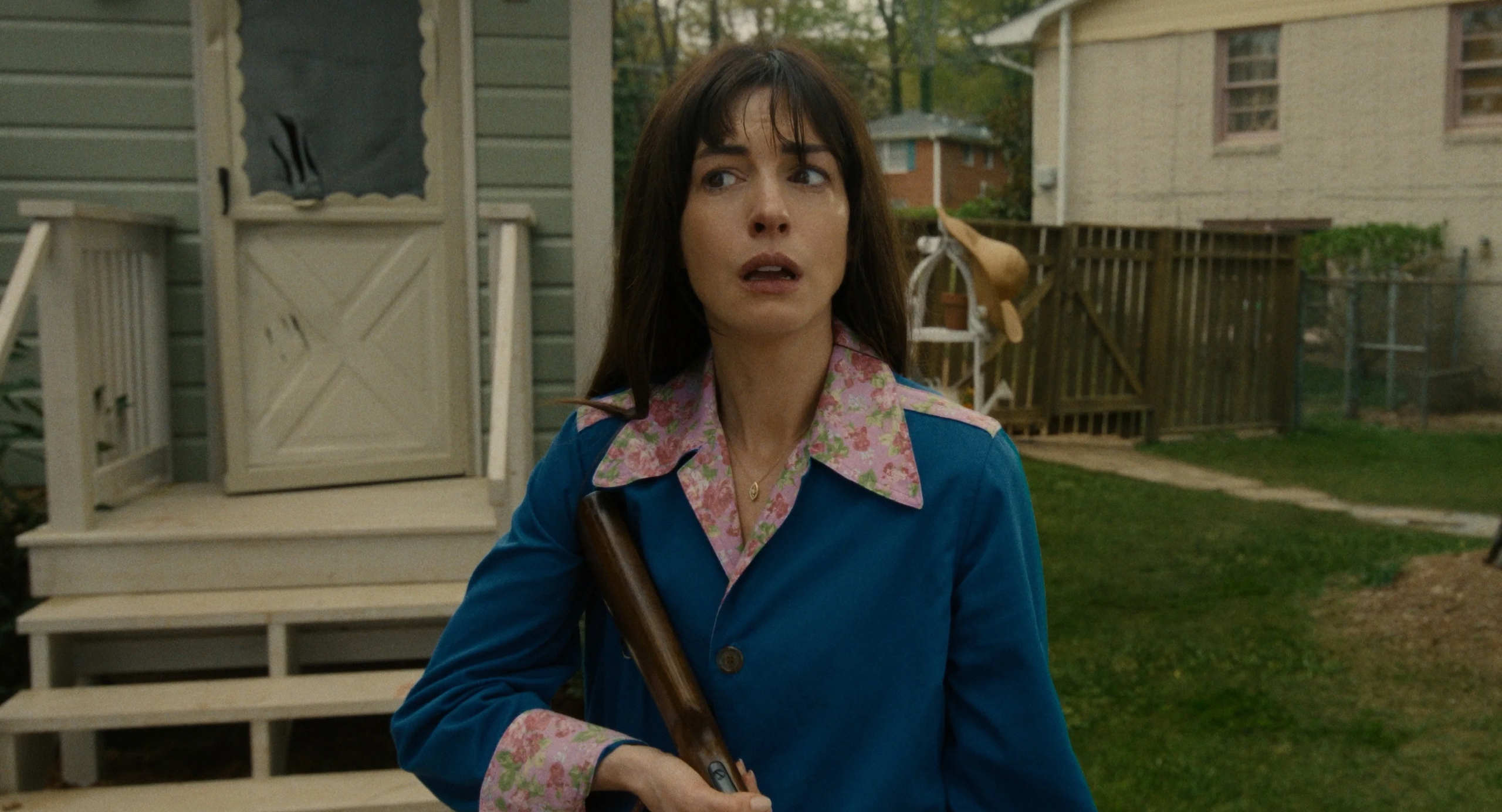
David Robert Mitchell’s The End of Oak Street is the kind of science-fiction survival film that understands that spectacle only works when there are compelling people caught in the middle of it. The premise is immediately irresistible: an ordinary suburban neighborhood in 1982 is mysteriously transported millions of years into the prehistoric past, forcing its residents to survive alongside creatures that have been extinct for ages. Yet rather than treating the concept as a simple excuse for dinosaur mayhem, Mitchell builds the movie around a fractured family, gradually turning a bizarre science-fiction mystery into an unexpectedly intimate story about marriage, parenthood, regret, and second chances.
The result is a gripping and frequently atmospheric thriller that occasionally struggles with its pacing and characterization but remains consistently imaginative. Mitchell, who has previously demonstrated a fascination with strange phenomena, ominous environments, and characters whose everyday lives are suddenly invaded by the inexplicable, is particularly well suited to this material. He approaches the premise with patience, allowing the mystery surrounding Oak Street to develop gradually instead of immediately explaining everything. That decision gives the opening portion an unsettling quality, as seemingly insignificant details begin to suggest that something is profoundly wrong.
The 1982 setting is one of the film’s strongest creative choices. Mitchell does not simply use the period as window dressing. The suburban environment feels deliberately ordinary, filled with the kinds of domestic concerns that would normally seem completely disconnected from science fiction. Denise Platt is an aspiring novelist struggling with uncertainty about her marriage, while Greg has secretly taken a pizza-delivery job after losing his regular employment. Their children, Audrey and Brian, have their own concerns and relationships, giving the family a believable sense of history before the extraordinary events begin.
Anne Hathaway gives Denise a wonderfully grounded performance. She plays her as intelligent, observant, and emotionally exhausted without turning her into a stereotypical “strong mother” character. Denise is frightened by what happens, but her fear never prevents her from thinking. Hathaway is especially effective in the quieter moments, where Denise’s dissatisfaction with her life gradually becomes intertwined with her determination to protect her family.
Ewan McGregor is equally strong as Greg, giving the character a combination of warmth, insecurity, and desperation. His relationship with Denise is never presented as effortlessly functional. There is genuine emotional distance between them, and the film uses their marital problems to create a second form of suspense. Even before dinosaurs begin roaming through the neighborhood, Denise and Greg are already dealing with the possibility that their family could fall apart. The prehistoric crisis therefore forces them to confront personal problems they might otherwise have continued avoiding.
One of the film’s most effective sequences of storytelling occurs before the neighborhood is transported. The strange prehistoric plant appearing in a neighbor’s yard, the unidentified animal remains, and reports of increased solar activity initially seem like disconnected oddities. Mitchell wisely allows them to remain unexplained for a while. Denise’s discovery of the plant at the library is particularly effective because it transforms something mundane into something deeply unsettling.
The movie’s science-fiction ideas are deliberately mysterious without becoming incomprehensible. The possibility of wormholes provides a compelling explanation for what has happened, but Mitchell is less interested in turning The End of Oak Street into a hard-science-fiction exercise than in exploring the terrifying implications of suddenly being somewhere humans were never meant to exist.
That approach also makes the dinosaurs more frightening. They are not merely attractions waiting for the characters to encounter them. Their presence completely alters the rules of the environment. A suburban street, which previously represented familiarity and safety, becomes a dangerous wilderness. Houses stop feeling like permanent shelters. Cars become temporary hiding places. Familiar spaces are transformed into potential traps.
Hathaway provides the emotional anchor, but the younger members of the cast make a strong impression as well. Maisy Stella brings considerable maturity to Audrey, portraying her as someone who can understand the seriousness of the situation while still behaving like a teenager. Christian Convery similarly gives Brian an appealing vulnerability, and the relationship between the siblings feels natural rather than artificially sentimental.
Jordan Alexa Davis is also memorable as Jeannette, whose introduction adds another emotional dimension to the story. She is not simply another person for the family to protect; she has her own grief and motivations. The film uses her presence to reinforce one of its recurring ideas: survival depends upon cooperation, even among people who barely know one another.
The performances are especially important because Mitchell keeps the film focused on the characters rather than constantly cutting away to showcase the creatures. There are certainly opportunities for larger-scale spectacle, but the movie understands that a dinosaur is more frightening when the audience is experiencing the danger from the perspective of vulnerable human beings.
Visually, The End of Oak Street is frequently gorgeous. Mitchell creates a striking contrast between the clean geometry of suburban America and the enormous, untamed prehistoric world surrounding it. The transition between those environments is one of the movie’s defining images: manicured lawns and familiar houses suddenly existing beside an ecosystem that predates humanity by millions of years.
The film also benefits from Mitchell’s preference for atmosphere. There is a sense of quiet dread hanging over many scenes, even when nothing immediately threatening is happening. The white flashes, changing atmospheric pressure, unexplained phenomena, and sudden appearances of prehistoric life create the impression that reality itself has become unstable.
The dinosaur sequences are effective without overwhelming the movie. Mitchell understands that restraint can be more frightening than constant exposure. The creatures are often glimpsed in ways that preserve their sense of scale and unpredictability, allowing the audience to imagine what might be lurking just beyond the frame.
Despite its strengths, The End of Oak Street is not flawless. Its deliberate pacing occasionally becomes frustrating, particularly in the middle section, where the story briefly feels like it is circling its central mystery rather than developing it. The movie’s patience generally works, but there are moments when the narrative could have moved more efficiently.
Some supporting characters also receive less development than they deserve. The family receives considerable attention, but several residents of Oak Street function primarily as plot devices. Given the intriguing premise, it would have been fascinating to see more perspectives on the catastrophe and how different people responded to being transported into the prehistoric world.
The science-fiction mechanics are another mixed element. Their ambiguity contributes to the movie’s atmosphere, but viewers looking for a detailed explanation of exactly how the phenomenon works may find the answers somewhat limited. Mitchell is clearly more interested in emotional and thematic consequences than in constructing an elaborate scientific mythology.
Still, these shortcomings rarely undermine the overall experience.
What ultimately makes The End of Oak Street work is that the dinosaurs are not really the film’s most important threat. The movie is interested in what happens when people are stripped of the routines and assumptions that normally define their lives. Denise and Greg cannot postpone difficult conversations anymore. Their children cannot rely on the ordinary protections of suburban life. Everyone must decide what matters when the familiar world disappears.
The 1982 setting reinforces that theme beautifully. This is a story about people who suddenly find themselves outside their own time, but it is also about people who have emotionally drifted away from one another. The prehistoric landscape becomes a metaphorical extension of that alienation.
Mitchell’s film also avoids becoming excessively cynical. Even amid the terror, there is room for compassion, sacrifice, and reconciliation. The survival story works because the characters are given reasons to care about one another beyond simply staying alive.
The End of Oak Street is an ambitious, atmospheric, and surprisingly emotional science-fiction survival film. David Robert Mitchell takes an undeniably entertaining high-concept premise and gives it considerably more substance than a straightforward dinosaur thriller would require. Anne Hathaway and Ewan McGregor anchor the movie with performances that make the family’s struggles feel as important as the prehistoric danger surrounding them, while Maisy Stella, Christian Convery, and Jordan Alexa Davis add convincing emotional weight to the ensemble.
Its pacing occasionally drags, some supporting characters could have been more developed, and its science-fiction explanations are intentionally less comprehensive than some viewers might expect. Nevertheless, the movie’s atmosphere, performances, visual imagination, and unusual blend of domestic drama and prehistoric survival make it thoroughly worthwhile.
Rather than simply asking what would happen if a suburban neighborhood suddenly landed in the age of dinosaurs, The End of Oak Street asks what people would discover about themselves when everything familiar vanished. The answer is occasionally frightening, frequently moving, and consistently compelling. It may not completely satisfy every aspect of its ambitious premise, but it is a memorable and thoughtfully constructed survival thriller.