The Dog Stars – Film Review
Published August 31, 2026

Movie Details

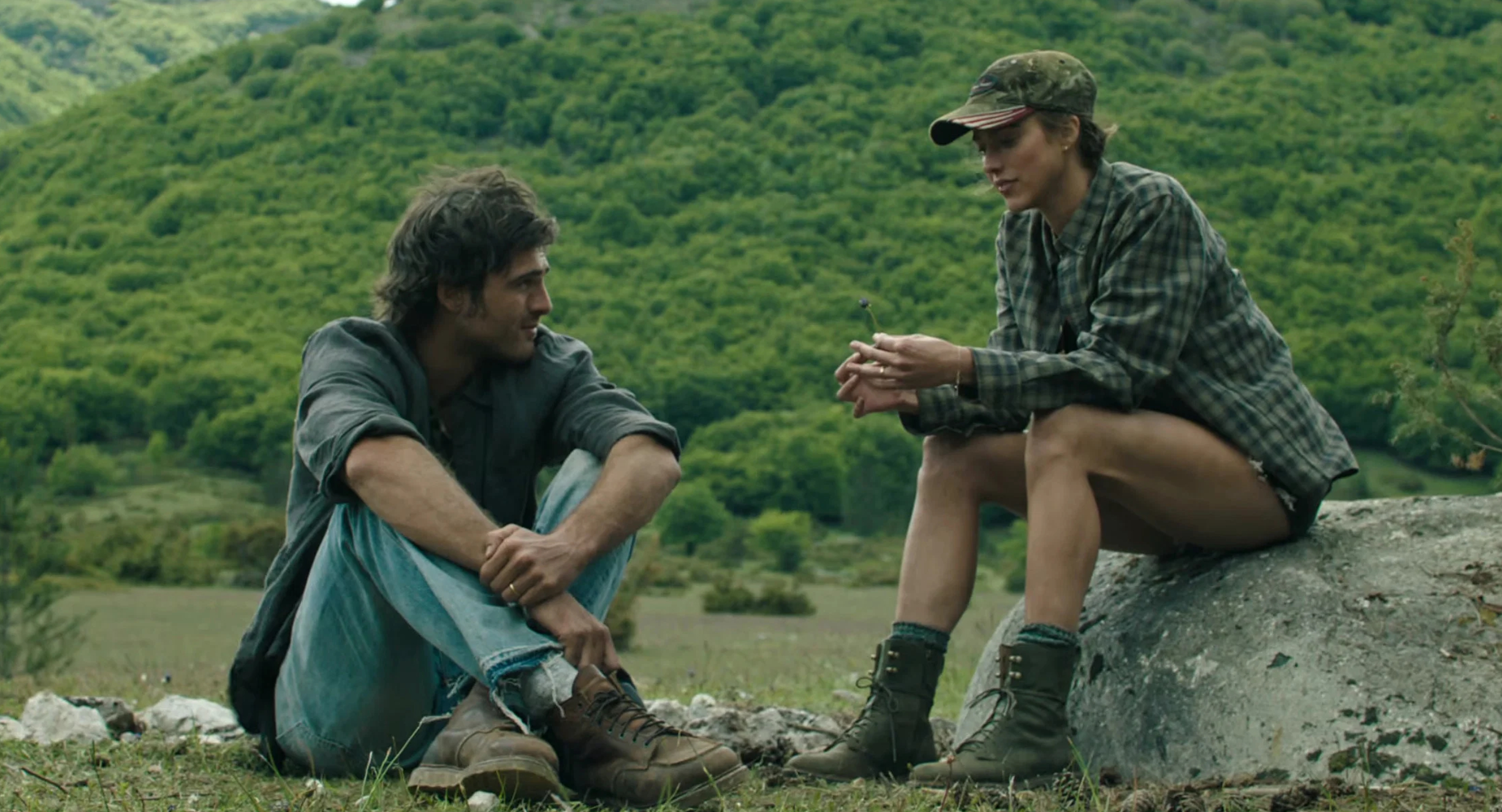
Ridley Scott has spent much of his career exploring humanity at the edge of collapse. From the dystopian futurism of Blade Runner to the brutal historical landscapes of Gladiator and the claustrophobic terror of Alien, Scott has repeatedly demonstrated an interest in characters struggling against environments that seem determined to destroy them. The Dog Stars, adapted from Peter Heller’s acclaimed 2012 novel by screenwriter Mark L. Smith, initially appears to be another ideal opportunity for the filmmaker to explore that territory. Set years after a devastating global pandemic has nearly wiped out humanity, the film follows a small group of survivors attempting to navigate a world where civilization has disappeared and trust has become almost as valuable as food, fuel, or ammunition.
Unfortunately, while The Dog Stars contains plenty of ingredients for a compelling post-apocalyptic thriller, the finished film struggles to transform its intriguing premise into a consistently gripping experience. There are stretches of haunting atmosphere, impressive landscapes, strong performances, and bursts of tense action, but the film frequently feels emotionally distant and dramatically underdeveloped. Scott’s visual craftsmanship remains evident throughout, yet the story never quite achieves the haunting intimacy or philosophical weight that its premise promises.
One of the film’s strongest qualities is its depiction of a world that has been emptied of people. Rather than presenting the apocalypse as a nonstop spectacle of destruction, The Dog Stars is primarily concerned with what happens afterward. The pandemic is largely something that exists in the characters’ memories and in the abandoned remnants of the society that existed before it.
That approach gives the film some of its best moments. Empty roads, abandoned buildings, deserted airports, and enormous stretches of Colorado wilderness create a haunting sense of absence. Scott understands how to make landscapes feel imposing, and the cinematography gives the post-pandemic setting a simultaneously beautiful and threatening quality.
The decision to emphasize isolation rather than constant destruction is particularly effective. Hig’s existence is defined by routine: maintaining his home, flying his plane, gathering supplies, and trying to preserve whatever fragments of normal life remain. The quietness can be hypnotic.
Unfortunately, the film sometimes confuses quietness with depth. Long stretches of The Dog Stars move at such a deliberate pace that the atmosphere begins to overwhelm the narrative. The world looks fascinating, but the screenplay does not always give us enough compelling material to discover within it.
Jacob Elordi delivers a restrained performance as Hig, and his subdued approach suits a character who has been profoundly changed by years of survival. Hig is not a traditional action hero. He is compassionate, introspective, and reluctant to embrace the brutality that has become necessary for survival.
That distinction is important because Josh Brolin‘s Bangley represents almost the opposite philosophy. Bangley is suspicious, aggressive, heavily armed, and willing to make difficult decisions without hesitation. Their relationship is arguably the film’s most interesting dynamic.
Brolin brings considerable charisma to Bangley without making him conventionally likable. His character’s worldview is harsh, but it comes from years of experience in a world where assuming the worst can mean staying alive. The tension between Bangley and Hig provides the film with a fascinating moral argument: how much humanity can someone afford to retain when civilization has collapsed?
The problem is that the screenplay does not explore this conflict as deeply as it could. There are moments when Hig and Bangley’s opposing philosophies feel genuinely compelling, but the film frequently moves away from their relationship just when it becomes most interesting.
Margaret Qualley brings warmth and vulnerability to Cima, who becomes an important figure in Hig’s journey. Qualley gives the character an appealing sense of intelligence and resilience, and her chemistry with Elordi is convincing enough to make their developing relationship feel sincere.
However, the romantic element is one of the areas where the screenplay feels somewhat rushed. Hig and Cima’s relationship is expected to carry substantial emotional significance, yet the film does not always give them enough time together to make their connection as powerful as it needs to be.
Guy Pearce is similarly effective as Pops, bringing a weathered authority to the role. Pearce understands how to communicate the character’s history without excessive exposition. His presence also adds another dimension to the film’s exploration of survival, family, and responsibility.
Allison Janney, meanwhile, makes an impression as Darlene. She has the kind of commanding screen presence that makes even relatively restrained scenes more compelling. Her character introduces one of the film’s most unsettling ideas: the possibility that rebuilding society does not necessarily mean rebuilding it in a morally better form.
For a film marketed as an action thriller, The Dog Stars is surprisingly patient. There are certainly moments of violence and danger, but Scott is more interested in anticipation than constant spectacle.
When the action does arrive, the contrast can be effective. Sudden threats feel particularly frightening because the film has spent so much time establishing the characters’ isolated existence. The danger is not abstract; it can arrive without warning.
Still, the action sequences vary considerably in effectiveness. Some are tense and efficiently constructed, while others feel strangely detached. Scott knows how to stage violence, but the emotional stakes do not always match the technical execution.
This becomes particularly frustrating because the premise offers so many opportunities for suspense. A lone pilot flying through an abandoned America, unsure who might be listening to his radio transmissions, is practically built for paranoia. The film occasionally captures that feeling but does not sustain it consistently.
The greatest disappointment is that The Dog Stars repeatedly approaches interesting thematic territory without fully exploring it.
The film asks important questions about what remains when civilization disappears. Is survival enough? What separates civilization from barbarism? How should people treat strangers when resources are scarce? Can kindness survive in a world built around fear?
These ideas are present throughout the story, but they often feel like background material rather than the driving force of the narrative.
The film is also interested in grief and memory. Hig’s attachment to the life he lost gives the story an emotional foundation, while his bond with Jasper provides some of the film’s most affecting material. The dog is more than a companion; Jasper represents loyalty, innocence, and a connection to the world that existed before everything changed.
Yet some of these emotional elements are introduced with considerably more impact than they are developed. The film wants the audience to feel the weight of Hig’s losses, but its deliberately detached storytelling can make those moments feel more intellectual than deeply moving.
There is plenty to admire in The Dog Stars. The performances are solid, the production design is convincing, and Scott’s command of visual scale remains impressive. The film’s Colorado setting gives it an identity distinct from many post-apocalyptic stories, and its emphasis on solitude occasionally produces genuinely haunting cinema.
But the movie never completely balances its competing ambitions. It wants to be a philosophical meditation on humanity, a survival thriller, a character drama, and a love story. Instead of synthesizing those elements, it sometimes feels like it is moving between them.
The biggest issue is pacing. At nearly every turn, the film seems to be deliberately slowing itself down, presumably to create atmosphere and contemplation. Sometimes that works beautifully. Other times, it drains scenes of urgency. A post-apocalyptic story does not necessarily need to move quickly, but it does need to make its stillness feel purposeful.
Ultimately, The Dog Stars is a frustratingly uneven film. There is enough quality here to prevent it from becoming a failure, and Scott’s visual sensibilities give the movie an unmistakable cinematic identity. Elordi, Brolin, Qualley, Pearce, and Janney all contribute worthwhile performances, while the devastated Colorado landscapes are frequently spectacular.
But the film never reaches the emotional or thematic heights suggested by its premise. It is too slow to work consistently as a thriller, too emotionally restrained to become a devastating character drama, and too familiar in its post-apocalyptic ideas to completely distinguish itself from the many stories that have explored similar territory.
The Dog Stars has the bones of a much stronger film. Its world is compelling, its cast is capable, and its director is undeniably skilled. What is missing is the sense of urgency and emotional specificity necessary to make that world truly unforgettable.