Resident Evil – Film Review
Published September 18, 2026

Movie Details

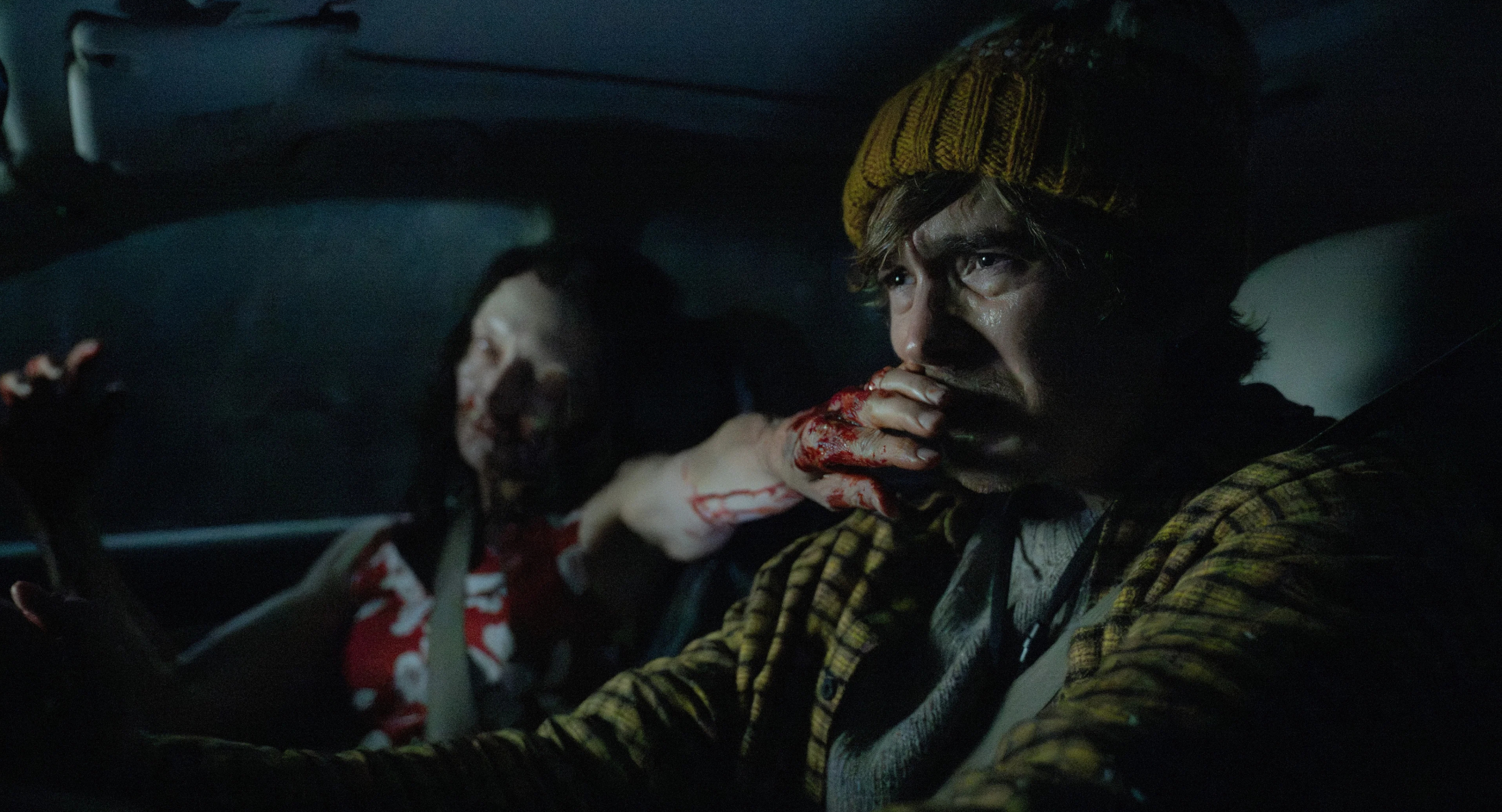
There have been plenty of attempts to bring Resident Evil back to the big screen, but few have understood what makes Capcom’s video game franchise so enduring quite like Zach Cregger’s Resident Evil. As the second reboot and eighth overall film in the franchise, the movie could have easily become another disposable video game adaptation trying to imitate the games without understanding them. Instead, Cregger and co-writer Shay Hatten have crafted a genuinely frightening, relentlessly entertaining survival-horror experience that understands the importance of atmosphere, tension, grotesque creature design, and the simple terror of being completely outmatched.
Set during events that parallel Resident Evil 2, the film follows Bryan, played brilliantly by Austin Abrams, a medical courier whose ordinary workday becomes a nightmare when he is tasked with delivering a mysterious package to Raccoon General Hospital. What begins as an unusual delivery quickly plunges him into the middle of a horrifying viral outbreak. Bryan isn’t an action hero who immediately knows how to handle himself in a crisis. He is an ordinary person thrown into an extraordinary situation, and that distinction gives the movie much of its emotional power.
Cregger’s direction is perhaps the film’s greatest strength. Following the success of Barbarian, he demonstrates an impressive understanding of how to manipulate an audience’s expectations. He knows when to show something and, more importantly, when not to. The movie constantly creates the sensation that something terrible could be waiting just outside the frame. Dark corridors, abandoned buildings, underground passages, and increasingly dangerous environments become sources of tension rather than merely locations where the next action sequence takes place.
That emphasis on atmosphere makes Resident Evil feel considerably closer to the survival-horror spirit of the games than many previous installments. The characters aren’t simply moving from one spectacular set piece to another. They are navigating environments that feel hostile and unpredictable. Every new room creates another question: What’s hiding there? How much ammunition is available? Where can Bryan go if something attacks him? That feeling of vulnerability is essential to survival horror, and the movie understands it remarkably well.
The screenplay by Cregger and Hatten also deserves considerable credit for keeping the story focused. Rather than overwhelming the audience with unnecessary mythology, exposition, and franchise references, the film builds its narrative around one person’s desperate attempt to survive. The larger Resident Evil mythology remains important, particularly through the presence of Umbrella Corporation and the connection to Resident Evil 2, but the movie never forgets that horror works best when the audience has someone to worry about.
Austin Abrams gives the film an especially strong emotional center as Bryan. His performance is refreshingly grounded for this type of movie. Bryan reacts to the increasingly horrifying circumstances like an actual human being rather than a character who has been waiting his entire life for the zombie apocalypse. Fear, confusion, desperation, and exhaustion all register convincingly in Abrams’ performance. That vulnerability makes his journey significantly more compelling because the audience isn’t watching an invincible protagonist mow down monsters; we’re watching someone desperately trying to survive something he doesn’t understand.
The supporting cast is equally effective. Zach Cherry, Kali Reis, Johnno Wilson, and Paul Walter Hauser all contribute performances that help make Raccoon City’s collapsing world feel populated by actual people rather than disposable genre characters. Hauser, in particular, brings his distinctive screen presence to the material without making the movie feel like a comedy. The balance between personality and horror is carefully maintained throughout.
Visually, Resident Evil is spectacular without sacrificing its oppressive atmosphere. The production design transforms Raccoon City into a place that feels simultaneously familiar and nightmarish. Hospitals, homes, roads, tunnels, and other everyday environments become progressively more threatening as the outbreak spreads. There is an excellent contrast between recognizable modern surroundings and increasingly grotesque biological horror.
The creature work is another major highlight. Rather than relying exclusively on generic infected humans, the movie embraces the bizarre, disgusting, and imaginative creature designs associated with Resident Evil. Mutations feel genuinely unsettling, and the film’s monsters possess enough physical individuality to make their appearances memorable. The effects also complement the horror rather than overwhelming it. The creatures are frightening because of what they represent: the complete breakdown of the human body and the terrifying unpredictability of the virus.
The film’s sound design is just as important. Screams, distant movements, sudden impacts, gunshots, and unsettling environmental noises create an almost constant sense of danger. Cregger understands that silence can sometimes be more frightening than noise, allowing certain sequences to breathe before unleashing the next nightmare. The result is a movie that feels designed to make audiences tense up in their seats.
What makes the movie particularly satisfying for fans is how naturally it incorporates elements associated with Resident Evil 2 without simply recreating the game scene-for-scene. The parallels are evident, but the filmmakers aren’t afraid to reshape familiar ideas for a different protagonist and a modern setting. This allows the movie to function both as an adaptation and as its own horror story. Fans can recognize the DNA of the games while newcomers can enjoy the movie without needing extensive knowledge of the franchise.
The pacing is also exceptionally strong. Resident Evil rarely gives the audience enough time to become comfortable. Each sequence seems to escalate naturally into the next, gradually expanding the scale of the outbreak while maintaining the personal stakes surrounding Bryan. The movie understands that survival horror shouldn’t feel safe simply because the protagonist has survived the previous encounter. Every victory carries the possibility of another threat immediately around the corner.
Perhaps most impressively, Resident Evil never loses sight of its emotional component. Beneath all the monsters, mutations, violence, and chaos is a story about an ordinary person trying desperately to hold onto his humanity while the world around him collapses. That grounding prevents the movie from becoming merely a theme-park ride of horror set pieces. There is genuine tension behind Bryan’s struggle, and Abrams gives the character enough humanity for the danger to feel consequential.
The movie also benefits from refusing to apologize for being a horror film. It is creepy, grotesque, suspenseful, occasionally nightmarish, and completely committed to its premise. It doesn’t feel like an action movie with horror elements pasted onto it. Survival is the objective, and every major filmmaking decision supports that idea.
After years of Resident Evil movies taking wildly different approaches to the source material, Cregger’s film feels like a welcome recalibration. It recognizes that the franchise doesn’t need to become something else to work on the big screen. It needs to embrace what made the games frightening in the first place: isolation, uncertainty, grotesque monsters, resourcefulness, claustrophobic environments, and the feeling that danger could appear at any moment.
Resident Evil is therefore not merely a successful video game adaptation; it is an exceptionally effective survival-horror film in its own right. Zach Cregger brings a confident visual style to the material, Shay Hatten helps shape a focused and propulsive screenplay, and Austin Abrams provides the emotional grounding necessary to make the horror resonate. Most importantly, the movie understands that the scariest thing about Resident Evil isn’t simply the creatures themselves. It’s the helpless feeling of being trapped in a world where the rules have completely changed.
This is the Resident Evil movie fans have been waiting for: frightening, atmospheric, grotesque, thrilling, emotionally grounded, and unmistakably connected to the spirit of the games. Rather than merely resurrecting the franchise, Cregger gives it a new life—and proves that there is still plenty of terror left in Raccoon City.