Practical Magic 2 – Film Review
Published September 13, 2026

Movie Details

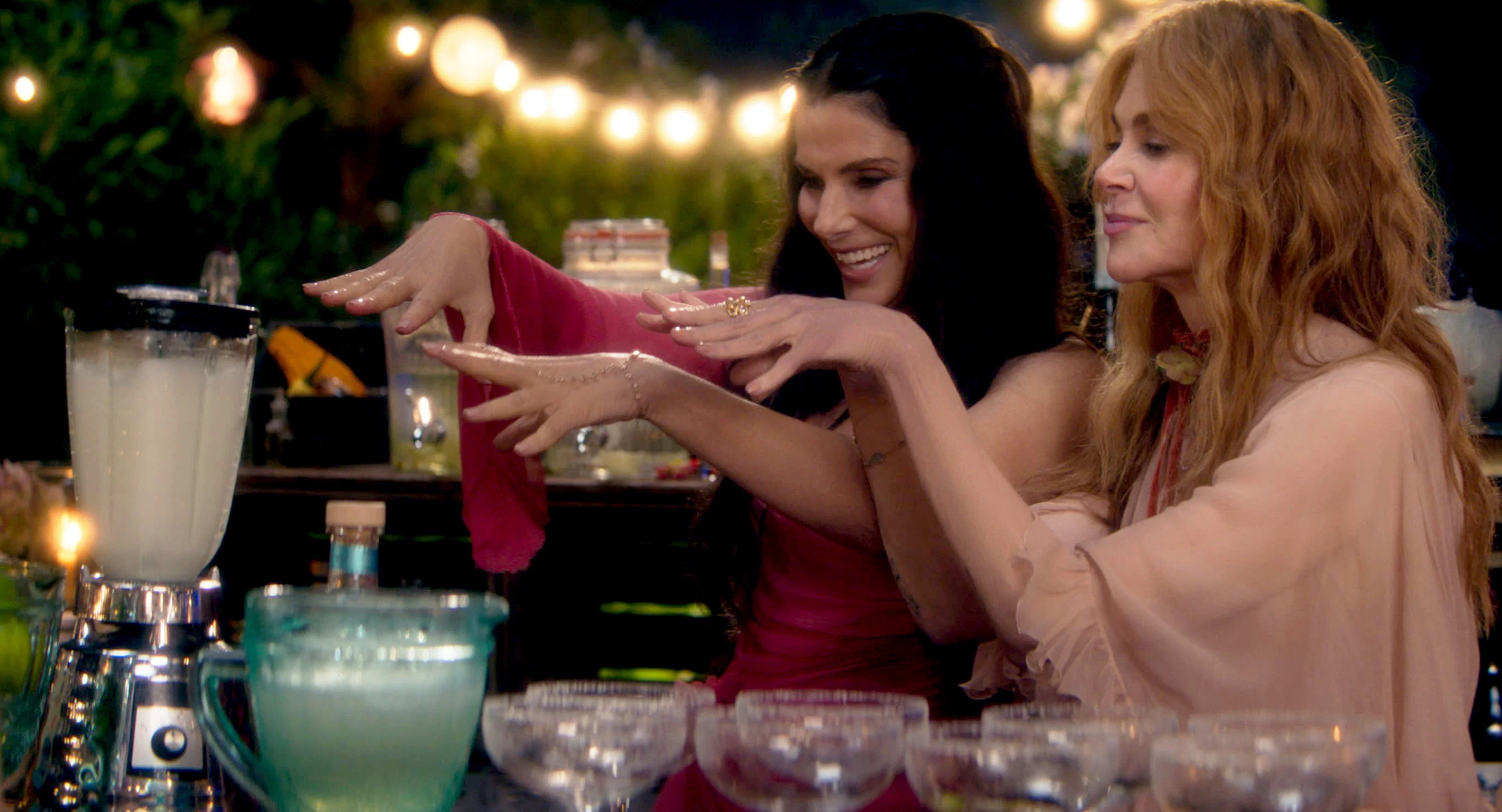
There are few things more frustrating than watching a beloved film return decades later with almost all of the ingredients that made the original special, only to discover that the magic has largely disappeared. Practical Magic 2 attempts to bring audiences back into the world of the Owens family, reuniting Sandra Bullock and Nicole Kidman as sisters Sally and Gillian Owens while expanding the story to the next generation. Unfortunately, despite some attractive cinematography, a handful of genuinely emotional moments, and strong work from Joey King and Maisie Williams, the sequel is an overstuffed, tonally inconsistent fantasy that struggles to justify its existence.
Directed by Susanne Bier and based on Alice Hoffman’s The Book of Magic, the film picks up with the Owens family still dealing with the consequences of their supernatural heritage. Sally and Gillian have spent years trying to protect the younger generation from the family’s complicated history, but that decision inevitably comes back to haunt them. When Kylie and Antonia become increasingly entangled in the Owens legacy, the sisters are forced to confront the magic they attempted to leave behind.
There is certainly a potentially compelling story buried within that setup. The idea of exploring what happens when the children of witches inherit a legacy that their parents deliberately kept secret offers plenty of dramatic possibilities. Unfortunately, Practical Magic 2 throws so many additional ideas, characters, magical rules, family revelations, romantic subplots, and supernatural complications into its screenplay that the movie rarely has enough time to develop any of them properly.
The biggest problem with Practical Magic 2 is its bloated and messy story. The screenplay by Akiva Goldsman, Georgia Pritchett, and Kelly Marcel attempts to expand the mythology considerably, introducing new elements of Owens family history while simultaneously dealing with Sally’s grief, Gillian’s relationship with her sister, Kylie’s romantic life, Antonia’s connection to magic, a mysterious book, an English village, ancient family secrets, and a new supernatural threat.
Individually, several of these ideas could have supported an entire movie. Together, however, they produce a narrative that feels constantly distracted by its next plot development. Rather than allowing the characters to breathe, the screenplay repeatedly introduces another piece of mythology or another complication before the previous one has had a chance to make an impression.
The result is a movie that feels less like a natural continuation of Practical Magic and more like an adaptation desperately trying to fit an entire fantasy novel into a single screenplay. There is a difference between expanding a fictional universe and overwhelming it. Unfortunately, the sequel frequently crosses that line.
That also makes the pacing surprisingly slow. For a movie containing magic, supernatural danger, family curses, romance, and an international journey, Practical Magic 2 often feels strangely inert. Long stretches are devoted to exposition and character conversations that don’t have enough dramatic energy to sustain them. The movie eventually reaches the larger supernatural conflicts audiences have been waiting for, but getting there can feel like an endurance test.
One of the most disappointing aspects of the film is the work from Sandra Bullock and Nicole Kidman. Their return should have been one of the sequel’s biggest advantages. Sally and Gillian remain the emotional foundation of this franchise, and the chemistry between Bullock and Kidman was one of the most memorable elements of the 1998 original.
Here, however, both performances feel surprisingly phoned-in.
Bullock has moments where Sally’s grief and emotional exhaustion come through, particularly when the character is forced to confront the consequences of the decisions she made years earlier. But too much of her performance feels like she is simply revisiting a familiar character rather than discovering anything new about her. There is little of the eccentricity, warmth, or mischievous energy that made Sally so appealing in the first movie.
Kidman fares somewhat better because Gillian has always been the more flamboyant of the two sisters, but even she is given relatively little material with which to work. Their scenes together occasionally remind viewers why the pairing worked so well, yet the film rarely captures the effortless sisterly chemistry that should have been its secret weapon.
It is especially disappointing because the movie clearly wants audiences to feel nostalgic about these characters. Nostalgia, however, cannot substitute for characterization.
Thankfully, Joey King and Maisie Williams provide some of the film’s strongest performances. King brings considerable emotional commitment to Kylie, particularly as the character begins to understand that her family’s history is far more complicated than she had previously realized. Kylie has a believable mixture of anger, fear, determination, and vulnerability, and King does a good job making those conflicting emotions feel connected rather than artificially manufactured.
Williams is equally effective as Antonia. She brings a natural warmth and sincerity to the role, giving the younger generation of the Owens family some much-needed personality. Unfortunately, the screenplay does not know what to do with her.
Antonia feels like a character who should be tremendously important to the overall narrative, particularly considering the film’s emphasis on the next generation of Owens witches. Instead, Williams is frequently pushed to the margins. Her character receives glimpses of development but is never given enough material to become as meaningful as she should have been.
That makes Williams’ presence simultaneously one of the movie’s pleasures and one of its greatest frustrations. She clearly has the ability to make Antonia interesting, but the screenplay repeatedly wastes that potential.
Visually, Practical Magic 2 is considerably stronger than its screenplay. The cinematography gives the film a suitably atmospheric appearance, particularly when the story moves away from the familiar Owens home and into more mysterious locations. There is an appealing gothic quality to the imagery, with old architecture, natural landscapes, magical objects, and shadowy interiors creating the impression of a much more visually ambitious fantasy than the screenplay ultimately delivers.
The film also understands that Practical Magic has always had a particular visual identity. Magic is presented through warm domestic spaces, unusual objects, atmospheric environments, and an appreciation for the strange beauty of everyday life. Some of those visual touches successfully evoke the spirit of the original without simply copying it.
Unfortunately, the strong cinematography frequently highlights how weak the material surrounding it can be. There are sequences that look beautiful but don’t feel dramatically compelling. The movie occasionally resembles a lavishly photographed television miniseries condensed into a feature-length running time.
Another significant problem is the humor. The original Practical Magic had a very particular comedic personality, balancing supernatural absurdity with family drama and romance. Its humor could be goofy without destroying the emotional stakes.
The sequel’s attempts at comedy rarely land with the same effectiveness. Too many jokes feel forced, obvious, or simply out of place. Rather than emerging naturally from the personalities of the Owens sisters, the humor sometimes feels inserted because the movie knows it is supposed to be funny.
The emotional material is more successful. Sally’s grief, the complicated relationship between mothers and daughters, and the Owens family’s struggle to understand their legacy provide the film with several genuinely moving moments. These scenes demonstrate that there is still an emotionally worthwhile story somewhere inside this sequel.
Unfortunately, the movie surrounds those moments with so much exposition and unnecessary plotting that their impact becomes diluted. The best emotional scenes work precisely because they temporarily strip away the mythology and allow the characters to simply be people dealing with complicated family relationships.
Ultimately, Practical Magic 2 is caught between two competing goals. It wants to be a nostalgic reunion for fans of the original while also functioning as a new chapter centered on a younger generation. It wants to be a romantic fantasy, a family drama, a supernatural mystery, and an expansion of the franchise’s mythology.
It never successfully balances those ambitions.
There are good ideas here. Joey King and Maisie Williams both bring welcome energy, the cinematography is attractive, and several emotional beats genuinely work. The return of the Owens family also carries an undeniable sense of familiarity that will probably appeal to viewers who have a strong attachment to the original.
But those positives are buried underneath a bloated screenplay, sluggish pacing, weak humor, underdeveloped characters, and performances from Bullock and Kidman that rarely capture the spark of their earlier work together. Most frustratingly, the sequel does not give its new generation enough room to flourish, wasting the considerable potential of Williams’ Antonia in particular.
Practical Magic 2 isn’t completely devoid of charm, but charm alone isn’t enough to sustain a sequel nearly three decades after the original. The movie understands that audiences still love the Owens family. What it doesn’t understand is that bringing beloved characters back requires more than nostalgia, familiar faces, and magical imagery.
The original Practical Magic may not have been universally embraced when it first arrived, but it developed a passionate following because of its unusual combination of romance, sisterhood, humor, melancholy, and supernatural whimsy. Practical Magic 2 has all the ingredients on paper, yet somehow manages to lose the flavor.