Moana – Film Review
Published July 12, 2026

Movie Details

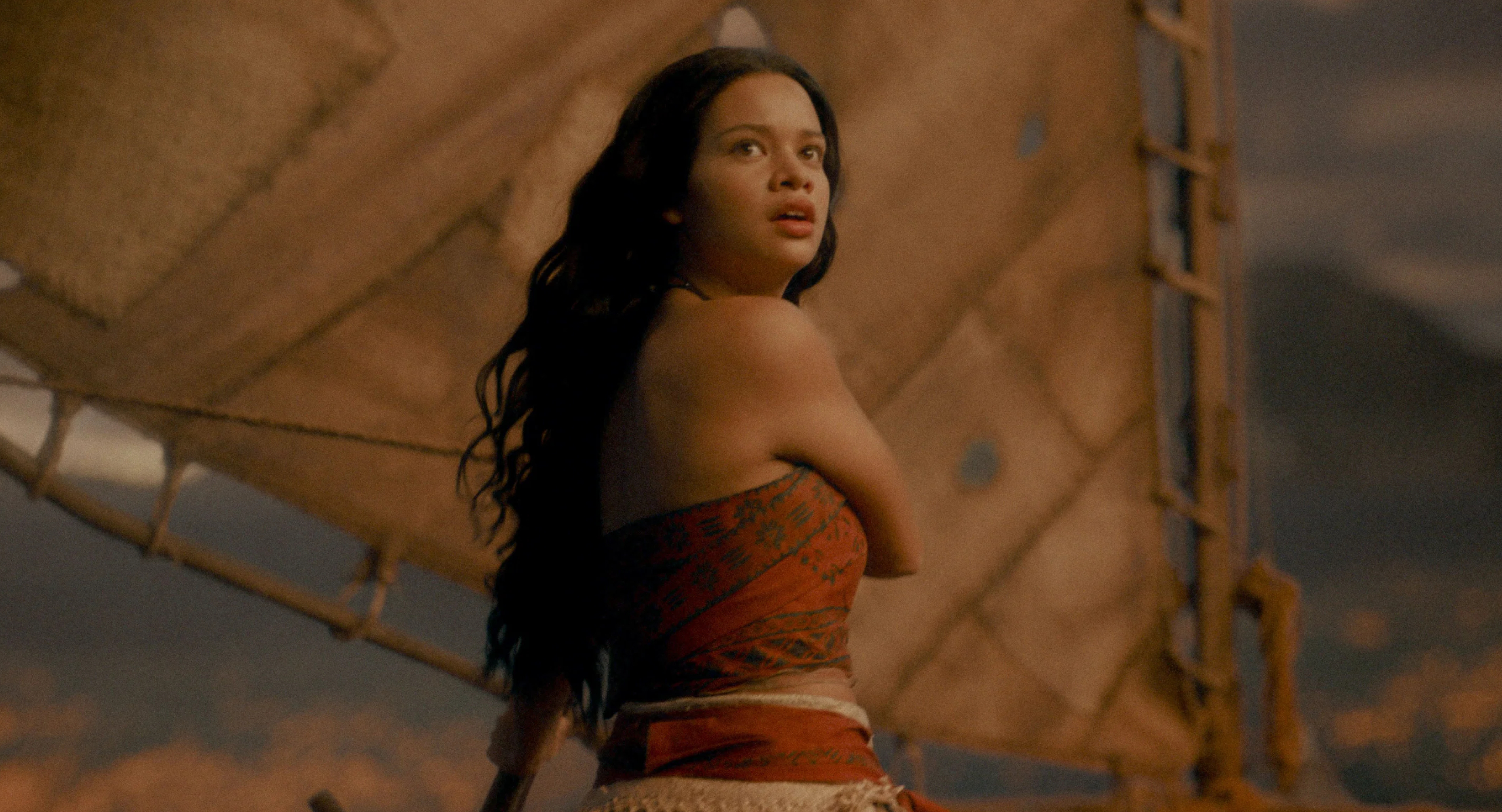
Disney’s ongoing fascination with remaking its animated classics in live action reaches the Pacific with Moana, a lavish reimagining of one of the studio’s most beloved films of the modern era. Directed by Thomas Kail in his feature film debut, the adaptation brings back Dwayne Johnson as Maui while introducing newcomer Catherine Laga’aia as the fearless voyager Moana. On paper, the project seems like a natural fit. The original film remains one of Disney’s strongest achievements of the last decade, boasting unforgettable music, breathtaking animation, rich Polynesian culture, and a timeless coming-of-age story. Unfortunately, this new version struggles to justify its own existence.
While the original narrative remains emotionally engaging and Catherine Laga’aia proves to be a worthy successor to the animated heroine, almost everything surrounding those strengths feels noticeably weaker. The visuals are oddly artificial, the magic is diluted by photorealistic effects that rarely convince, and Dwayne Johnson returns to Maui with an energy level that suggests he’s simply going through the motions. Rather than offering a fresh perspective or meaningful reinterpretation, this remake often feels like a scene-for-scene recreation that lacks the heart, imagination, and visual wonder that made the 2016 film so special.
The result isn’t a terrible movie, but it is one of Disney’s least convincing live-action remakes—a production that constantly reminds audiences just how exceptional the animated version still is.
The biggest success of Moana is undoubtedly Catherine Laga’aia.
Making her feature film debut is no easy task, especially when stepping into the shoes of one of Disney’s most beloved modern princesses. Thankfully, Laga’aia rises to the occasion with remarkable confidence. She captures Moana’s determination, kindness, curiosity, and bravery without simply impersonating the animated performance. Instead, she creates a version of the character that feels sincere and believable while honoring everything audiences loved before.
She also possesses an impressive singing voice that shines throughout the film’s musical numbers. Whether she’s expressing uncertainty or embracing adventure, Laga’aia communicates genuine emotion that helps anchor the film whenever the spectacle around her falls flat.
Her chemistry with the supporting cast is also consistently warm, particularly during the story’s more emotional family moments. Those quieter scenes become some of the remake’s strongest because they allow her performance to breathe rather than relying on visual effects.
Without Laga’aia, it’s difficult to imagine this adaptation working nearly as well as it does. One advantage this remake possesses is that it inherits an excellent screenplay.
The journey remains one of Disney’s strongest modern adventures, blending mythology, family relationships, self-discovery, and courage into an emotionally satisfying narrative. Even if you’ve seen the animated version multiple times, the story itself continues to resonate because the themes are timeless and universally relatable.
The screenplay wisely avoids dramatically altering what already worked. The emotional beats remain effective, the pacing stays brisk, and the central journey continues to feel meaningful from beginning to end. Even newcomers unfamiliar with the original are likely to enjoy the adventure because the foundation remains incredibly solid.
Ironically, that’s also one of the remake’s biggest problems. Because the film follows the original so closely, it rarely offers surprises or fresh ideas. Instead of feeling like a reinterpretation, it often resembles a very expensive reenactment. Viewers familiar with the animated classic may spend much of the runtime comparing scenes rather than becoming immersed in this version.
One area where the film still manages to entertain is through its music. Lin-Manuel Miranda’s songs remain just as catchy nearly a decade later, and hearing them performed in live action carries a certain novelty. The musical sequences preserve much of the infectious energy that made the soundtrack such a phenomenon, and Laga’aia handles every vocal performance with confidence and warmth.
Several songs still generate genuine excitement thanks to energetic choreography and committed performances from the ensemble cast. While they don’t quite reach the emotional highs of their animated counterparts, they’re among the remake’s most consistently enjoyable moments.
Even so, some of the musical magic inevitably disappears during the translation into live action. Animation allowed impossible movements, vibrant colors, and exaggerated expressions that complemented these songs perfectly. Here, everything feels slightly more restrained, making even the biggest musical moments seem less imaginative than before.
The songs remain wonderful because they were wonderful to begin with—not because this adaptation significantly improves them.
One of the remake’s biggest disappointments is, surprisingly, Dwayne Johnson. His vocal performance in the animated films was charismatic, funny, and full of larger-than-life confidence. That same spark is strangely absent here.
Johnson certainly looks the part physically, but his performance often feels oddly detached. Many of his line deliveries lack enthusiasm, while his comedic timing doesn’t land nearly as often as expected. Instead of feeling like the boastful demigod audiences remember, this version of Maui frequently comes across as someone simply checking another franchise obligation off his schedule. It’s surprising because this is a character Johnson helped define in the original films.
Whether it’s fatigue from revisiting the role or simply a different creative approach, the performance never reaches the infectious charisma that once made Maui one of Disney’s most entertaining modern characters. Whenever Johnson shares scenes with Laga’aia, she consistently emerges as the more emotionally engaging presence.
Perhaps the remake’s greatest failure lies in its visuals. For a film reportedly made with an enormous budget, Moana is surprisingly unattractive. The extensive reliance on digital environments creates a world that rarely feels tangible. Oceans, islands, creatures, and magical elements frequently resemble unfinished visual effects rather than believable locations.
Instead of enhancing the fantasy, the realism often strips away much of the wonder. The original animation embraced bold colors, expressive character designs, and painterly beauty that made every frame feel alive. Here, the photorealistic approach produces imagery that feels muted, artificial, and, at times, downright unpleasant to look at.
Several fantasy creatures suffer the most from this transition. Designs that appeared charming in animation become awkward when rendered realistically, creating an uncanny appearance that distracts rather than amazes. Rather than expanding the visual possibilities of the story, the remake repeatedly reminds viewers why animation was the ideal medium for this world.
The most frustrating aspect of Moana is how unnecessary it feels. The 2016 animated film remains widely available, visually stunning, emotionally rich, and endlessly rewatchable. This remake rarely improves upon any aspect of that experience. Instead, it recreates familiar moments with less visual imagination, weaker performances from key returning cast members, and a presentation that never fully justifies why the story needed to be retold so soon.
That doesn’t erase the strengths inherited from the original. The adventure remains engaging, the emotional journey still resonates, and Catherine Laga’aia announces herself as an exciting young talent with a genuinely star-making performance. Unfortunately, those positives exist despite the remake rather than because of it.
If someone has never seen Moana, they’ll probably still enjoy this version because the underlying story remains excellent. But for everyone else, the comparison is impossible to ignore. You’re simply much better off revisiting Disney’s 2016 animated masterpiece.