Enola Holmes 3 – Film Review
Published July 3, 2026

Movie Details

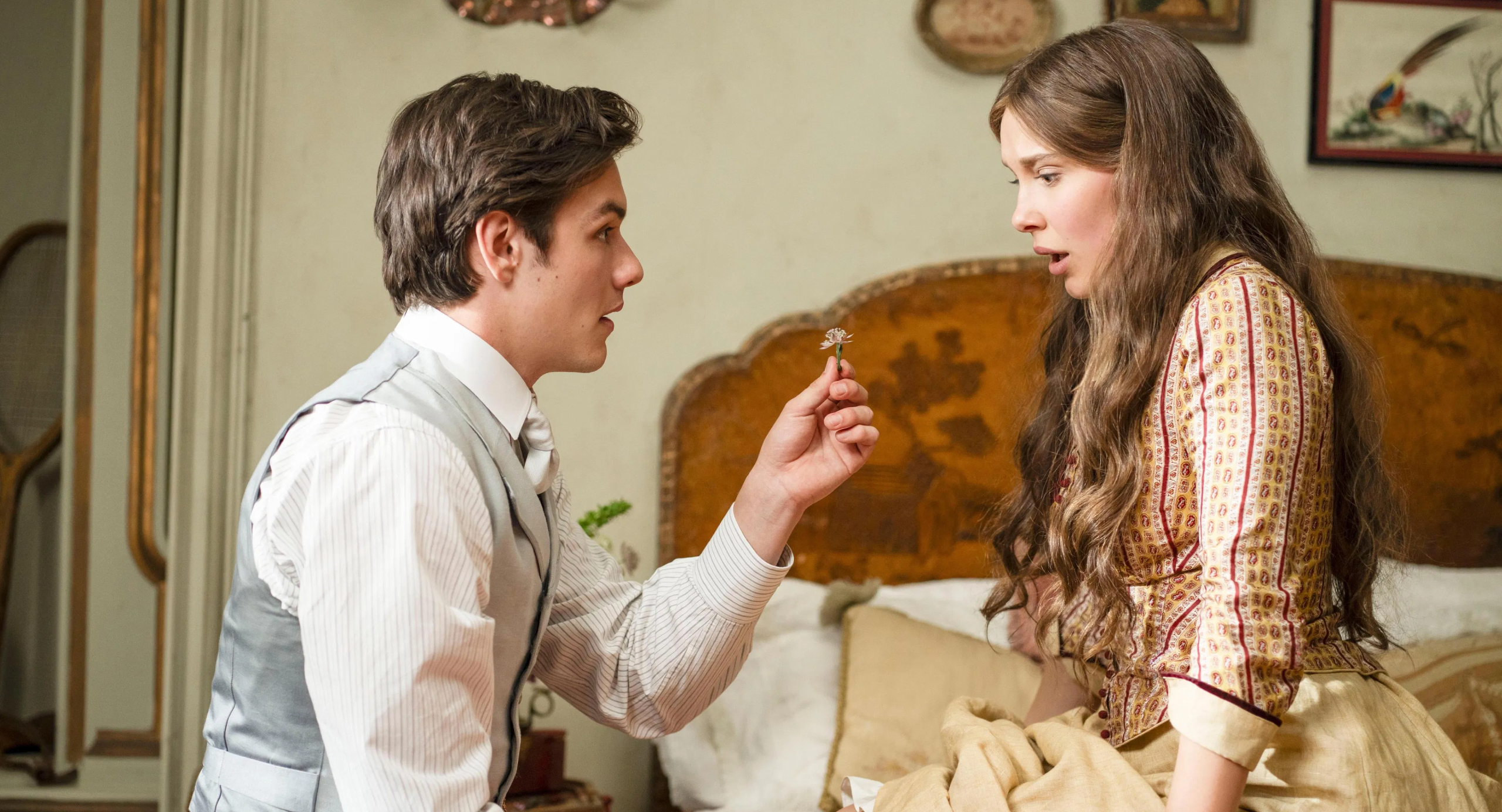
The Enola Holmes series has always succeeded by doing something deceptively difficult: it takes one of fiction’s most famous literary universes and filters it through a fresh perspective without feeling like a gimmick. Rather than simply retelling Sherlock Holmes stories with a younger protagonist, the franchise has carved out its own identity by focusing on Enola’s wit, determination, and refusal to conform to Victorian expectations. With Enola Holmes 3, the series raises the stakes considerably, delivering its biggest mystery yet while also exploring questions of family, legacy, colonialism, and personal identity. Under new director Philip Barantini, the film takes a noticeably more mature approach without sacrificing the charm, humor, and adventurous spirit that made the first two installments so entertaining.
Millie Bobby Brown once again proves why Enola is one of the most enjoyable modern mystery protagonists. She brings effortless charisma to every scene, balancing Enola’s confidence with enough vulnerability to keep her relatable. Brown has now fully settled into the role, making it feel as though Enola has naturally grown older alongside the audience. Rather than portraying a teenager trying to emulate Sherlock, this installment presents her as an accomplished detective capable of carrying investigations entirely on her own.
The screenplay by Jack Thorne wisely acknowledges that evolution. Instead of constantly comparing Enola to her older brother, the story allows her intelligence to stand independently. She approaches problems differently than Sherlock, relying just as much on empathy and intuition as deductive reasoning. That distinction continues to be one of the franchise’s greatest strengths, giving audiences two brilliant detectives whose methods complement rather than imitate one another.
This third adventure expands the series beyond the streets of London by transporting much of the action to Malta, creating a refreshing change of scenery. The Mediterranean setting immediately gives the film a different visual identity, with ancient fortifications, narrow city streets, coastal landscapes, and historic architecture replacing London’s familiar foggy alleys. The new environment injects fresh energy into the franchise while naturally lending itself to an international conspiracy.
The mystery itself is among the strongest the series has tackled. Without revealing its many twists, the investigation unfolds through interconnected clues, hidden identities, long-buried secrets, and political corruption that stretches back decades. The puzzle remains engaging because it constantly rewards careful observation instead of relying solely on shocking revelations. Each discovery feels earned, encouraging viewers to piece together the mystery alongside Enola.
One of the film’s biggest surprises is its willingness to engage with Britain’s imperial history. While previous entries addressed issues like workers’ rights and women’s equality, Enola Holmes 3 expands its scope considerably by exploring historical injustices connected to colonial rule. The screenplay handles these heavier themes with more nuance than one might expect from a family-oriented mystery, adding genuine substance without overwhelming the adventure.
Replacing Harry Bradbeer was always going to be a significant challenge, but Philip Barantini successfully puts his own stamp on the series. His direction favors a slightly more grounded tone, dialing back some of the exaggerated whimsy while increasing the tension during investigative sequences and action scenes. The shift never feels jarring, instead reflecting Enola’s own maturity as she faces increasingly dangerous situations.
Barantini stages several suspenseful sequences with impressive confidence. Chase scenes through Malta’s historic streets possess real momentum, while quieter investigative moments build tension through atmosphere instead of constant action. His experience directing character-focused dramas also shines through during emotional conversations between Enola and Sherlock, allowing those scenes room to breathe.
Visually, the film remains elegant throughout. Costume design continues to be exceptional, with richly detailed Victorian clothing contrasting beautifully against Malta’s sunlit stone architecture. The cinematography captures both intimate character moments and sweeping historical locations, giving the production a cinematic scale that feels larger than previous installments.
Jack Thorne’s screenplay keeps an impressive number of moving pieces in motion. The mystery grows increasingly layered without becoming incomprehensible, while character arcs remain emotionally satisfying. There are occasional moments where exposition arrives in large chunks, particularly when explaining the conspiracy’s historical background, but the narrative generally maintains strong momentum.
Although Enola remains the clear protagonist, Henry Cavill once again delivers an excellent interpretation of Sherlock Holmes. His version continues to avoid portraying Sherlock as emotionally detached, instead emphasizing quiet affection beneath his reserved exterior. The sibling relationship remains the emotional anchor of the franchise, and the film wisely gives it greater complexity this time around.
Rather than functioning merely as mentor and student, Sherlock and Enola now feel like genuine equals. Their differing philosophies create compelling dramatic tension without ever undermining the affection between them. Cavill and Brown share effortless chemistry that elevates every conversation, making even simple exchanges entertaining to watch.
Louis Partridge also receives stronger material than before. Tewkesbury has matured considerably since his introduction, and the screenplay allows him to develop beyond simply being Enola’s love interest. His personal journey carries surprising emotional weight while complementing the film’s broader themes of identity, responsibility, and confronting uncomfortable family legacies.
Himesh Patel makes an immediately appealing addition as Dr. John Watson. Rather than attempting to mimic previous portrayals of the iconic character, Patel creates a version that feels intelligent, compassionate, and quietly humorous. His interactions with both Sherlock and Enola establish a dynamic that promises exciting possibilities for future installments.
Helena Bonham Carter once again makes every appearance memorable despite relatively limited screen time. Her eccentric warmth continues to define Eudoria Holmes, while Susan Wokoma’s brief return as Edith serves as a welcome callback for longtime fans.
The film’s final act embraces larger-scale action than earlier entries while remaining rooted in detective work. Instead of abandoning the mystery in favor of spectacle, the climax allows Enola’s intelligence to remain her greatest weapon. Physical confrontations exist, but clever thinking continues to solve the most important problems.
Thematically, Enola Holmes 3 feels more ambitious than either predecessor. Questions surrounding independence, inherited privilege, justice, and personal identity are woven naturally into the narrative without becoming preachy. Enola’s continuing determination to define herself on her own terms remains one of the franchise’s most satisfying ongoing threads.
Not every aspect works perfectly. The conspiracy occasionally becomes so expansive that certain supporting characters receive less development than they deserve. Some revelations arrive quickly near the conclusion, and a few secondary villains function more as symbols than fully realized individuals. A tighter final twenty minutes might have strengthened the overall pacing.
Still, those shortcomings are relatively minor compared to the film’s accomplishments. The emotional payoffs land effectively, the mystery remains consistently engaging, and the character relationships continue to evolve in meaningful ways. Perhaps most importantly, the film successfully justifies its existence by expanding both the world and its central heroine rather than simply repeating familiar formulas.
By the time the credits roll, Enola Holmes 3 leaves viewers eager to spend more time with these characters. It successfully balances historical intrigue, entertaining detective work, heartfelt family drama, and sharp humor while demonstrating that Enola has fully earned her place alongside the greatest fictional detectives. Philip Barantini confidently takes the reins of the franchise, Millie Bobby Brown delivers another winning lead performance, and Jack Thorne crafts a mystery that is both intellectually satisfying and emotionally rewarding.
While it doesn’t quite surpass the very best moments of its predecessors, Enola Holmes 3 stands as a thoroughly entertaining continuation that deepens its characters, broadens its themes, and proves there are still plenty of compelling mysteries left for Enola Holmes to solve. It’s a clever, confident sequel that rewards longtime fans while continuing to establish Enola as one of the most engaging detectives in contemporary cinema.