Artificial – Film Review
Published November 22, 2026

Movie Details

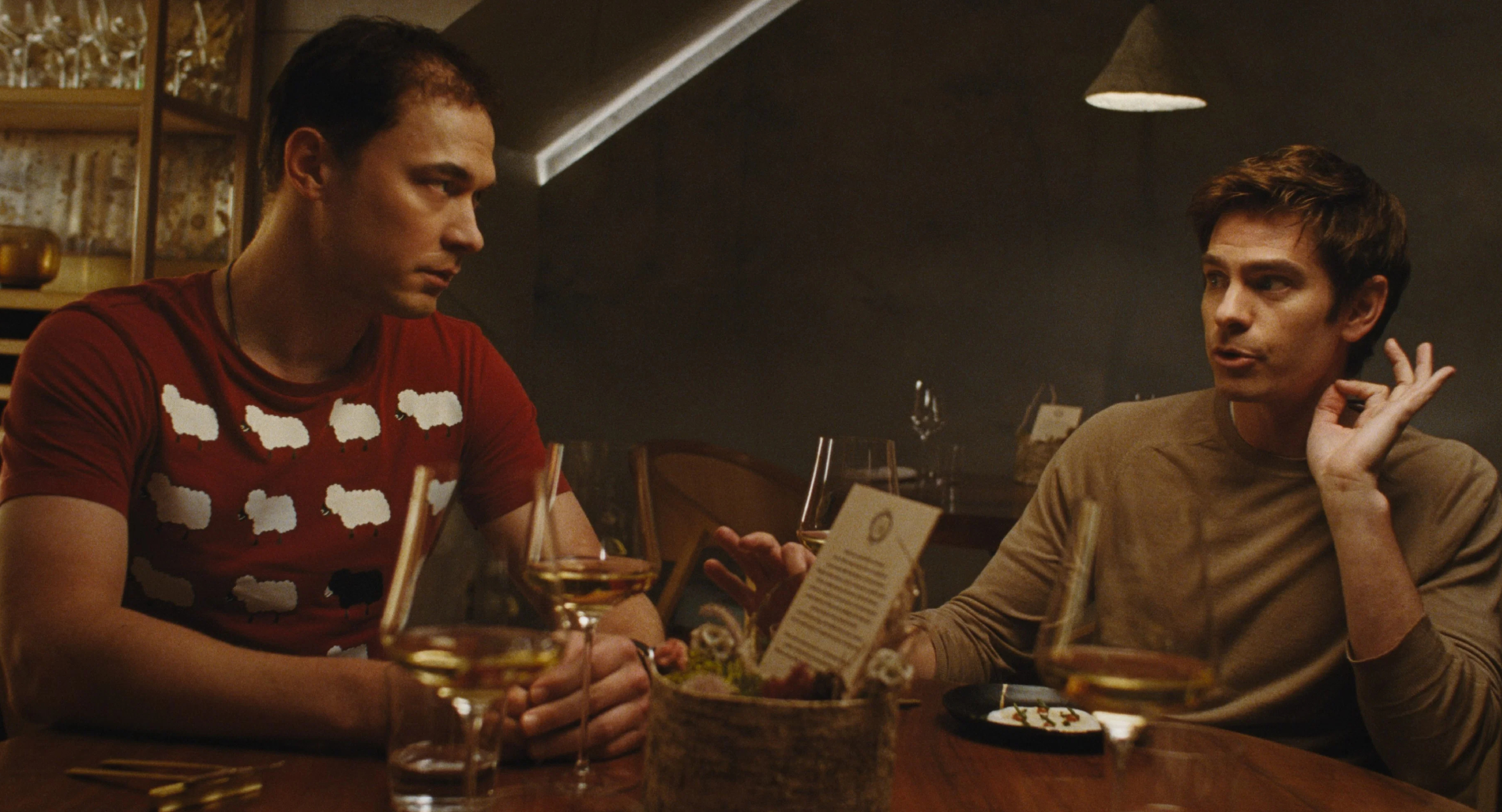
One of the strongest elements of Artificial is Andrew Garfield’s extraordinary performance as Sam Altman. Known for his versatility and willingness to embrace challenging characters, Garfield delivers a fascinating interpretation of the OpenAI CEO, capturing the combination of charm, intelligence, insecurity, and calculated ambition that makes the character such a compelling subject. Rather than presenting Altman as an uncomplicated villain or a misunderstood technological visionary, Garfield portrays someone whose personality becomes increasingly difficult to understand as his influence expands. His ability to move between seemingly approachable friendliness and unsettling self-interest makes the performance particularly effective. There is an unpredictability to his portrayal that keeps audiences interested, even when the character’s motivations become questionable.
Garfield’s performance is especially impressive because he understands the importance of making Altman entertaining without necessarily making him sympathetic. His character frequently approaches disagreements with an almost childlike defensiveness, creating moments of uncomfortable comedy that reveal considerably more about his personality than straightforward exposition ever could. However, beneath that occasionally humorous exterior is someone who appears increasingly convinced that his vision justifies the decisions he makes. Garfield captures this contradiction beautifully, allowing the audience to recognize the charisma that makes Altman an effective leader while simultaneously questioning whether that charisma conceals something considerably more troubling. It is a wonderfully layered performance that provides the film with much of its personality.
Equally impressive is Yura Borisov as Ilya Sutskever, whose performance provides an important counterbalance to Garfield’s interpretation of Altman. Borisov brings a fascinating combination of intellectual curiosity, emotional restraint, and moral uncertainty to the character. His portrayal communicates the enormous responsibility Sutskever feels toward the technology he helped develop, particularly as its potential consequences become increasingly difficult to ignore. The relationship between Sutskever and Altman is particularly compelling because neither character exists simply to represent an opposing philosophical position. Their disagreements emerge from competing ambitions, personal convictions, and fundamentally different interpretations of what OpenAI should become. Borisov is terrific throughout, giving the film an emotional grounding that complements Garfield’s more theatrical approach.
The supporting performances also contribute considerably to the film’s success. Monica Barbaro makes an impression as Mira Murati, bringing intelligence and authority to a character caught between competing responsibilities. Cooper Hoffman is equally effective as Greg Brockman, while Mark Rylance delivers another memorable performance as Geoffrey Hinton, whose involvement establishes the scientific foundations behind the technological developments explored throughout the narrative. Jason Schwartzman and Chris O’Dowd provide additional personality, while Ike Barinholtz nails his portrayal of Elon Musk. Although certain supporting characters receive considerably less development than others, the ensemble is consistently entertaining.
Simon Rich’s screenplay is another major strength, particularly in its ability to transform complicated technological and corporate developments into an accessible dramatic narrative. Rather than overwhelming audiences with technical explanations about machine learning, neural networks, and artificial intelligence, the screenplay concentrates on the personalities and disagreements responsible for pushing the technology forward. This decision makes the film considerably more approachable, even for viewers who might not have extensive knowledge of the technological industry. More importantly, Rich recognizes that the most interesting elements of this story are not necessarily the technological breakthroughs themselves, but the human decisions surrounding them.
The screenplay’s greatest achievement is its darkly comedic examination of corporate culture. There is something inherently absurd about watching powerful individuals argue over the future of a technology that could fundamentally transform society while simultaneously behaving like people involved in an ordinary workplace disagreement. Rich finds considerable humor in this contradiction, frequently allowing conversations to become uncomfortable without sacrificing their entertainment value. However, the screenplay occasionally struggles to determine how seriously it wants audiences to approach its subject matter. Certain comedic exchanges feel overly broad, while some of its more dramatic developments would benefit from additional breathing room. Nevertheless, the writing remains intelligent, provocative, and consistently engaging.
Behind the camera, Guadagnino demonstrates his ability to approach an unconventional subject with considerable visual personality. Having previously explored complicated relationships, psychological instability, and human desire in films such as Call Me by Your Name, Bones and All, and Queer, the director brings many of those same interests to Artificial. His fascination with human behaviour makes him an interesting filmmaker to tackle the story of OpenAI, particularly when examining the personalities behind technological advancement. Rather than approaching the material like a conventional corporate biographical drama, Guadagnino gives the film an energetic, occasionally surreal atmosphere that reflects the increasingly unpredictable world it depicts.
The cinematography by Malik Hassan Sayeed is another noteworthy component. The visual presentation gives the film a contemporary aesthetic that complements its technological subject matter without becoming overly dependent on flashy imagery. Guadagnino frequently uses composition and camera movement to emphasize the relationships between characters, making seemingly ordinary conversations feel considerably more significant. The visual language also helps communicate the growing tension surrounding OpenAI’s development, particularly as the narrative approaches the events of November 2023. Although some visual metaphors are somewhat heavy-handed, the overall presentation demonstrates a clear understanding of how cinematography can reinforce a film’s thematic concerns.
Damon Albarn‘s original score is particularly effective in establishing the atmosphere. Its electronic influences complement the subject matter while creating an increasingly ominous feeling that becomes more pronounced as the narrative progresses. The music never feels entirely disconnected from the characters’ experiences, instead reinforcing the contrast between technological optimism and the uncertainty surrounding its consequences. There is an appropriately unsettling quality to the score, suggesting that something potentially catastrophic might be developing beneath the surface of seemingly ordinary corporate decisions. Combined with Guadagnino’s confident direction, the music helps give Artificial an identity that distinguishes it from more conventional biographical dramas.
Narratively, Artificial is at its most compelling when exploring the complicated relationship between technological innovation and human responsibility. Its examination of OpenAI’s development raises important questions about whether the individuals creating increasingly powerful technologies can genuinely understand or control their long-term consequences. The film recognizes that technological progress is not automatically synonymous with societal progress, particularly when the people responsible for these developments are motivated by competing interests. Its portrayal of Sutskever’s growing concerns and Altman’s determination to maintain control creates an engaging dramatic conflict that gives the narrative considerable momentum.
The November 2023 controversy provides the film with its most gripping material. Watching the disagreements surrounding Altman’s leadership develop into an extraordinary corporate crisis is fascinating, especially considering how quickly the situation escalated in reality. The decision to remove Altman, the backlash that followed, and his eventual reinstatement demonstrate just how complicated the relationship between corporate governance, personal influence, and technological responsibility can become. Guadagnino approaches these developments with a combination of tension and dark humour, making the proceedings feel simultaneously ridiculous and deeply consequential. The film also benefits from the audience’s awareness that these events have implications extending far beyond the individuals directly involved.
However, the film occasionally struggles with its pacing and tonal consistency. Covering approximately two decades of technological development within a 140-minute runtime is an ambitious undertaking, and certain transitions between different periods and developments feel somewhat rushed. Some characters could have benefited from additional exploration, while certain dramatic sequences lack the intensity necessary to make their consequences fully resonate. The film’s comedic approach can also undermine moments that would otherwise benefit from a more restrained treatment. Although Guadagnino’s willingness to experiment is admirable, the resulting tonal shifts occasionally prevent the narrative from achieving the emotional cohesion it deserves.
Ultimately, Artificial is an entertaining, intelligent, and incredibly frightening examination of the people and decisions shaping the technological future. Its greatest accomplishment is recognizing that the story of OpenAI is not simply about artificial intelligence becoming increasingly sophisticated, but about the human ambitions, insecurities, and disagreements that accompany the development of potentially world-changing technology. The film does not necessarily provide definitive answers to the questions it raises, but it encourages audiences to consider the consequences of allowing a relatively small group of powerful individuals to make decisions that could affect billions of people.
Andrew Garfield and Yura Borisov are unquestionably the film’s greatest assets, delivering exceptional performances that make the complicated relationship between Altman and Sutskever consistently fascinating. Rich’s screenplay provides plenty of sharp observations and uncomfortable humour, while Guadagnino’s direction, Sayeed’s cinematography, and Albarn’s musical contributions create an unmistakable atmosphere. Although the narrative occasionally feels uneven and some of its thematic observations could have been explored with greater subtlety, the film remains compelling throughout its runtime.
What makes Artificial particularly effective is its understanding that the future of artificial intelligence is ultimately inseparable from the people developing it. Technology might become increasingly sophisticated, but the individuals responsible for controlling it remain susceptible to the same flaws, disagreements, and questionable motivations that have influenced human civilization throughout history. That contradiction gives the film much of its dramatic power and makes its subject matter considerably more unsettling.
While it occasionally struggles to balance its comedic ambitions with the seriousness of its subject, Artificial is an impressive achievement from Guadagnino and one of the more interesting contemporary examinations of technological ambition. It is funny, provocative, visually engaging, and supported by two outstanding central performances. Most importantly, it leaves audiences with plenty to consider about the direction in which humanity is heading. It might not be a completely successful examination of every aspect of its enormous subject, but there is no denying its entertainment value or the importance of the questions it raises.