Forgotten Island – Film Review
Published September 27, 2026

Movie Details

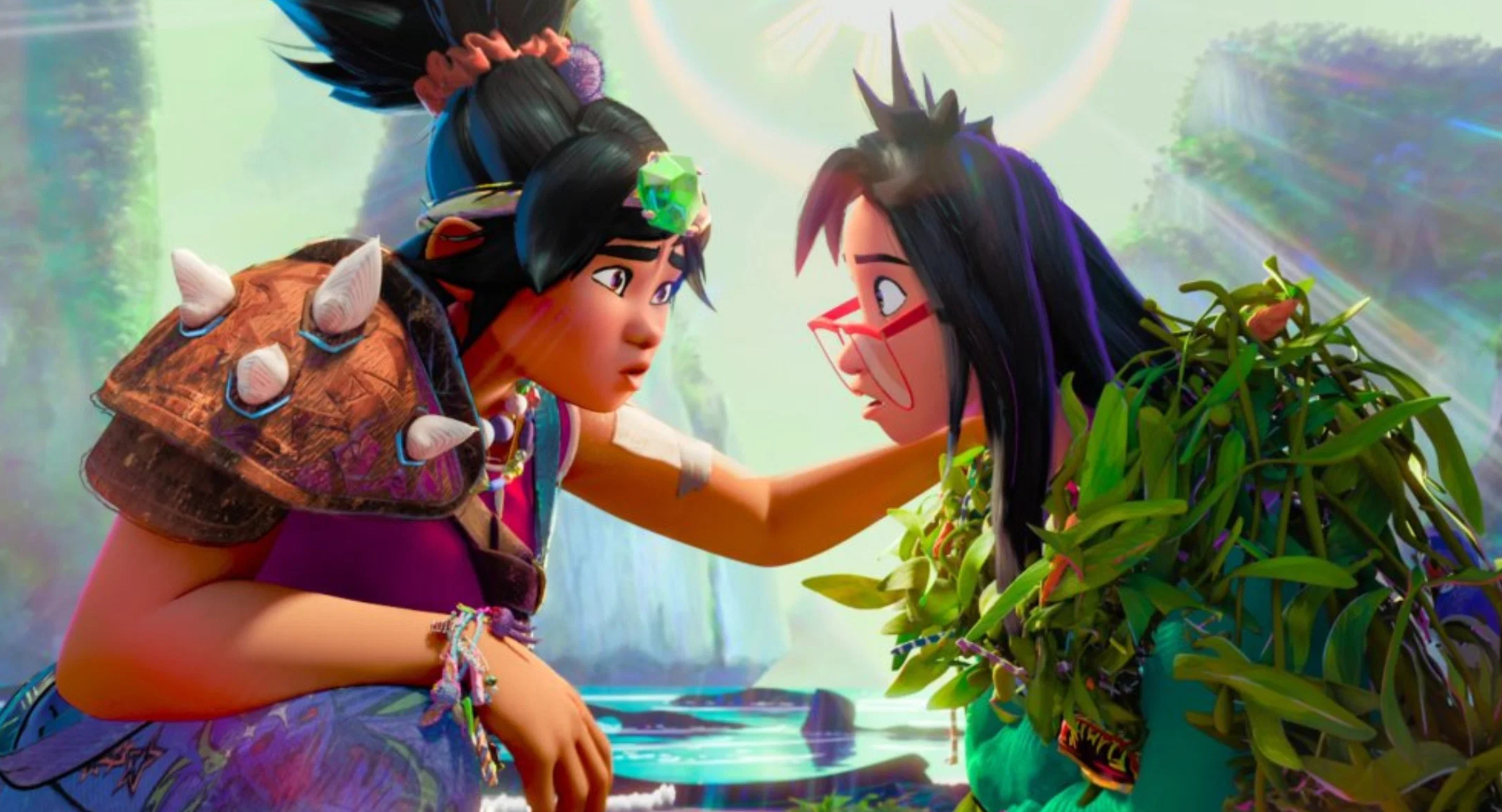
DreamWorks Animation has built much of its reputation around animated adventures that can entertain younger audiences while giving older viewers something more emotionally substantial to chew on. Forgotten Island continues that tradition with a colorful fantasy comedy that combines Filipino mythology, coming-of-age themes, friendship, and a surprisingly poignant meditation on memory and growing apart. Directed by Joel Crawford and Januel Mercado, the film is bursting with imagination, memorable characters, and visual creativity, even if its sprawling middle section occasionally causes the adventure to lose some of its momentum.
Set across the 1990s and early 2000s in the Philippines, Forgotten Island follows Jo Yuson (H.E.R.) and Raissa Molina (Liza Soberano), two girls whose friendship begins during childhood and develops into an inseparable bond. Jo is an energetic, outspoken artist with a fascination for the stories her grandmother, Lola Fatima, tells her about the mysterious island of Nakali. Raissa, meanwhile, is academically gifted and has ambitions that eventually threaten to take her far away from home. Their friendship is affectionate and believable, but the film wisely avoids presenting it as effortless. Instead, it understands that even the strongest friendships can be challenged by change, distance, and the fear of being left behind.
The emotional foundation established during the film’s opening portion is one of its greatest strengths. Jo and Raissa’s childhood friendship feels genuine because the movie allows their relationship to develop through small moments rather than simply declaring that they are best friends. Their matching charm bracelets become an especially effective symbol of their connection, representing the memories they have accumulated together and the importance they place on their shared history. When the story eventually begins exploring what happens when those memories are threatened, the bracelets take on an even greater emotional significance.
The movie’s treatment of Filipino folklore is equally impressive. Rather than simply using supernatural creatures as generic fantasy monsters, Forgotten Island incorporates figures from Philippine mythology into its world-building. The Manananggal, Batibat, Tiyanak, Duwende, Kataw, Kapre, and other creatures give Nakali a distinct identity that separates it from the countless other fantasy worlds seen in animated films. The result is a setting that feels culturally specific rather than assembled from familiar fantasy conventions.
Nakali is a wonderful playground for the filmmakers visually. The animation embraces a heightened, storybook aesthetic, filling the island with strange creatures, fantastical landscapes, magical objects, and elaborate environments. There is a sense of discovery attached to practically every new location. The film also makes effective use of its supernatural elements for comedy, allowing its creatures to be simultaneously strange, intimidating, and ridiculous. The contrast between genuine danger and playful humor is one of the movie’s most consistent sources of entertainment.
The voice cast helps sell that combination of comedy and sincerity. H.E.R. brings plenty of personality to Jo, capturing both her rebellious energy and the vulnerability beneath it. Jo could easily have become an overly loud animated protagonist, but H.E.R. gives the character enough emotional dimension to make her insecurities believable. Her fear of losing Raissa gradually becomes one of the movie’s most important emotional threads.
Liza Soberano complements her exceptionally well as Raissa. Her performance gives Raissa an intelligent, grounded presence that contrasts nicely with Jo’s impulsiveness. More importantly, Soberano conveys the complicated feelings that come with wanting to pursue one’s own future while still caring deeply about the people being left behind. The friendship between Jo and Raissa works because neither character is treated as completely right or wrong when their relationship begins to fracture.
The supporting cast is also packed with recognizable personalities. Dave Franco has plenty of fun as Raww, a well-meaning but hapless were-aspin whose awkwardness makes him an amusing addition to the group. Manny Jacinto brings an appropriately eccentric energy to Bungi, while Jenny Slate gets some of the film’s most entertaining material as Batiba. The supporting characters frequently inject the movie with bursts of absurdity without completely overwhelming its more serious emotional storytelling.
Unfortunately, Forgotten Island does stumble somewhat during its second act. The opening is focused and emotionally compelling, and the final stretch eventually brings the story back to its strongest themes, but the middle portion feels noticeably more meandering. Once Jo, Raissa, and their companions begin navigating the various corners of Nakali, the film introduces several new characters, locations, conflicts, and revelations in relatively quick succession. Individually, many of these sequences are enjoyable, but collectively they slow the movie down.
The problem isn’t that the second act lacks imagination. If anything, there is almost too much of it. The filmmakers clearly have an abundance of ideas for Nakali and its inhabitants, but some of the detours make the central emotional conflict between Jo and Raissa temporarily less prominent. The adventure occasionally feels like it is moving from one fantastical encounter to another when what the story really needs is more time with its two protagonists. As a result, the film bogs things down for a bit before eventually finding its rhythm again.
Thankfully, the emotional material remains strong enough to carry the movie through those slower stretches. The film’s central discussion of memory is particularly effective because it connects the fantasy mechanics directly to the anxieties of adolescence. Memories aren’t simply treated as magical commodities; they represent the experiences that shape people and relationships. The possibility of losing those memories consequently becomes much more meaningful than a conventional fantasy threat.
This also gives Forgotten Island a surprisingly mature understanding of friendship. Growing up can mean accepting that someone you love will make choices that don’t include you. The movie doesn’t suggest that true friendship requires two people to remain together forever or make identical decisions. Instead, it explores the idea that meaningful relationships can survive change when both people are willing to understand each other’s perspectives.
The film’s setting also deserves particular praise. Placing the story in the Philippines during the 1990s and early 2000s gives the movie a distinct sense of time and place. The period setting complements its themes of childhood memories and nostalgia without turning the movie into a collection of references. There is something fitting about a story centered on remembering the past being set during an era that already feels distant to many viewers.
Crawford and Mercado also maintain a good balance between fantasy adventure and comedy. Forgotten Island can be genuinely exciting one moment and deliberately goofy the next, but its humor rarely undermines the emotional stakes. The filmmakers understand that animated fantasy works best when the world feels capable of both wonder and danger. The movie’s creatures can be funny without becoming completely harmless, while its more frightening moments retain a playful quality appropriate for its audience.
Where Forgotten Island falls slightly short is in its storytelling efficiency. There are enough ideas here for a considerably longer film, and the middle section sometimes feels like it is trying to accommodate all of them. Some supporting characters could have been developed further, while certain plot developments could have benefited from additional breathing room. The result is an adventure that occasionally feels crowded when its emotional story is actually quite simple.
Still, the film ultimately succeeds because its heart is in the right place. The mythology, animation, comedy, and fantasy adventure are entertaining, but the relationship between Jo and Raissa gives the movie its lasting emotional impact. Their friendship feels lived-in, imperfect, and deeply important to both characters, making their struggles considerably more affecting than the typical animated disagreement between protagonists.
By the time Forgotten Island reaches its conclusion, the film has transformed its fantastical premise into a touching story about memory, identity, change, and the people who help shape who we become. It may occasionally lose its way in the middle, but it ultimately returns to the emotional foundation that makes the adventure worthwhile.
With its distinctive Filipino setting, imaginative mythology, colorful animation, charming voice performances, and sincere exploration of friendship, Forgotten Island is an enjoyable and emotionally resonant animated adventure. Its second act could have used some trimming and its story occasionally becomes overstuffed, but the film’s cultural specificity and genuine affection for its characters make those shortcomings relatively easy to overlook. This is a fantasy adventure with plenty of laughs and spectacle, but its greatest strength is its understanding that the memories we make with other people can become part of who we are.