The Magic Faraway Tree – Film Review
Published August 27, 2026

Movie Details

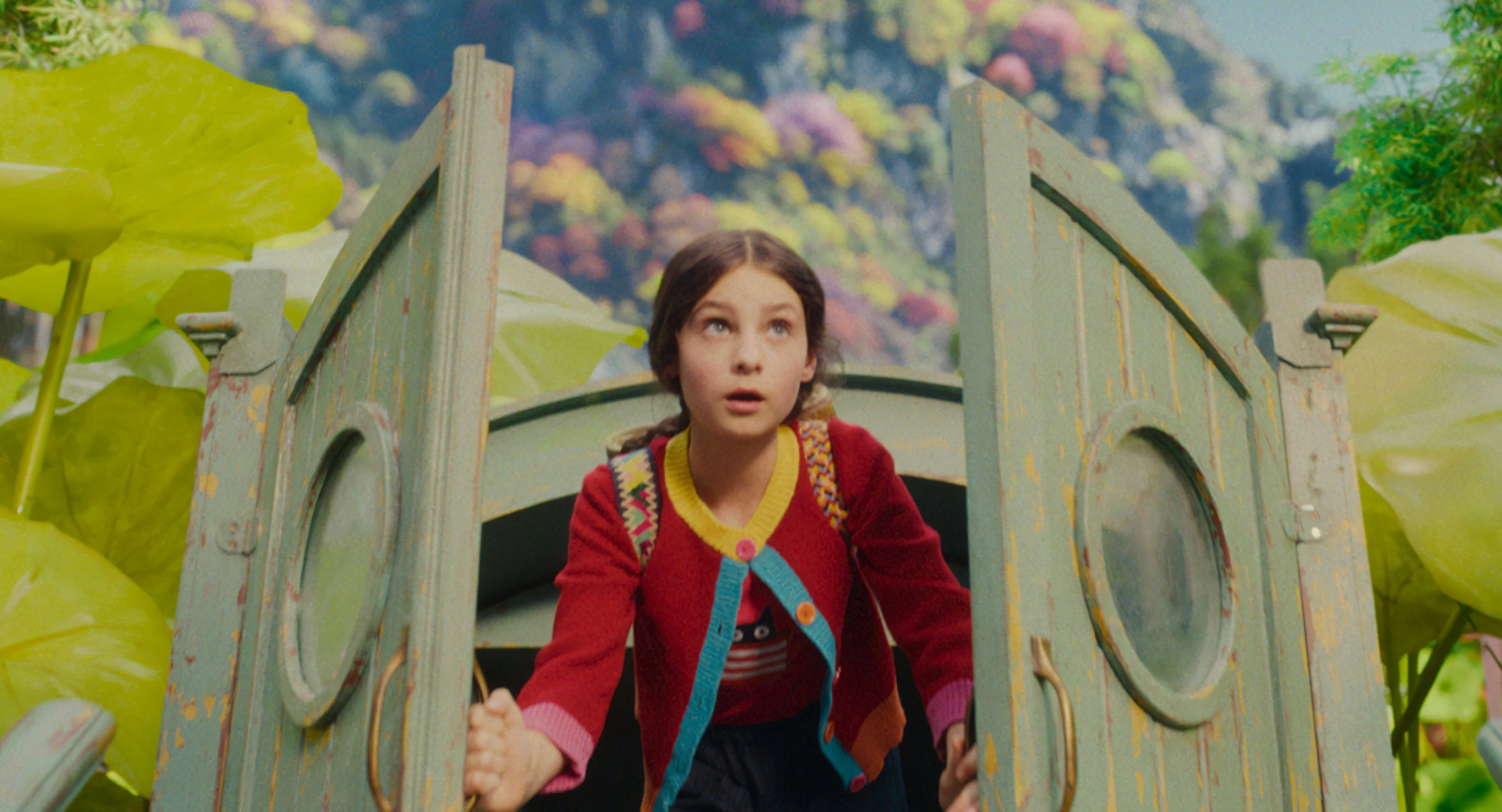
There is something inherently appealing about bringing Enid Blyton’s The Faraway Tree books to the big screen. The premise practically begs for cinematic imagination: three children discovering an enormous magical tree, meeting bizarre and lovable inhabitants, and climbing into ever-changing worlds where anything seems possible. The Magic Faraway Tree, directed by Ben Gregor and adapted by Simon Farnaby, certainly understands the appeal of that premise. It is colorful, energetic, frequently charming, and clearly designed to introduce a beloved piece of children’s literature to a new generation. Unfortunately, the film also feels caught between being a faithful children’s fantasy, a broad family comedy, and a modern message movie about technology and family connection. The result is pleasant enough but surprisingly underwhelming.
The film follows the Thompson family, who leave their city life behind after Polly Thompson, an inventor, discovers that her employer has incorporated invasive surveillance technology into one of her creations. Tim and Polly decide to pursue their dream of living in the countryside, taking their three children—Beth, Joe, and Fran—with them. The transition is predictably difficult. Their new home is practically falling apart, there is no electricity or running water, and the children are far more interested in their devices than their unfamiliar rural surroundings. It is a familiar setup, but one that gives the film an opportunity to explore how imagination can reconnect people with one another.
That theme becomes more compelling once Fran discovers the Magic Faraway Tree. After encountering the fairy Silky, Fran finds herself drawn toward the enormous tree and the fantastical worlds hidden beyond it. The film introduces Moonface, the Saucepan Man, Mr. Watzisname, Dame Washalot, and a succession of magical lands populated by colorful characters. These sequences are easily the film’s greatest source of entertainment. There is a genuine sense of discovery whenever the children enter a new realm, and the filmmakers clearly understand that the unpredictability of the tree is part of its charm.
The problem is that the movie doesn’t always know how to make those worlds feel truly extraordinary. The production design is colorful and imaginative, but the digital effects can be inconsistent. Some environments have the bright, exaggerated appearance one would expect from a children’s fantasy, while others look more like conventional computer-generated movie sets. Rather than feeling like an entirely separate universe governed by its own strange rules, certain locations resemble elaborately decorated film sets. The result isn’t disastrous, but it prevents the movie from achieving the sense of wonder that its premise demands.
Andrew Garfield and Claire Foy make an appealing pairing as Tim and Polly. Garfield brings warmth and slightly goofy enthusiasm to Tim, while Foy gives Polly a grounded, practical quality. Their chemistry helps sell the idea that these are parents who genuinely care about their children even when they don’t always understand them. The family dynamic is one of the movie’s more successful elements because the parents aren’t portrayed simply as obstacles standing between the children and adventure.
The three young actors are similarly likable. Delilah Bennett-Cardy gives Beth an appropriately complicated mixture of frustration, jealousy, and vulnerability. Phoenix Laroche makes Joe energetic without becoming overwhelmingly irritating, while Billie Gadsdon gives Fran an especially sweet presence. Fran’s relationship with Silky provides some of the movie’s most sincere emotional moments, particularly because her rediscovery of her voice is treated as an important expression of her newfound confidence.
Still, the children’s personalities aren’t always developed beyond their basic functions in the story. Beth is the dissatisfied eldest sibling, Joe is the technology-loving boy, and Fran is the imaginative youngest child. Those distinctions are useful, but the screenplay rarely gives them enough complexity to become memorable characters in their own right. Their journey toward reconnecting as siblings is effective in broad strokes, but the emotional progression feels more prescribed than organically developed.
The supporting cast has considerably more fun. Nicola Coughlan, Jennifer Saunders, Jessica Gunning, and Rebecca Ferguson bring recognizable personalities to the film’s eccentric adult characters. Nonso Anozie also adds plenty of warmth. Yet many of these performances are built around broad comic mannerisms, and the screenplay sometimes seems more interested in giving actors amusing material to play than developing the characters themselves.
The most obvious weakness in Simon Farnaby’s screenplay is its tendency to over-explain. The film wants to tell a story about the dangers of excessive technology use, the importance of family, the value of imagination, the courage to admit mistakes, and the importance of pursuing your dreams. None of these are bad themes, particularly for a family movie, but the screenplay repeatedly announces its lessons rather than allowing them to emerge naturally.
The technology element is particularly conspicuous. The Thompson children are introduced as being heavily attached to their devices, and the move to the countryside is framed partly as an opportunity to separate them from their screens. That’s a perfectly reasonable premise, but the movie’s perspective sometimes feels simplistic. Technology is frequently treated as something that prevents genuine connection, while the countryside and fantasy are presented as inherently liberating. The reality is obviously more complicated, and the film could have explored that tension with greater subtlety.
Fortunately, the Faraway Tree itself remains entertaining enough to keep the movie moving. The various magical lands offer a succession of visual gags and imaginative situations, and there is a welcome episodic quality to the adventure. The Land of Goodies is particularly effective as an introduction to the movie’s anything-goes sensibility, while the later excursions into stranger territories demonstrate the possibilities of the premise.
The film is at its best when it simply allows children to explore. There is something refreshing about watching the siblings encounter worlds without immediately understanding how they work. Their curiosity drives the strongest scenes, and the movie occasionally captures the exhilarating feeling of childhood imagination—the idea that walking through a door or climbing a tree could lead somewhere completely impossible.
Andrew Garfield is arguably the film’s secret weapon. He plays Tim with an appealing sincerity that keeps the character from becoming another generic goofy father figure. Garfield understands that Tim’s enthusiasm is rooted in genuine love for his family, and his performance gives the domestic portions of the movie more emotional weight than the screenplay necessarily provides.
Claire Foy is equally effective, particularly in the quieter moments. Polly could easily have been reduced to the stereotypical responsible parent who constantly tells everyone to behave, but Foy gives her a sense of independence and conviction. Her professional storyline also establishes her as someone willing to sacrifice security for her principles, which gives the family decision to move to the countryside more meaning.
The young cast does well with the material, although they are occasionally asked to deliver dialogue that sounds much more like screenplay exposition than something children would naturally say. Their chemistry nevertheless makes the sibling relationship believable, and the film’s emotional climax benefits from their investment in one another.
The supporting performers, meanwhile, understand that they are operating in a heightened fantasy-comedy world. Saunders is especially enjoyable, while Coughlan’s comic instincts are put to good use. The movie could have benefited from allowing some of these characters more room to breathe instead of constantly rushing toward the next plot development.
The biggest disappointment with The Magic Faraway Tree is not that it is bad. It is that it could have been so much better. The source material offers filmmakers an extraordinary playground, but this adaptation often approaches that playground with the cautious sensibilities of a conventional family film.
There are plenty of enjoyable ingredients here: an appealing family, a wonderful central concept, colorful fantasy worlds, funny supporting characters, and several genuinely heartfelt moments. The movie also avoids becoming excessively cynical or overly self-conscious. It wants children to have fun, and that sincerity is welcome.
But the pacing can be uneven, the humor is inconsistent, and the screenplay’s messages occasionally overwhelm the fantasy. The visual effects don’t always match the ambition of the concept, while the episodic structure means some of the magical worlds feel like brief stops rather than fully realized destinations. The movie introduces possibilities that make you wish it had been willing to spend more time exploring them.
Ultimately, The Magic Faraway Tree is a pleasant but underwhelming family adventure. It has enough charm to entertain younger viewers and enough recognizable talent to keep adults engaged, but it rarely reaches the level of enchantment that its premise promises. The film understands why the Faraway Tree is such a captivating idea; it simply doesn’t always know how to translate that idea into cinematic magic.
There is fun to be found among the clouds, and the film’s emphasis on family, imagination, and curiosity is admirable. Yet for a story built around a magical tree that can transport children into limitless worlds, The Magic Faraway Tree feels strangely restrained. It is a perfectly serviceable fantasy adventure, but one that leaves you wishing you could climb a little higher and find something truly magical waiting at the top.