I Love Boosters – Film Review
Published May 27, 2026

Movie Details

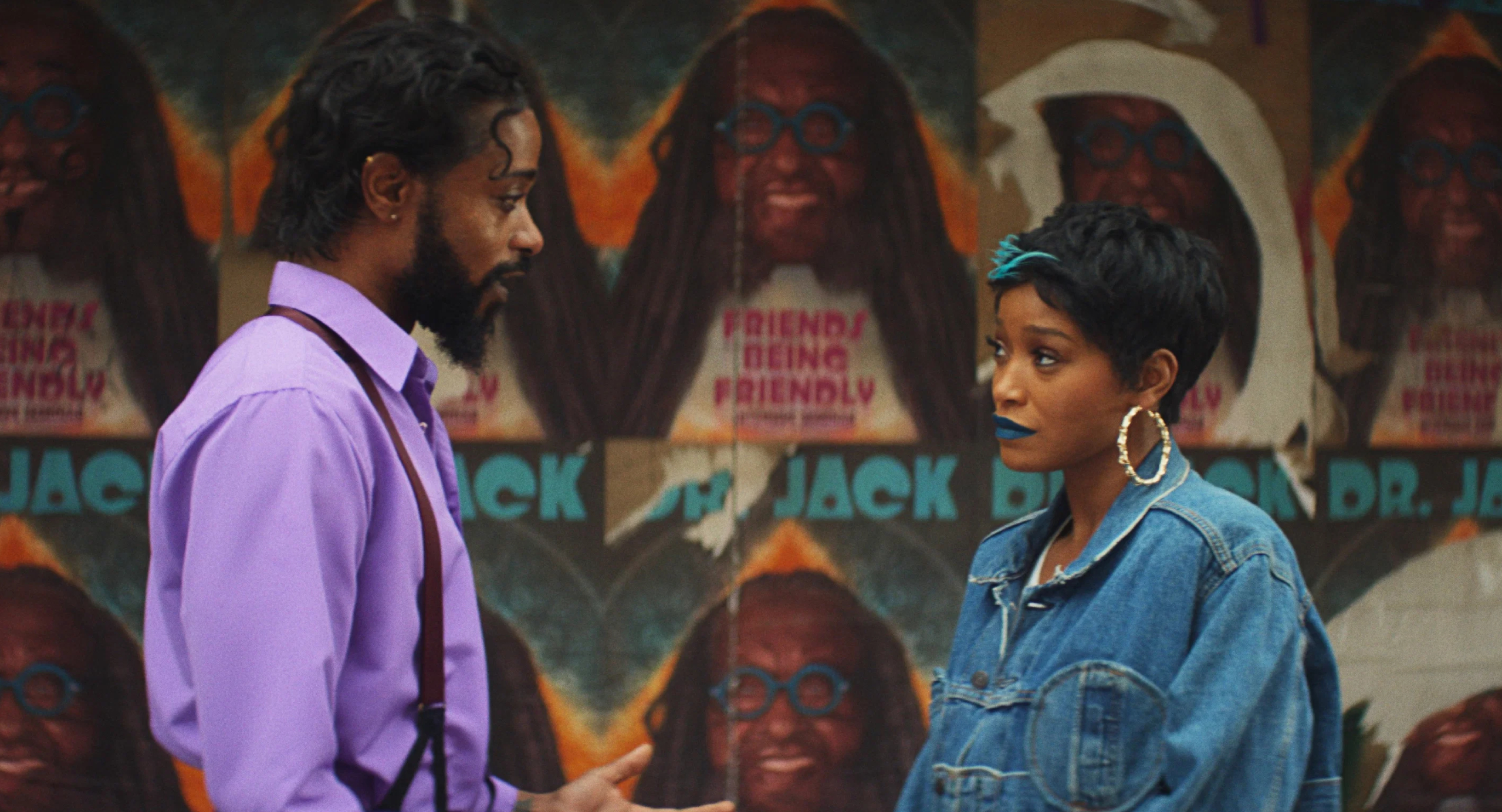
There are very few filmmakers working today who can make a movie feel simultaneously chaotic, hilarious, politically charged, emotionally sincere, and completely unpredictable. Boots Riley proved with Sorry to Bother You that he has a singular cinematic voice, and I Love Boosters only strengthens that reputation. This latest crime comedy is louder, stranger, and more ambitious than many modern studio satires dare to be, delivering a wildly entertaining story about fashion, labor exploitation, capitalism, and survival through the lens of a shoplifting crew navigating a deeply broken system.
What makes I Love Boosters so compelling is how confidently it commits to its absurdity. Riley never softens the weirdness or explains away the surreal elements for mainstream comfort. Instead, he throws viewers headfirst into a world where teleportation devices, soul-sucking demons, luxury fashion propaganda, and labor revolutions coexist naturally beside jokes about retail culture and economic desperation. The result is a film that feels messy in the best possible way — alive with ideas, anger, humor, and imagination.
The story follows Corvette, played brilliantly by Keke Palmer, alongside her friends Sade and Mariah, portrayed by Naomi Ackie and Taylour Paige. Together, they form the Velvet Gang, a trio of women surviving in the San Francisco Bay Area by stealing designer clothing from the Metro Designers fashion chain and reselling it at affordable prices. Riley immediately frames them not as glamorous criminals, but as people adapting to an economic system that leaves little room for dignity or stability.
Palmer delivers one of the best performances of her career here. Corvette is charismatic, funny, ambitious, insecure, and increasingly conflicted as the story spirals into larger political and moral territory. Palmer’s comedic timing has always been excellent, but I Love Boosters gives her the opportunity to showcase dramatic depth as well. Corvette’s admiration for designer Christie Smith becomes one of the film’s strongest narrative threads because Palmer makes that admiration feel genuine rather than naïve. She sees fashion as art and self-expression, even while recognizing the ugliness of the industry surrounding it.
Ackie and Paige are equally strong, bringing warmth and authenticity to the Velvet Gang’s friendship. The chemistry between the three leads is one of the movie’s greatest strengths. Riley allows them to feel like real friends with shared histories, frustrations, and conflicting priorities. Their conversations bounce naturally between hilarious banter and serious discussions about money, survival, and opportunity. Even during the film’s most surreal moments, that grounded friendship keeps the story emotionally engaging.
One of the smartest aspects of the screenplay is how Riley uses fashion not simply as aesthetic decoration, but as a metaphor for power, labor, identity, and exploitation. Metro Designers sells exclusivity and aspiration while profiting from brutal labor conditions overseas. The movie repeatedly questions who gets to create art, who profits from it, and who suffers to sustain luxury culture. Riley’s satire is direct, but it rarely feels preachy because the film constantly balances its political commentary with energetic humor and bizarre worldbuilding.
Poppy Liu nearly steals the entire film as Jianhu, a factory worker who becomes central to the story after the Velvet Gang discovers her using advanced teleportation technology to rob Metro Designers. Liu gives the movie an emotional anchor that deepens its broader themes about global labor exploitation. Jianhu’s motivation never feels reduced to a political talking point; instead, Riley and Liu present her as someone exhausted by a system that treats workers as disposable. Her scenes add surprising emotional weight to the film while also escalating its science-fiction absurdity.
The teleportation devices themselves are one of the movie’s most inventive ideas. Riley transforms what could have been a simple gimmick into a thematic tool tied directly to labor, class, and material value. The film’s increasingly bizarre revelations about the devices create some unforgettable sequences, especially as the story shifts from small-scale theft into full-blown revolutionary chaos. Riley’s imagination feels limitless here, and even when the movie becomes narratively overloaded, it remains consistently fascinating.
I Love Boosters is also one of the best-looking films of the year so far. Riley and his creative team build a heightened version of the Bay Area filled with vibrant colors, extravagant fashion, grimy retail spaces, and surreal imagery that reflects the contradictions of consumer culture. The costume design deserves enormous praise because clothing becomes a storytelling device in itself. Every outfit communicates status, aspiration, rebellion, or manipulation. The movie understands how fashion can empower people while simultaneously functioning as a weapon of exclusion.
The supporting cast is packed with memorable performances. Eiza González brings intensity and urgency to Violeta, a character who pushes the Velvet Gang to think beyond individual survival and toward collective action. LaKeith Stanfield is wonderfully strange as the mysterious pinky ring man, delivering deadpan absurdity that perfectly matches Riley’s offbeat tone. Will Poulter, Don Cheadle, and Demi Moore all leave strong impressions despite more limited screen time.
The comedy throughout the film is sharp and often laugh-out-loud funny, but Riley refuses to let audiences become too comfortable. Many jokes carry a sting beneath them, targeting performative activism, corporate branding, media manipulation, and the illusion of ethical consumerism. One minute the film is delivering absurd visual comedy, and the next it is exposing the grotesque machinery hiding behind luxury industries. Riley understands how humor can disarm viewers before confronting them with uncomfortable truths.
That said, I Love Boosters is undeniably overstuffed. Riley throws so many ideas, genres, and tonal shifts into the film that certain storylines feel underdeveloped. Some supporting characters disappear for long stretches, and the pacing occasionally becomes uneven during the second half. There are moments where the movie seems more interested in introducing a provocative concept than fully exploring its emotional consequences. Viewers expecting a tightly structured narrative may find the film frustrating.
Still, the sheer ambition on display makes those flaws easier to forgive. Riley is making movies that genuinely feel dangerous, unpredictable, and artistically fearless in an era where many mainstream productions feel engineered for maximum safety. I Love Boosters takes enormous swings, and even when every swing does not fully connect, the attempt itself is invigorating. The film never feels manufactured by committee. It feels personal, angry, creative, and alive.
The movie also succeeds because it never loses sight of the humanity behind its satire. Beneath all the surrealism and political commentary is a story about people trying to survive in systems designed to exploit them. Corvette and her friends are not portrayed as perfect revolutionaries or flawless heroes. They are messy, conflicted, funny, selfish, caring, and believable. Riley recognizes the contradictions people carry when trapped between morality and survival.
By the time the credits roll, I Love Boosters leaves behind a strange mix of exhaustion, excitement, and admiration. It is the kind of film that demands conversation afterward because there is so much packed into every scene — sometimes too much. Yet that overwhelming energy is also part of its identity. Riley refuses simplicity, and the movie is richer because of it.
With phenomenal performances, inventive worldbuilding, razor-sharp satire, and an unapologetically bold vision, I Love Boosters stands as one of the most original crime comedies in recent memory. It may not work perfectly for everyone, but there is nothing else quite like it. In a cinematic landscape crowded with safe choices and recycled ideas, Boots Riley continues to make movies that feel thrillingly untamed.