Passenger – Film Review
Published May 24, 2026

Movie Details

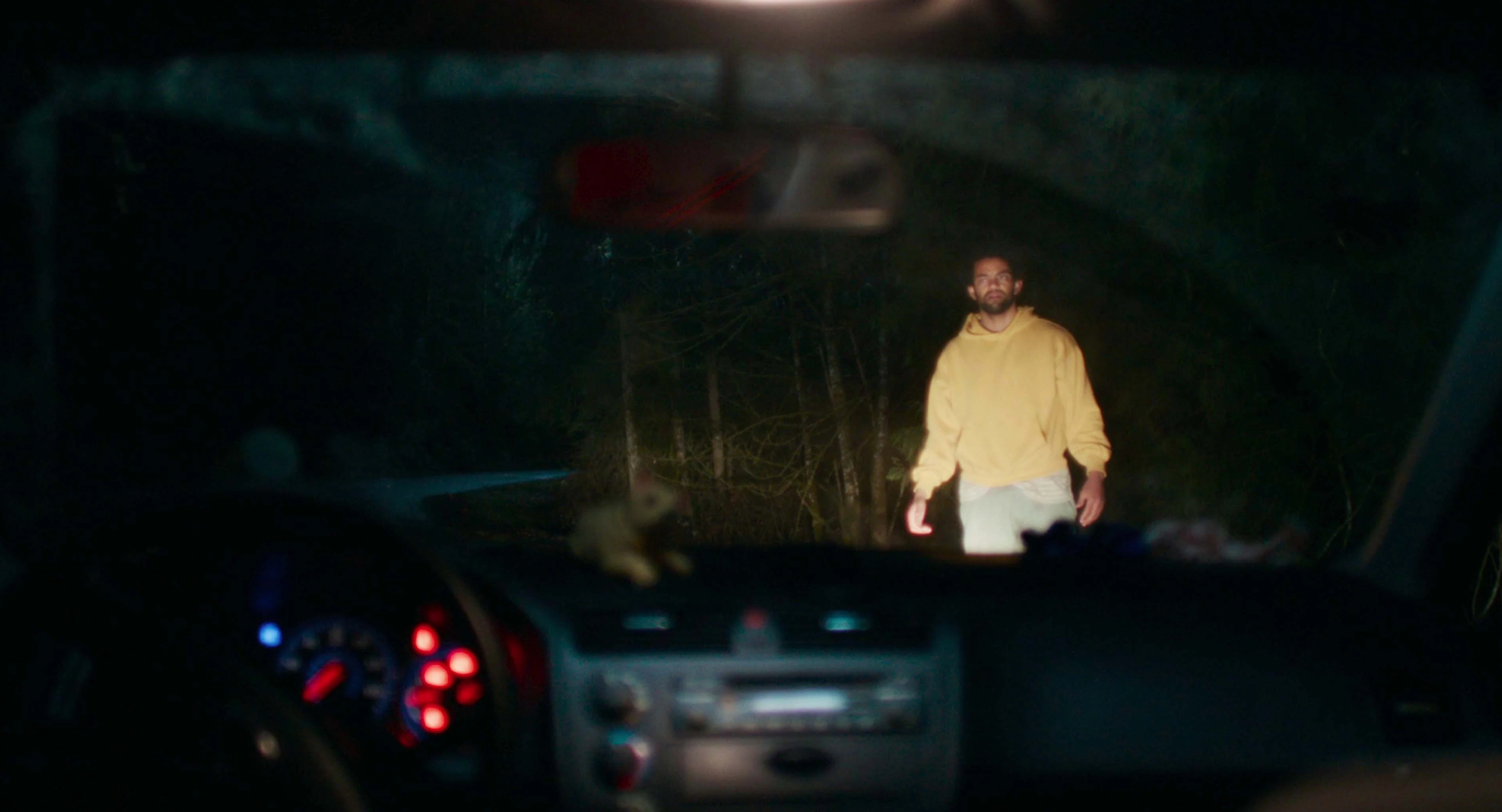
There is something inherently unnerving about the open road in horror cinema. Endless highways, isolated rest stops, and the lingering sense that danger could emerge from the darkness at any moment have fueled countless effective thrillers over the years. With Passenger, director André Øvredal attempts to channel that fear into a supernatural road-trip nightmare about a demonic entity stalking unsuspecting travelers. On paper, the premise sounds like an ideal fit for the filmmaker’s style. Unfortunately, the final result is a frustratingly generic horror movie that never capitalizes on its eerie setup or strong atmosphere.
That disappointment stings even more because Øvredal has previously proven himself to be one of modern horror’s most visually confident directors. Whether it was the chilling creature work of Scary Stories to Tell in the Dark or the claustrophobic dread of The Autopsy of Jane Doe, his films usually balance tension, mythology, and memorable imagery with remarkable precision. Passenger, however, feels strangely anonymous by comparison. While there are glimpses of the director’s talent throughout the film, they are buried beneath a repetitive script and an overreliance on horror clichés that make the experience feel far longer than it actually is.
The story follows Maddie and Tyler, played by Lou Llobell and Jacob Scipio, a young couple embarking on a road trip in their van. After witnessing the aftermath of a horrific car accident involving a terrified stranger named Lucas, they unknowingly attract the attention of a sinister supernatural entity known as “The Passenger.” Once the creature begins haunting them, their romantic getaway spirals into a desperate fight for survival as they search for answers while being relentlessly stalked across lonely highways and remote campsites.
To the film’s credit, the opening twenty minutes are genuinely effective. Øvredal knows how to establish atmosphere, and the early sequences are drenched in ominous tension. The nighttime cinematography captures the unsettling emptiness of rural highways beautifully, while the sound design creates a constant sense of dread. There is a palpable fear in the initial crash sequence involving Lucas, particularly because the film wisely avoids showing too much too soon.
The idea of a supernatural hitchhiker-like entity silently appearing inside vehicles is also undeniably creepy. One of the film’s better moments involves Maddie reviewing dashcam footage and spotting the Passenger seated beside Lucas moments before his death. Scenes like this briefly hint at the terrifying psychological horror the movie could have explored more deeply.
Unfortunately, Passenger begins unraveling almost immediately after those early scenes. Rather than building suspense gradually, the script repeatedly falls back on predictable jump scares and repetitive encounters with the creature. The Passenger itself quickly loses its mystique because the movie keeps overexposing it. Horror often thrives on uncertainty and imagination, but the film constantly places the creature front and center without developing any truly frightening mythology around it.
The screenplay from T.W. Burgess and Zachary Donohue feels especially undercooked. The lore surrounding the Passenger is vague in a frustrating way rather than an intriguing one. The film introduces symbols, claw marks, medallions, and cryptic warnings from strangers, but none of these elements evolve into anything meaningful. Instead, the story becomes a repetitive cycle of “drive somewhere, get attacked, escape, repeat.”
Lou Llobell gives the strongest performance in the film by a considerable margin. Maddie is the only character who feels remotely believable, largely because Llobell commits fully to the material even when the dialogue falters. She conveys panic and exhaustion convincingly, and her performance helps anchor scenes that otherwise might collapse under the script’s absurd logic.
Jacob Scipio does decent work with Tyler, though the character is frustratingly underwritten. Tyler spends much of the movie either doubting Maddie’s experiences or reacting generically to supernatural events. There is little chemistry between the two leads, which hurts the emotional investment significantly. For a film centered on a couple trying to survive together, their relationship never feels especially lived-in or emotionally compelling.
Then there is Melissa Leo as Diana Marsh, a mysterious traveler who seemingly knows more about the Passenger than anyone else. Leo brings gravitas to the role simply through her screen presence, but the character ultimately exists as little more than an exposition machine. Her scenes feel rushed, and the movie never gives her enough time to become memorable despite the potential intrigue surrounding her character.
Joseph Lopez’s portrayal of the Passenger fares even worse, largely because the film cannot decide what kind of monster it wants the entity to be. Sometimes the creature behaves like a ghost, other times like a physical demon, and occasionally like a slasher villain capable of teleportation. The inconsistent rules make the horror feel arbitrary rather than suspenseful.
When it comes to its visuals, Passenger occasionally reminds viewers why Øvredal became such a respected horror filmmaker in the first place. There are flashes of genuinely eerie imagery scattered throughout the movie. The sight of empty roads illuminated only by headlights creates an effective sense of isolation, while certain dreamlike nighttime sequences evoke the same unsettling atmosphere that made Scary Stories to Tell in the Dark so memorable.
Yet even the direction feels oddly restrained here. Øvredal’s previous work often featured inventive creature reveals and escalating tension, but Passenger rarely delivers sequences that stand out. The attacks blur together after a while, and the film’s pacing becomes increasingly sluggish during the second half.
One particularly frustrating aspect is how repetitive the scares become. Nearly every major horror beat follows the same formula: Maddie notices the Passenger lurking nearby, ominous music swells, the creature lunges forward, and the protagonists narrowly escape. The lack of variation eventually drains the suspense entirely. By the final act, the film feels less frightening than exhausting.
The movie also struggles tonally. Certain scenes aim for psychological horror, while others lean into supernatural action territory. The climax especially feels disconnected from the quieter dread established earlier in the film, culminating in a finale that borders on unintentionally silly rather than terrifying.
What makes Passenger particularly disappointing is that it wastes such a promising concept. The notion of an entity attaching itself to travelers after witnessing roadside tragedies could have led to an atmospheric meditation on fear, guilt, or even urban legends tied to the open road. Instead, the film settles for surface-level scares and thin mythology that never evolves into anything memorable.
For longtime fans of Øvredal’s work, this may come as an especially frustrating experience. This is a filmmaker who has consistently demonstrated an ability to craft intelligent, visually striking horror movies. That makes the mediocrity of Passenger all the more surprising. While it is competently made on a technical level, it lacks the imagination, tension, and emotional depth that defined his best projects.
There are still a handful of effective moments scattered throughout the film, particularly in its opening stretch, and Lou Llobell does admirable work carrying the material she is given. But those positives are not enough to salvage a horror movie that quickly becomes repetitive and dramatically hollow.
By the time the credits roll, Passenger feels less like a terrifying supernatural road-trip thriller and more like a collection of familiar horror ideas stitched together without much purpose. For a director capable of delivering something as atmospheric and haunting as Scary Stories to Tell in the Dark, this ultimately feels like a major detour in the wrong direction.