Undertone – Film Review
Published March 14, 2026

Movie Details

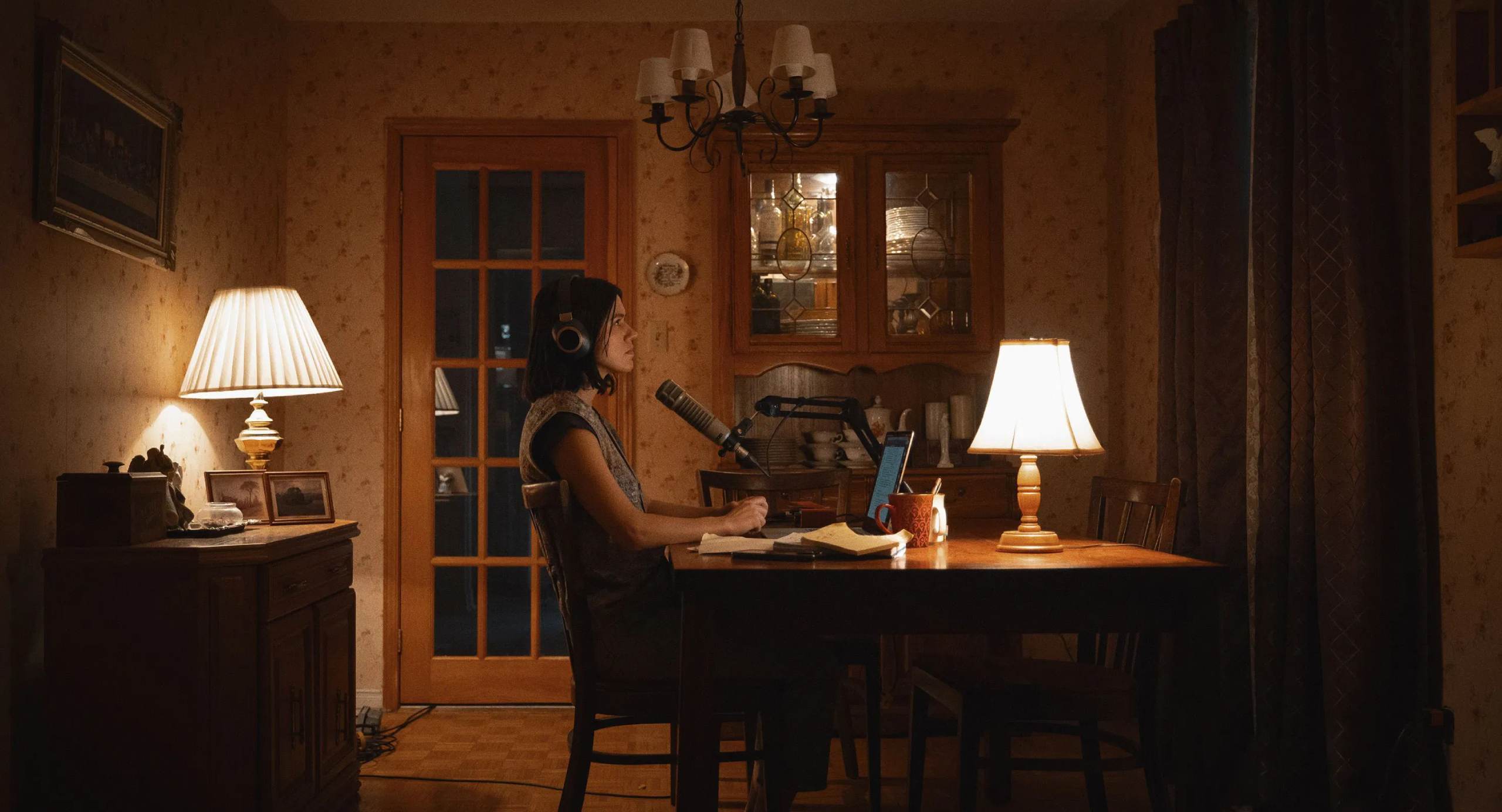
Horror cinema has long relied on striking imagery to provoke fear, but Undertone, the directorial debut of Ian Tuason, chooses a more unsettling path. Rather than overwhelming audiences with elaborate visual set pieces, the film constructs its dread through atmosphere, suggestion, and a meticulous use of sound. This bold stylistic decision makes Undertone feel both refreshingly experimental and deeply rooted in the genre’s psychological traditions. Anchored by a committed performance from Nina Kiri, the film transforms a modest premise into a slow-burning descent into paranoia that lingers long after the credits roll. While not every creative risk pays off, Tuason’s vision remains confident and distinctive, resulting in a strong horror experience.
The narrative centers on Evy, a paranormal podcast host who approaches the supernatural with skepticism. Alongside her more spiritually inclined co-host Justin, she has built a reputation by exploring eerie phenomena with a rational mindset. When Evy returns to her childhood home to care for her dying mother, she finds herself emotionally vulnerable, a state that becomes fertile ground for the creeping unease that follows. Their podcast receives disturbing audio recordings from a couple who claim to be plagued by inexplicable noises, and Evy’s attempt to debunk the mystery gradually pulls her into an unnerving spiral of doubt. What begins as a professional curiosity transforms into a deeply personal confrontation with fear and grief.
Tuason’s decision to keep all characters except Evy and her mother off-screen is the film’s defining creative gamble. This unconventional approach forces the audience to engage with the story in a heightened sensory way. Voices crackle through headphones, whispers seem to emerge from the darkness, and ordinary household sounds take on sinister undertones. The result is an immersive soundscape that becomes the film’s primary storytelling tool. In a genre often dominated by visual spectacle, Undertone demonstrates how carefully orchestrated audio can evoke tension that feels both intimate and suffocating. The film’s title proves fitting, as much of its horror lies beneath the surface, embedded in subtle sonic cues that reward attentive viewers.
Nina Kiri delivers a performance that carries the film with remarkable intensity. Evy’s emotional journey unfolds through small gestures and shifting expressions, capturing the fragility of someone trying to maintain control while confronting the unknown. Kiri conveys skepticism not as cynicism but as a coping mechanism, making her gradual unraveling all the more affecting. Her chemistry with Michèle Duquet, who plays Evy’s mother, grounds the supernatural elements in a poignant exploration of familial responsibility and unresolved tensions. Their interactions are quiet yet charged, revealing layers of affection, resentment, and sorrow that deepen the film’s psychological resonance.
Adam DiMarco’s Justin exists primarily as a voice, yet his presence remains significant. His belief in the paranormal provides a counterpoint to Evy’s rationality, and their podcast conversations create a dynamic that feels authentic and lived-in. The off-screen performances from Keana Lyn Bastidas and Jeff Yung as the distressed couple add another dimension to the narrative. Through fragmented recordings and distressed pleas, they contribute to a sense of escalating dread that blurs the line between external threat and internal projection. Tuason’s screenplay cleverly withholds visual confirmation of events, allowing the audience’s imagination to amplify the terror.
The pacing of Undertone is deliberately measured, unfolding like a gradually tightening knot. Some viewers may find the film’s restraint frustrating, particularly in its first act, which prioritizes mood over immediate scares. Yet this patience ultimately pays dividends. By the time the narrative reaches its climactic moments, the accumulated tension feels earned rather than manufactured. Tuason demonstrates a keen understanding of how anticipation can be more powerful than shock, using silence and repetition to create an atmosphere that becomes increasingly oppressive.
Much of the action takes place within the dimly lit confines of Evy’s home, a setting that evolves into a character in its own right. The production design emphasizes familiarity tinged with decay, suggesting a past that continues to exert influence on the present. Subtle camera movements and carefully composed frames reinforce the sensation of being watched or listened to, even in moments when nothing overtly threatening occurs. This visual austerity complements the sound-driven narrative, ensuring that the film’s aesthetic remains cohesive.
One of Undertone’s most compelling strengths lies in its thematic depth. Beyond its surface-level ghost story, the film engages with ideas about perception, belief, and the ways in which grief can distort reality. Evy’s role as a caregiver introduces a layer of emotional strain that makes her increasingly susceptible to fear. The supernatural elements function less as external antagonists and more as manifestations of psychological turmoil. This ambiguity invites multiple interpretations, encouraging viewers to question whether the horror originates from unseen forces or from the human mind’s capacity for self-sabotage.
Despite its many achievements, the film is not without shortcomings. The commitment to ambiguity occasionally borders on evasiveness, leaving certain narrative threads underdeveloped. A more defined resolution might have provided greater catharsis, particularly for audiences who prefer clearer answers. Additionally, the reliance on audio as a primary device can feel repetitive during the middle stretch, where variations in tone and rhythm might have sustained momentum more effectively. These issues do not undermine the film’s impact but prevent it from reaching the level of genre-defining excellence it sometimes seems poised to achieve.
What ultimately distinguishes Undertone is its willingness to trust the audience. Tuason refrains from over-explaining or resorting to conventional jump scares, instead crafting an experience that demands active participation. Viewers must listen closely, interpret subtle cues, and confront the unsettling possibility that what they hear may not be what truly exists. This interactive quality transforms the act of watching into something more akin to inhabiting Evy’s perspective, a creative choice that enhances empathy and intensifies suspense.
As a directorial debut, Undertone signals the arrival of a filmmaker with a strong sense of purpose and a clear understanding of horror’s emotional potential. Tuason’s emphasis on sound design and psychological nuance sets him apart in a crowded genre landscape. The film’s imperfections feel less like missteps and more like evidence of ambitious experimentation. With future projects, he may refine his narrative instincts while continuing to push formal boundaries.
In the end, Undertone resonates not through spectacle but through suggestion. It lingers like an echo in a quiet room, inviting reflection on the ways fear can infiltrate everyday life. Anchored by compelling performances and an inventive sonic framework, the film offers a chilling reminder that the most unsettling horrors often emerge from what we cannot see. For viewers willing to embrace its unconventional approach, Undertone provides a haunting and memorable journey into the unknown.