The Strangers: Chapter 3 – Film Review
Published February 8, 2026

Movie Details

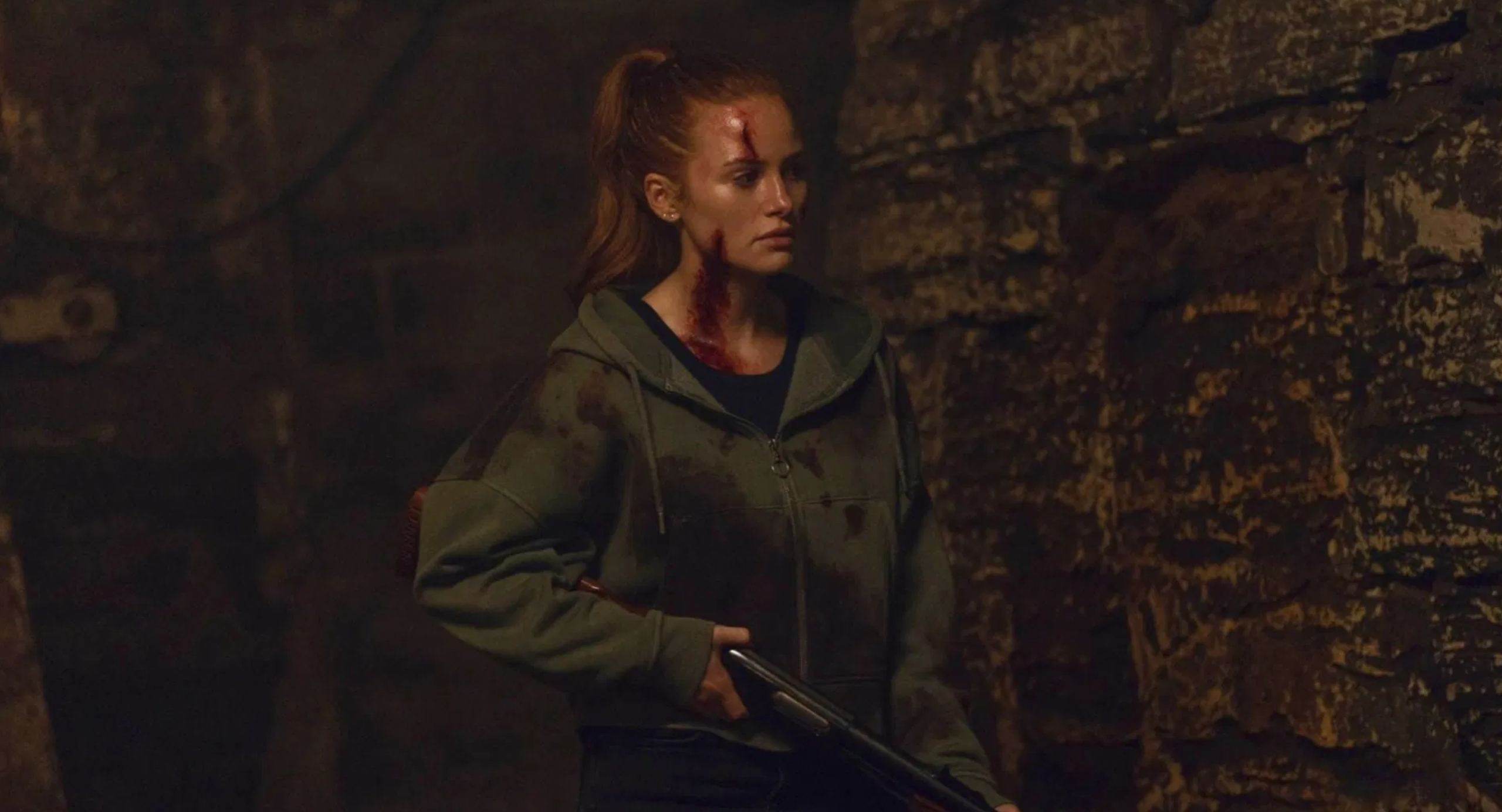
Renny Harlin’s The Strangers: Chapter 3 is the fifth entry in The Strangers franchise and the concluding chapter of a newly minted trilogy that began in 2024, the film promises to bring cohesion, terror, and narrative finality to a series known for its stripped-down home-invasion horror. Instead, it delivers a bloated and tonally confused finale that substitutes relentless brutality for genuine suspense, and melodrama for meaning.
What once made The Strangers so chilling was its simplicity: faceless predators terrorizing ordinary people for no discernible reason. That randomness was the horror. Chapter 3, however, attempts to over-explain the mythology behind the masked killers while simultaneously escalating the violence to exhausting levels. The result is a film that feels less like a natural evolution of the franchise and more like a grim attempt to wring shock value out of increasingly implausible narrative turns.
Madelaine Petsch returns as Maya Lucas, now the battered survivor caught in a twisted psychological game with Gregory (Gabriel Basso) and Dollface. Petsch gives a committed performance, and she carries the emotional burden of the film with as much conviction as the script allows. Unfortunately, the screenplay undermines her efforts with repetitive torment sequences and heavy-handed psychological beats that lack nuance. Maya’s arc is meant to feel transformative and cathartic, but the execution veers into overwrought territory, robbing it of authenticity.
Gabriel Basso’s Gregory is positioned as the trilogy’s ultimate antagonist, and the film invests heavily in his backstory. Flashbacks explore his connection to Sheriff Rotter (Richard Brake), adding a generational corruption angle to the carnage in Venus, Oregon. While the idea of a town complicit in violence is intriguing, the storytelling becomes muddled by constant timeline shifts and exposition dumps. Rather than deepening the horror, these revelations dilute it. Gregory’s motivations are spelled out so explicitly that any lingering mystique evaporates.
Richard Brake, usually reliable in villainous roles, does what he can with Sheriff Rotter. The character is meant to embody small-town rot and moral decay, yet he never evolves beyond a stock corrupt-lawman archetype. The dynamic between father and son, which should provide dramatic tension, is rendered in broad strokes. The emotional conflict feels underdeveloped, and key moments land with a thud instead of impact.
One of the most significant missteps in Chapter 3 is its tonal inconsistency. The film oscillates between grim psychological horror and grindhouse-style brutality. Scenes designed to build dread are often interrupted by sudden bursts of graphic violence that feel less like organic developments and more like desperate attempts to shock. While horror thrives on discomfort, there’s a fine line between unsettling and numbing. Harlin crosses it frequently.
Visually, the film has moments of atmospheric promise. The rain-soaked streets of Venus and the eerie isolation of the sawmill setting offer a moody backdrop. Harlin, known for slick genre craftsmanship, stages a handful of suspense sequences with competence. A nighttime stalking sequence in particular hints at the kind of slow-burn terror the franchise once excelled at. Yet these moments are fleeting, swallowed by drawn-out confrontations and excessive cruelty that overshadow the tension.
The decision to delve deeply into the origins of the masked trio—Gregory, Shelly, and Dollface—proves to be a double-edged sword. While expanding the mythology could have enriched the trilogy, the film’s approach feels overindulgent. The mystery that once made the Strangers terrifying is replaced with soap-operatic revelations and convoluted personal vendettas. Horror rooted in ambiguity is replaced by horror that insists on explanation.
Ema Horvath’s Shelly appears largely in flashbacks, and though her performance is serviceable, the character never emerges as more than a narrative device. The film gestures toward exploring the twisted bond between the killers, but it lacks the patience or insight to make that dynamic compelling. Their relationships are sketched in shorthand: trauma, obsession, violence. There’s little psychological layering beneath the surface.
Perhaps most frustrating is how the film handles escalation. Instead of building toward a crescendo of dread, Chapter 3 piles incident upon incident. Each new development aims to outdo the previous one in intensity, but without narrative restraint, the impact diminishes. By the final act, the film feels less like a carefully constructed horror experience and more like a checklist of shocking moments.
Even the thematic ambitions—exploring complicity, generational violence, and trauma—remain surface-level. The script gestures toward commentary about small-town secrets and inherited evil but never commits to exploring these ideas meaningfully. The symbolism is blunt, and the emotional beats are telegraphed long before they arrive.
To its credit, the film’s production design maintains a grimy, lived-in texture. The underground lair, the motel rooms, and the abandoned structures all contribute to a sense of decay. The masks themselves remain iconic, and their presence still carries a flicker of unease. But iconography alone cannot sustain a film that struggles so profoundly with tone and structure.
In the end, The Strangers: Chapter 3 feels like a franchise chasing escalation rather than refinement. What began as a minimalist nightmare has become an overstuffed saga desperate to mythologize its villains. By prioritizing backstory and brutality over tension and restraint, the film loses sight of what made the series resonate in the first place.
As a trilogy finale, it fails to deliver satisfying closure. As a horror film, it offers intermittent atmosphere buried beneath excessive cruelty. And as a continuation of a once-distinctive franchise, it serves as a cautionary tale about the dangers of over-explaining the monster.
For longtime fans hoping for a chilling sendoff, The Strangers: Chapter 3 is more punishing than petrifying—a grim farewell that mistakes excess for evolution.