The Rip – Film Review
Published January 20, 2026

Movie Details

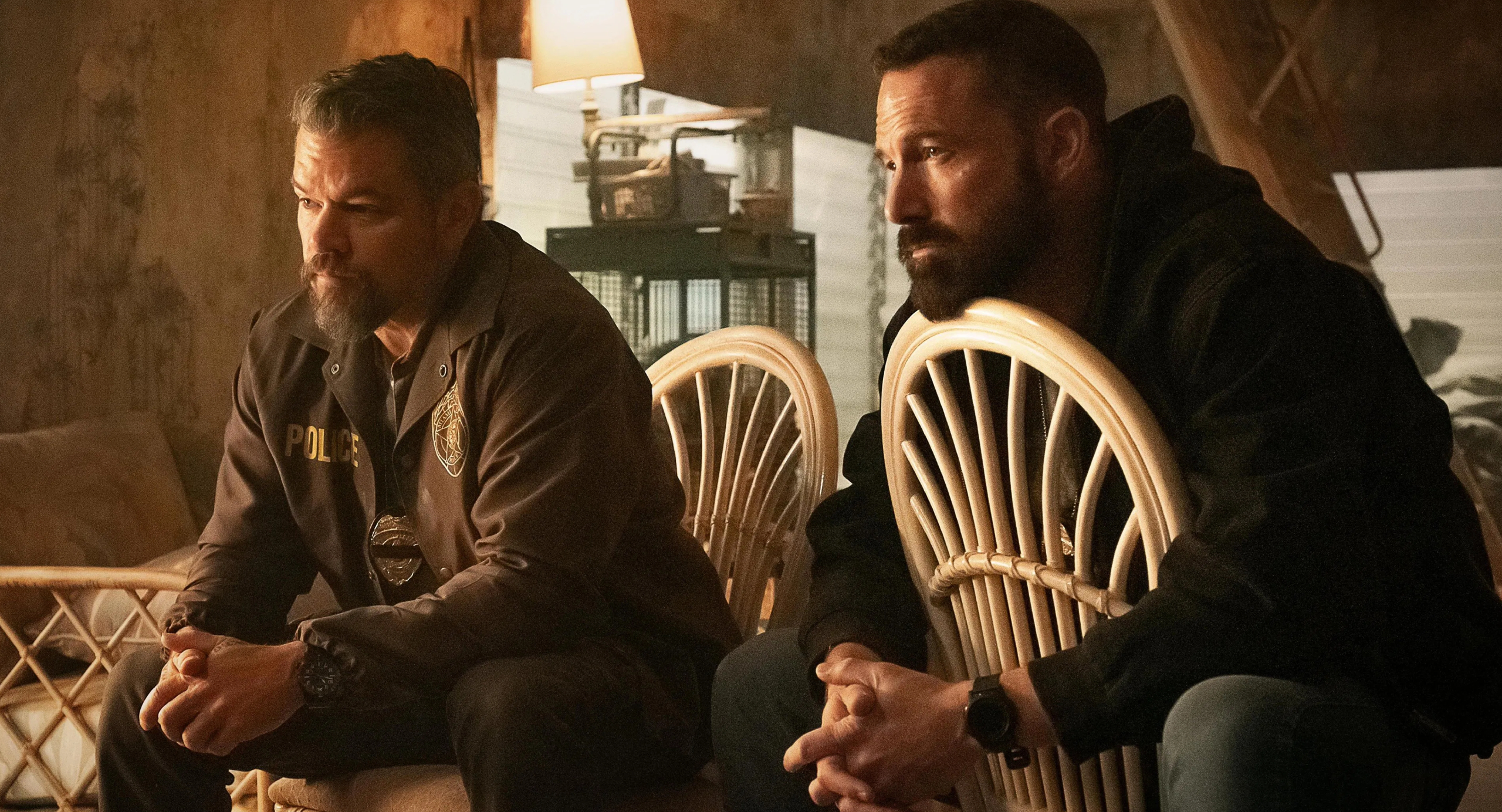
Joe Carnahan’s The Rip arrives with the promise of sweaty intensity, crackling dialogue, and a throwback approach to the crime thriller. Set in the sun-bleached, pressure-cooker atmosphere of Miami, the film pairs longtime collaborators Matt Damon and Ben Affleck as cops caught in a web of suspicion, shifting loyalties, and dangerous secrets. Inspired by the real-life story of Miami-Dade Sheriff Chris Casiano, The Rip blends procedural grit with a pulpy, almost noir-style sense of paranoia. While it doesn’t reinvent the genre, it delivers a tense, entertaining ride anchored by strong performances and Carnahan’s signature muscular direction.
The premise is deceptively simple: after the murder of Captain Jackie Velez, members of her elite Tactical Narcotics Team become suspects in a wider corruption scandal involving stolen drug money. A raid on a Hialeah stash house yields an enormous cash haul, but the discovery quickly fractures trust within the unit. Each officer begins to question who can be relied on—and who might be playing a deeper game. The film uses this scenario to explore the fragile bonds between cops who operate in morally gray territory, where loyalty is constantly tested by temptation and fear.
Carnahan, who also developed the story with Michael McGrale, leans hard into tension rather than spectacle. The action is sharp and punchy, but the real focus is on atmosphere: the claustrophobic interiors, the uneasy silences between conversations, and the constant sense that someone in the room knows more than they’re letting on. Miami is portrayed less as a glamorous beach paradise and more as a sun-soaked pressure chamber, where heat and suspicion rise together. This grounded, gritty approach keeps the film feeling serious even when it flirts with heightened genre elements.
Matt Damon brings a quiet intensity to his role as Lieutenant Dane Dumars, a man who commands authority without raising his voice. Dumars is written as a calculating strategist, someone who understands how to manipulate perception and information to achieve his goals. Damon plays him with controlled restraint, letting small facial shifts and subtle line deliveries suggest the weight of leadership and the burden of secrets. He doesn’t dominate every scene, but when Dumars speaks, the film slows down to listen.
Ben Affleck’s Detective Sergeant JD Byrne provides an effective counterbalance. Byrne is more openly emotional, driven by a mix of loyalty, grief, and growing suspicion. Affleck leans into the character’s moral uncertainty, portraying a man torn between trusting his colleagues and protecting his own conscience. The chemistry between Damon and Affleck remains one of the film’s biggest strengths. Their shared history—both as actors and as characters—adds texture to the story, making their exchanges feel layered rather than purely functional.
Steven Yeun’s performance as Detective Mike Ro is another standout. Yeun brings an unpredictable edge to the role, mixing charm with a simmering sense of unease. His character never feels fully transparent, and Yeun plays that ambiguity with precision. Whether joking with teammates or reacting under pressure, Ro always seems like he’s hiding something just beneath the surface. It’s a performance that thrives on subtlety, making his scenes especially engaging.
Teyana Taylor’s Numa Baptiste and Sasha Calle’s Desi Molina help broaden the film’s emotional range. Taylor gives Baptiste a grounded, professional presence, emphasizing competence over flash. She feels like a real officer shaped by years in high-risk environments. Calle, meanwhile, brings vulnerability and quiet strength to Desi, a character caught between her family’s past and the dangerous present. Desi isn’t just a plot device; she’s given moments of agency that make her feel like a person navigating impossible circumstances.
Carnahan’s direction favors tight framing and dynamic camera movement, especially during moments of confrontation. The film often places characters in close quarters—hallways, cramped rooms, narrow stairwells—to heighten the sense of confinement. Even when the action shifts outdoors, the tension doesn’t dissipate. The Miami setting remains oppressive, with bright sunlight contrasting against the story’s darker themes. This visual approach reinforces the idea that there’s no easy escape from the moral mess these characters are in.
The screenplay thrives on distrust and misdirection. Conversations feel layered, with characters saying one thing while implying another. Information is treated like currency, and who knows what becomes just as important as what actually happened. This structure keeps viewers engaged, constantly reassessing motivations and alliances. The film doesn’t rely on flashy twists every few minutes, but it does maintain a steady sense of uncertainty that drives the narrative forward.
However, The Rip isn’t without its familiar elements. If you’ve seen enough corruption-driven police thrillers, you’ll recognize many of the genre’s standard beats: the rogue officers, the questionable procedures, the internal investigations, and the moral compromises. Carnahan executes these tropes competently, but the film rarely subverts them in surprising ways. The story feels more like a refined version of well-worn ideas than a bold reimagining.
That said, familiarity doesn’t necessarily hurt the experience. The film’s strength lies in how well it commits to its tone. Carnahan doesn’t aim for glossy spectacle or over-the-top action. Instead, he focuses on mood, tension, and character dynamics. The action scenes, while intense, are brief and purposeful. They serve the story rather than overshadow it, emphasizing consequences over chaos.
The pacing is generally strong, though the middle section lingers slightly longer than necessary on procedural details. Some viewers may appreciate the realism, while others might wish for a tighter runtime. Still, the slow-burn approach allows relationships and suspicions to develop naturally, giving the eventual confrontations more weight.
Musically, the score complements the film’s gritty atmosphere without drawing too much attention to itself. It leans on low, pulsing tones that enhance tension rather than dominate scenes. The sound design also plays an important role, using distant sirens, muffled conversations, and environmental noise to keep the world feeling alive and unpredictable.
One of the film’s more interesting themes is the idea of loyalty under pressure. Every character claims to value teamwork, yet personal motives constantly threaten to override that ideal. The story suggests that in environments where corruption is always a possibility, trust becomes a fragile and expensive commodity. The officers aren’t portrayed as villains or heroes, but as flawed people navigating a system that rewards secrecy and risk-taking.
While the film avoids heavy-handed messaging, it does offer a subtle commentary on how institutional structures can blur ethical lines. The characters operate in a space where bending the rules feels almost routine, and the consequences of those choices ripple outward. The story never feels preachy, but it does invite reflection on how power, secrecy, and temptation intersect.
The supporting cast, including Catalina Sandino Moreno, Scott Adkins, and Kyle Chandler, adds texture to the world without overwhelming the main narrative. Each brings a distinct presence, helping the Miami-Dade setting feel populated by real, varied personalities rather than background filler. Their roles may be limited, but they contribute to the film’s overall sense of authenticity.
Ultimately, The Rip succeeds as a tense, character-driven action thriller. It doesn’t revolutionize the genre, but it doesn’t need to. What it offers instead is a polished, well-acted story fueled by paranoia, moral ambiguity, and the uneasy bonds between people who depend on one another in dangerous situations. Damon and Affleck anchor the film with confident performances, while Steven Yeun and Sasha Calle provide some of its most compelling moments.
For viewers who enjoy grounded crime dramas with sharp dialogue and simmering tension, The Rip is a satisfying watch. It rewards attention, thrives on atmosphere, and maintains a consistent tone from start to finish. While it may not leave a lasting mark on the genre, it delivers exactly what it promises: a gritty, suspenseful story about trust, power, and the cost of secrets.