The Drama – Film Review
Published April 7, 2026

Movie Details

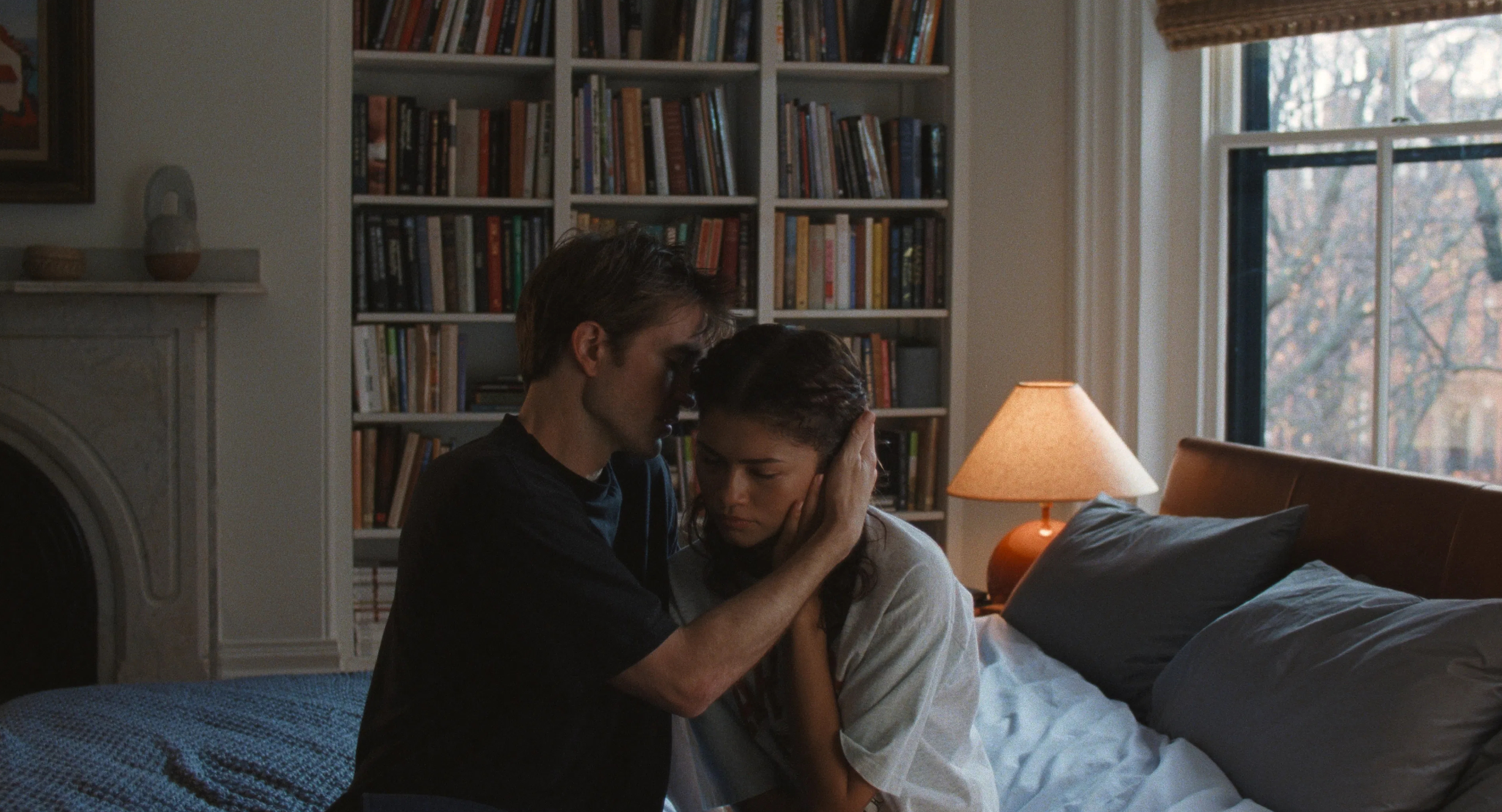
There’s a particular brand of discomfort that filmmaker Kristoffer Borgli excels at crafting—one that sneaks up on you with humor before tightening into something far more unnerving. With The Drama, Borgli leans fully into that tonal balancing act, delivering a romantic dark comedy that is equal parts cringe-inducing, psychologically probing, and unexpectedly tender. Anchored by daring performances from Zendaya and Robert Pattinson, the film explores how well we can ever truly know another person—and whether love can survive when that illusion is shattered.
Set in a quiet Boston suburb, The Drama begins with a meet-cute that immediately signals Borgli’s offbeat sensibilities. Emma Harwood and Charlie Thompson’s first interaction is awkward, halting, and laced with miscommunication, yet it blossoms into something genuine. That early sequence is deceptively simple, but it establishes a key theme: perception versus reality. What begins as a conventional romantic setup gradually mutates into something far more complex as buried truths surface.
Borgli’s script wastes little time disrupting the couple’s idyllic engagement. The central premise—a shocking confession during a casual conversation—could easily veer into melodrama in less capable hands. Instead, Borgli treats it with a peculiar mix of restraint and dark humor, allowing the tension to simmer rather than explode. The revelation itself is not played for spectacle, but for its ripple effects, which spread insidiously through every interaction that follows.
Zendaya delivers one of her most layered performances to date as Emma. She navigates an incredibly delicate role with precision, never reducing the character to a single defining trait. Emma is intelligent, introspective, and deeply flawed, and Zendaya ensures that each of those qualities remains visible even as the narrative places her under increasing scrutiny. The performance resists easy judgment, compelling the audience to sit with discomfort rather than resolve it.
Opposite her, Robert Pattinson continues his streak of choosing unconventional, character-driven projects. His portrayal of Charlie is a masterclass in slow psychological unraveling. Pattinson captures the character’s growing paranoia and confusion with subtle shifts—hesitations in speech, forced smiles, and moments of quiet panic that feel all too real. The chemistry between him and Zendaya is crucial, and it works precisely because it feels fragile. Their connection is believable, but never entirely stable.
Supporting performances add further texture to the film’s uneasy atmosphere. Alana Haim brings a sharp edge to Rachel, imbuing her with a mix of wounded loyalty and simmering resentment. Mamoudou Athie provides a grounded counterpoint as Mike, while Hailey Gates injects an undercurrent of volatility into her role as Misha. Each character feels like a fully realized individual, which makes the group dynamics all the more compelling—and uncomfortable.
What makes The Drama particularly effective is its refusal to offer easy answers. Borgli doesn’t frame the central conflict in black-and-white terms. Instead, the film exists in a morally gray space where past actions, intentions, and personal growth collide. The script raises difficult questions about accountability, forgiveness, and the ways in which people evolve over time. It’s less interested in providing conclusions than in exploring the emotional fallout of uncertainty.
Tonally, the film walks a tightrope between dark comedy and psychological drama. Borgli’s humor is often rooted in awkwardness—long pauses, ill-timed comments, and painfully relatable social missteps. These moments elicit laughter, but it’s the kind that catches in your throat. The comedy never undercuts the seriousness of the subject matter; instead, it heightens it by emphasizing how ill-equipped the characters are to handle what they’re facing.
Visually, The Drama adopts a restrained, almost clinical aesthetic that mirrors the characters’ emotional states. The cinematography favors static compositions and muted color palettes, creating a sense of detachment that gradually gives way to unease. As the narrative progresses, the framing becomes more claustrophobic, subtly reinforcing Charlie’s growing sense of paranoia. It’s a quiet but effective visual strategy that enhances the film’s psychological tension.
The film’s pacing may prove divisive. Borgli allows scenes to linger, often pushing moments of discomfort to their limits. Conversations stretch on, silences become oppressive, and the narrative unfolds with deliberate patience. For some viewers, this will feel immersive; for others, it may come across as indulgent. Still, the slow-burn approach is essential to the film’s impact, as it mirrors the way trust erodes gradually rather than all at once.
One of the film’s strongest elements is its exploration of how external perceptions shape relationships. As Emma’s past becomes known, the reactions of those around her begin to redefine who she is in the present. Friends, coworkers, and even strangers impose their own interpretations, creating a version of Emma that may or may not align with reality. This shifting perception becomes a central source of tension, not just for Emma, but for Charlie as well.
The screenplay also delves into the fragility of modern relationships, particularly in an age where information—and misinformation—spreads rapidly. The fear of being judged, misunderstood, or exposed looms over every interaction. Borgli captures this anxiety with precision, crafting scenarios that feel exaggerated yet eerily plausible. The result is a film that resonates on both a personal and societal level.
Despite its heavy themes, The Drama never loses sight of its emotional core. Beneath the discomfort and ambiguity lies a genuine exploration of love—messy, imperfect, and often contradictory. The film suggests that relationships are built not just on shared experiences, but on the stories we tell ourselves about each other. When those stories are challenged, the foundation begins to crack.
If there’s a weakness to be found, it lies in the film’s occasional tendency to circle its central ideas without advancing them. Certain scenes feel repetitive, reiterating points that have already been established. While this reinforces the characters’ inability to move forward, it can also slow the narrative momentum. Additionally, some viewers may find the film’s ambiguity frustrating, particularly if they prefer more definitive resolutions.
Even so, the film’s final moments linger long after the credits roll. Borgli opts for an ending that is both understated and thought-provoking, resisting the urge to provide closure. It’s a choice that perfectly aligns with the film’s themes, leaving the audience to grapple with the same uncertainties as the characters.
Ultimately, The Drama is a bold and unsettling exploration of love in the face of doubt. It challenges viewers to reconsider how well they truly know the people closest to them, and whether understanding is ever complete. With exceptional performances from Zendaya and Robert Pattinson, and a script that refuses to play it safe, the film stands as one of Borgli’s most compelling works to date.
