The Devil Wears Prada 2 – Film Review
Published May 2, 2026

Movie Details

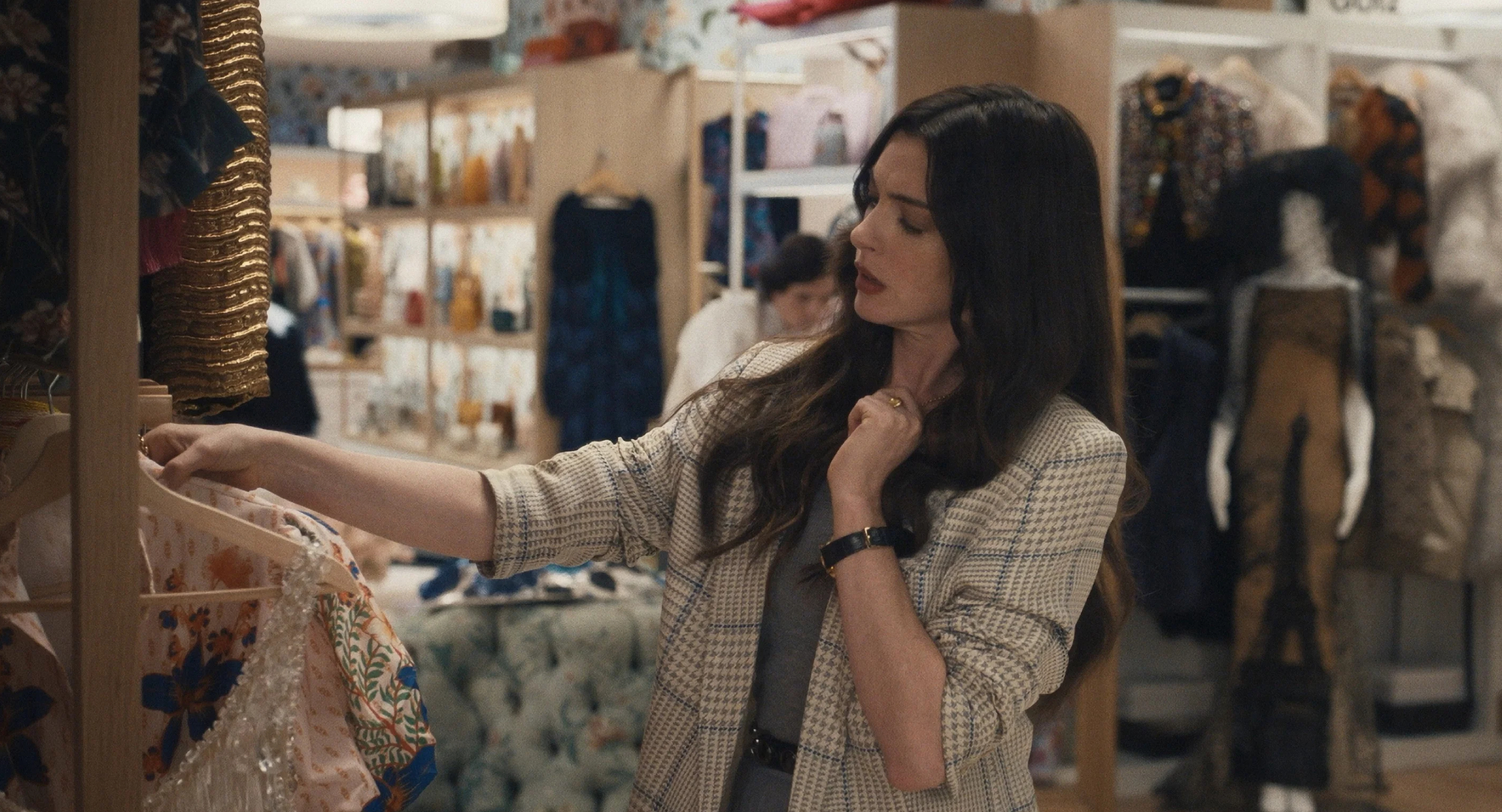
Nearly two decades after the original film became a cultural touchstone, The Devil Wears Prada 2 arrives with the kind of confidence and polish that suggests it never truly left the runway. Directed once again by David Frankel and written by Aline Brosh McKenna, this sequel doesn’t simply trade on nostalgia—it updates its world, challenges its characters, and digs into the modern media landscape with a surprising amount of depth. The result is a sharply observed, emotionally resonant comedy-drama that you absolutely must check out as soon as possible.
What immediately stands out is how seamlessly the film reintroduces its iconic characters. Anne Hathaway returns as Andy Sachs, no longer the wide-eyed assistant but a seasoned journalist navigating a collapsing industry. Hathaway plays Andy with a matured confidence, layering her performance with both ambition and vulnerability. This isn’t the same character we left behind; she’s more hardened, more thoughtful, and occasionally more conflicted in ways that feel authentic given the passage of time.
Of course, the film belongs—once again—to Meryl Streep as Miranda Priestly. Streep’s performance remains nothing short of mesmerizing. She subtly adjusts Miranda for a new era, maintaining her icy authority while revealing cracks beneath the surface. There’s a weariness to Miranda here, a recognition that the world she once dominated has shifted beyond her control. Watching her grapple with irrelevance, corporate oversight, and the digital transformation of fashion media gives the character a fascinating new dimension without diminishing her legendary presence.
The screenplay smartly places its characters in a world that feels markedly different from 2006. Print media is dying, clickbait reigns supreme, and the once-glamorous halls of Runway now feel like relics of a bygone era. The film uses this shift not just as a backdrop, but as a driving force for its narrative tension. Andy’s struggle to produce meaningful journalism in a landscape that rewards virality over substance resonates strongly, especially in an age where credibility often takes a backseat to engagement metrics.
Emily Blunt’s return as Emily Charlton is another highlight. Blunt leans into Emily’s razor-sharp wit but adds a layer of ambition that borders on ruthlessness. Her dynamic with Andy is far more complex this time around—less about petty rivalry and more about ideological differences. Their confrontations, particularly surrounding the ethics of modern fashion and accessibility, are among the film’s most compelling moments. It’s a testament to both actors that these scenes feel charged without tipping into melodrama.
Meanwhile, Stanley Tucci continues to be the film’s emotional anchor as Nigel. Tucci brings warmth and quiet gravitas to a character who understands the industry better than anyone. His role in bringing Andy back into the fold adds a poignant layer to the story, reinforcing themes of loyalty, mentorship, and the complicated bonds formed in high-pressure environments. Nigel’s presence grounds the film, preventing it from becoming too cynical.
The new additions to the cast inject fresh energy without overshadowing the returning ensemble. Justin Theroux as Benji Barnes is particularly effective, embodying the disruptive influence of tech wealth on traditional industries. His character represents a looming future that feels both inevitable and unsettling, especially as he pitches an AI-driven vision that threatens to erase the human artistry Miranda holds dear. Theroux plays the role with a slick, understated menace that makes him more than just a standard antagonist.
Visually, the film remains a feast. The costume design is as impeccable as ever, blending high fashion with contemporary sensibilities. Milan Fashion Week sequences are especially dazzling, capturing both the spectacle and the desperation behind the glamour. Yet, what’s most impressive is how the film uses fashion not just as eye candy, but as a storytelling device. Clothing becomes a reflection of identity, power, and adaptation—or the lack thereof.
The film’s pacing is confident, allowing moments of introspection to breathe without losing momentum. Scenes of quiet reflection—Miranda flying economy class, Andy questioning her career choices—are given as much weight as the more dramatic confrontations. This balance keeps the narrative engaging while ensuring that the emotional beats land effectively.
One of the film’s greatest strengths is its willingness to challenge its characters. Miranda is no longer untouchable, Andy is no longer purely idealistic, and Emily is no longer simply the ambitious underling. Each character is forced to confront uncomfortable truths about themselves and the industries they inhabit. This evolution makes the story feel necessary rather than obligatory—a rare feat for a sequel arriving so long after the original.
There’s also a surprising emotional depth running through the film. Andy’s personal life, particularly her relationship with Peter, adds stakes that feel grounded and relatable. The tension between professional ambition and personal fulfillment is handled with nuance, avoiding easy answers. The film acknowledges that success often comes with compromise, and not all compromises are worth it.
Thematically, The Devil Wears Prada 2 explores relevance, reinvention, and resilience. It asks whether legacy institutions can adapt without losing their identity, and whether individuals can evolve without sacrificing their principles. These questions give the film a weight that elevates it beyond a simple continuation of a beloved story.
If there’s a minor criticism, it’s that some plot threads feel slightly underdeveloped, particularly involving the corporate machinations behind Runway’s potential sale. While these elements add intrigue, they occasionally take a backseat to the character-driven drama. That said, the film’s focus on relationships and personal growth ultimately proves to be the right choice.
The climax, set against the backdrop of a lavish gala, delivers both spectacle and emotional payoff. It’s a fitting culmination of the film’s central conflicts, bringing its characters to moments of clarity that feel earned rather than forced. The resolution strikes a satisfying balance between closure and open-ended possibility, leaving room for interpretation without feeling incomplete.
Ultimately, The Devil Wears Prada 2 succeeds because it understands what made the original film resonate while recognizing the need to evolve. It’s stylish, yes, but also thoughtful and surprisingly introspective. The performances are uniformly excellent, the writing is sharp, and the direction ensures that every element works in harmony.
This is a sequel that respects its legacy without being constrained by it—a film that knows exactly when to lean into nostalgia and when to push forward. In doing so, it proves that even in an ever-changing world, some stories are worth revisiting, especially when they have something new to say.
