The Comeback – Season 3 Review
Published March 25, 2026

Movie Details

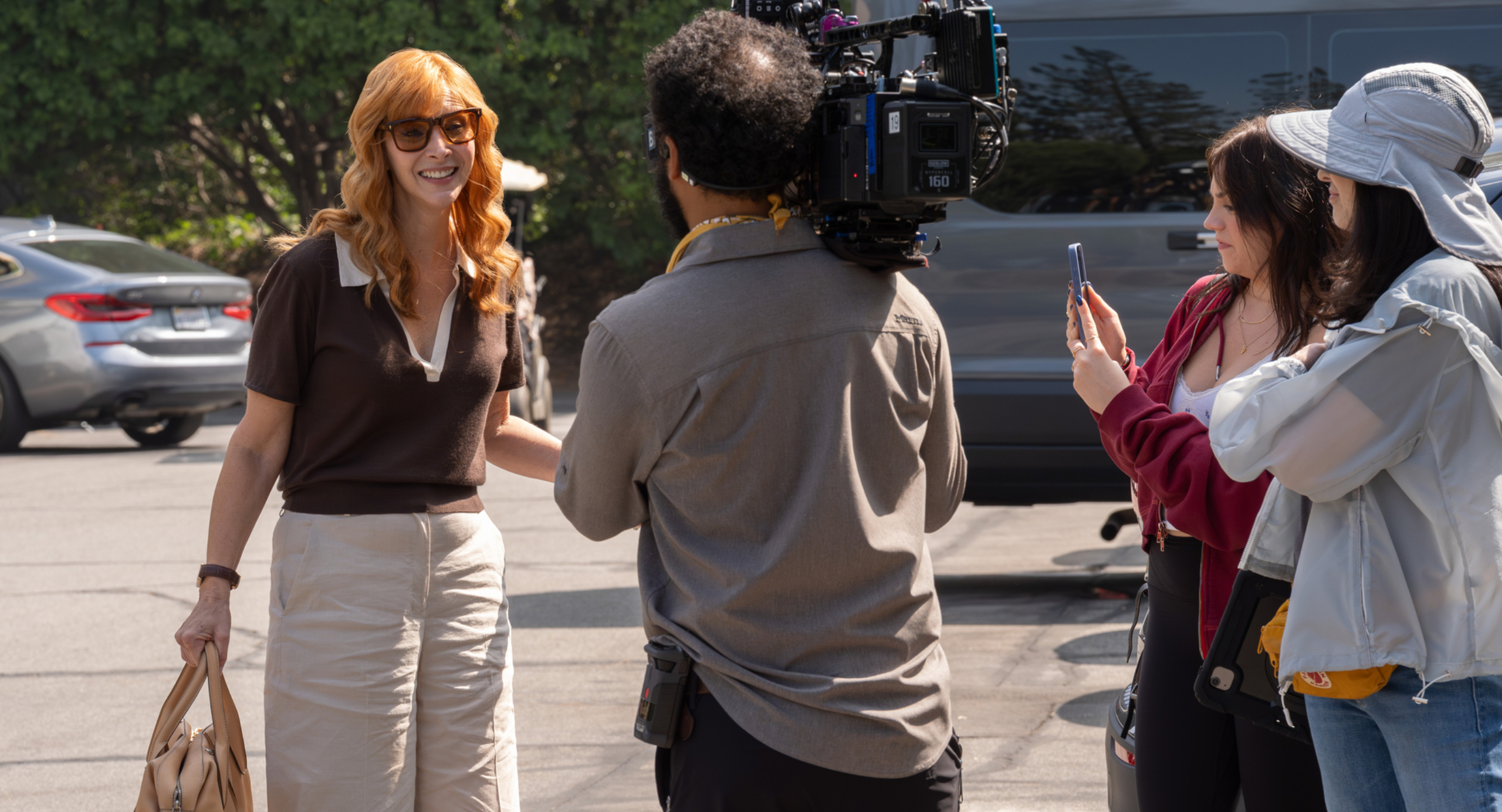
There are very few television comedies that can disappear for years, return with something meaningful to say, and still feel as razor-sharp as they once did. HBO’s The Comeback has always been one of those rare anomalies, and its third and final season proves that lightning can, in fact, strike three times. Created by Lisa Kudrow and Michael Patrick King, this concluding chapter doesn’t just revisit Valerie Cherish—it evolves her, placing her in a world that has become even more absurd, more performative, and more unsettling than the one she first struggled to navigate.
From its opening moments, the season feels comfortingly familiar. Valerie, once again, finds herself tangled in a professional misstep—this time abandoning her lead role in Chicago: The Musical in spectacularly chaotic fashion. It’s vintage Valerie: impulsive, painfully self-sabotaging, yet somehow endearing. Fans of the series will recognize the rhythm immediately, that delicate balance between cringe and comedy that Kudrow has perfected over the years. But just as it seems like the show might retread old ground, it pivots in a way that feels both surprising and deeply relevant.
That pivot comes in the form of one of the season’s most daring creative choices: its exploration of artificial intelligence within the entertainment industry. Rather than treating AI as a distant or abstract concept, The Comeback integrates it directly into Valerie’s world through the new sitcom How’s That?!, a seemingly standard vehicle for her talents—except for one crucial twist. The show is written by an AI program known as AI Assist, a detail that is deliberately obscured from most of the cast and crew. This narrative device becomes the engine that drives much of the season’s tension, humor, and thematic weight.
What makes this storyline so effective is how seamlessly it blends into the show’s existing format. The Comeback has always thrived on peeling back the glossy veneer of Hollywood to reveal the awkward, often uncomfortable truths beneath. Introducing AI into that ecosystem feels like a natural progression rather than a gimmick. The writing cleverly highlights the ethical gray areas, from questions of authorship and creativity to the unsettling possibility of human talent being rendered obsolete. And yet, it never loses sight of its comedic roots.
Valerie’s reaction to AL Assist is particularly compelling. As someone who has spent her entire career fighting to remain relevant, she is uniquely positioned to both benefit from and be threatened by this technological shift. Kudrow plays these contradictions beautifully, allowing Valerie to oscillate between opportunistic enthusiasm and genuine unease. It’s a nuanced performance that underscores just how much the character has grown, even as she continues to stumble in familiar ways.
Of course, Valerie would not be Valerie without the people orbiting her, and the supporting cast remains as strong as ever. Damian Young returns as Mark Berman, Valerie’s long-suffering husband, bringing a grounded presence that contrasts sharply with her relentless energy. Laura Silverman’s Jane Benson continues to deliver deadpan commentary that cuts through the chaos, while Dan Bucatinsky’s Billy Stanton remains a delightfully desperate figure, forever chasing the next big opportunity for Valerie—even when it leads them both into questionable territory.
New additions also make a strong impression, particularly the showrunners of How’s That?!, played by Abbi Jacobson and John Early. Their characters, Mary and Josh, embody a certain modern industry archetype—creative professionals navigating a landscape that increasingly prioritizes efficiency and data over instinct and artistry. The dynamic between them and Valerie is rich with comedic potential, as their attempts to maintain control over a project secretly driven by AI lead to a series of awkward and morally complex situations.
One of the most impressive aspects of this final season is how it manages to stay true to the show’s original tone while also expanding its scope. The mockumentary format remains as effective as ever, capturing those painfully intimate moments where Valerie’s need for validation clashes with the reality of her circumstances. The camera lingers just long enough to make the audience squirm, a technique that has always been a hallmark of the series. But now, those moments are layered with a new kind of anxiety—one that reflects the uncertainties of a rapidly changing industry.
The writing is particularly sharp when it comes to exploring the illusion of control. Valerie believes she understands the game she’s playing; after all, she’s been in the industry for decades. But AL Assist represents something fundamentally different, a force that operates beyond the traditional rules of Hollywood. This creates a fascinating tension, as Valerie tries to assert her agency in a situation where the very concept of authorship is being redefined.
Despite these heavier themes, the season never loses its sense of humor. The comedic set pieces are as cringe-inducing and hilarious as ever, often stemming from Valerie’s inability to read a room or her tendency to double down on bad decisions. Kudrow’s comedic timing remains impeccable, and the show continues to find new ways to mine laughter from discomfort. There’s a particular brilliance in how it allows the audience to laugh at Valerie while also empathizing with her—a delicate balance that few comedies can achieve.
The inclusion of Jack O’Brien as Tommy Tomlin adds another layer of emotional resonance to the season. As Valerie reconnects with him following a personal loss, the show briefly steps outside its usual comedic framework to explore themes of grief and connection. These moments are handled with a surprising amount of tenderness, providing a counterpoint to the more satirical elements of the story.
Visually and structurally, the season maintains the lo-fi aesthetic that has always defined The Comeback. The handheld camera work, the awkward framing, and the sense of unfiltered access all contribute to the show’s unique identity. In an era where television often leans toward cinematic polish, there’s something refreshing about a series that embraces imperfection as part of its storytelling language.
As a final season, it also succeeds in giving Valerie Cherish a sense of closure without compromising what makes her so compelling. She remains flawed, often frustrating, and occasionally oblivious—but she is also resilient, determined, and, in her own way, deeply authentic. The show doesn’t attempt to reinvent her entirely; instead, it allows her to evolve in a way that feels organic and earned.
What ultimately makes this season so impactful is its ability to reflect the current state of the entertainment industry while staying rooted in character-driven storytelling. The introduction of AI could have easily overshadowed the human elements of the narrative, but instead, it enhances them, forcing Valerie and those around her to confront difficult questions about their place in an ever-changing landscape.
By the time the series reaches its conclusion, it’s clear that The Comeback has accomplished something remarkable. It has not only maintained its relevance over the years but has also adapted to a world that is, in many ways, even more absurd than the one it originally satirized. The result is a final season that feels both timely and timeless, offering a fitting sendoff for one of television’s most unique and enduring comedies.
In the end, Valerie Cherish’s journey comes full circle—not with a neat resolution, but with a deeper understanding of who she is and what she’s willing to fight for. It’s a conclusion that feels honest, satisfying, and entirely in keeping with the spirit of the show.