Ted – Season 2 Review
Published March 6, 2026

Movie Details

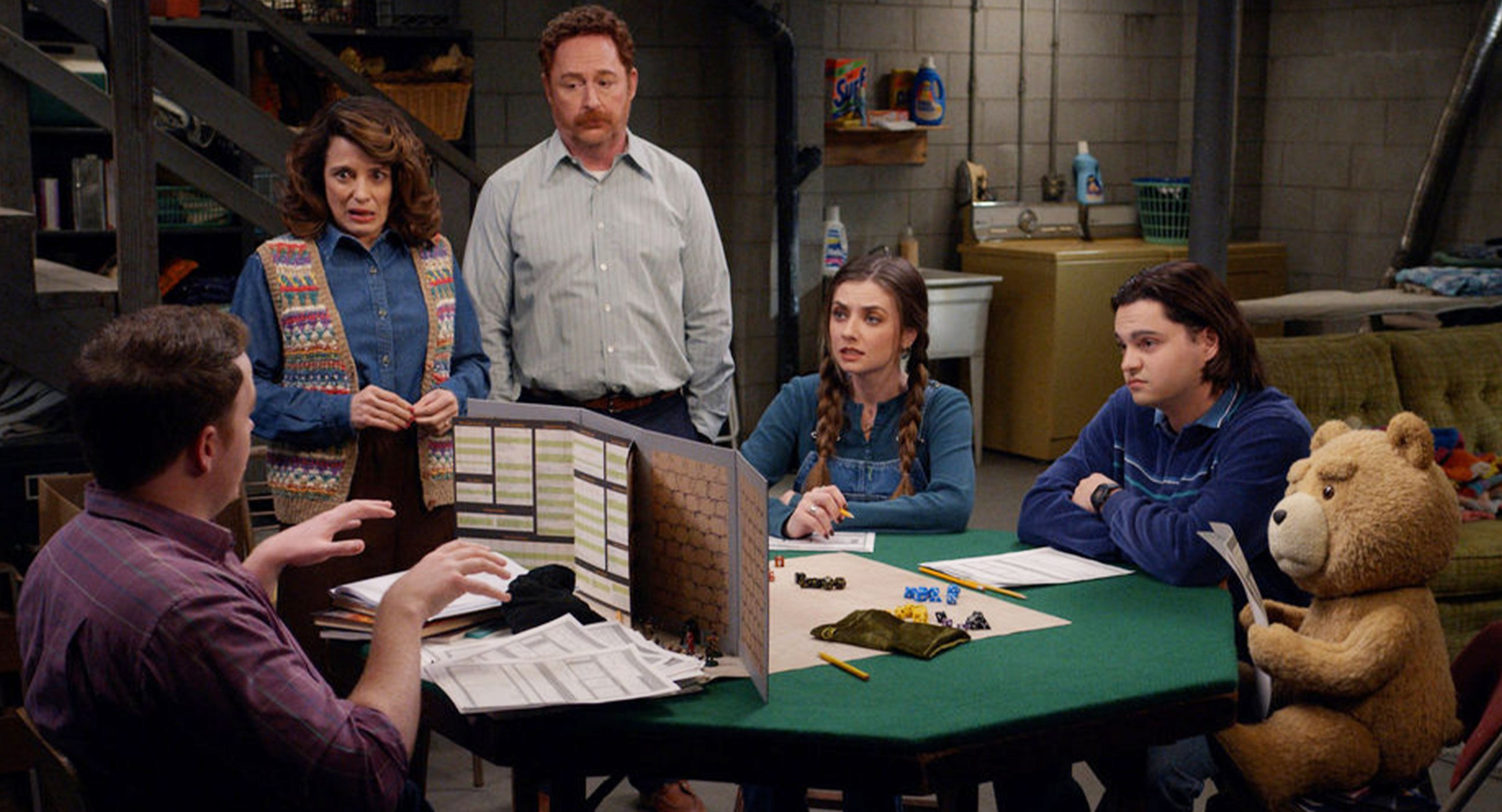
When Seth MacFarlane first brought a foul-mouthed teddy bear to life in the 2012 hit film Ted, the absurd premise quickly became a pop-culture phenomenon. Over a decade later, the franchise has evolved into a prequel television series on Peacock that explores the chaotic teenage years of John Bennett and his best friend Ted. With its second season, the show continues expanding the strange, vulgar, and oddly heartfelt world of the living stuffed animal.
Season two builds on the foundation laid by the first season, leaning harder into outrageous comedy while also strengthening the ensemble cast and character dynamics. Set between 1993 and 1994, the series again follows Ted and sixteen-year-old John navigating high school life, family dysfunction, and increasingly ridiculous misadventures in Framingham, Massachusetts. The result is a season that feels more confident, more outrageous, and often funnier than before.
One of the most noticeable improvements in season two is its confidence in tone. The first season sometimes struggled to balance the outrageous humor of the films with the slower pacing of a television format. Here, the writing feels much more comfortable letting the jokes escalate into absurd territory.
The opening episode, “Talk Dirty to Me,” sets the tone perfectly. After discovering a phone sex advertisement, John and Ted rack up a massive bill using the school’s basement phone, eventually inventing a fake delinquent student named Jeremy to take the blame. The situation spirals into increasingly ridiculous territory, culminating in a ludicrous scheme involving disguises and motocross theatrics. The episode demonstrates the series’ knack for escalating small teenage mistakes into elaborate disasters.
What makes the comedy work is MacFarlane’s trademark style. Much like his work on Family Guy, the humor mixes quick punchlines, absurd scenarios, and shock jokes with self-aware commentary. The series thrives on pushing boundaries, but it rarely feels mean-spirited.
Even after two films and multiple seasons, Ted remains an incredibly effective comedic character. Voiced again by Seth MacFarlane, the living teddy bear continues to function as the show’s chaos generator.
Ted’s personality sits somewhere between a rebellious teenager and an irresponsible adult. He drinks, swears, lies, and manipulates situations for his own entertainment, yet he also maintains a genuine loyalty to John. That dynamic gives the show emotional grounding even while the jokes become increasingly outrageous.
The season also explores Ted’s vulnerability in unexpected ways. In the episode “Mrs. Robicheck,” Ted develops an emotional attachment to a neglected housewife during a bizarre affair storyline. While the premise is pure raunchy comedy, the episode quietly reveals Ted’s capacity for loneliness and romantic longing.
MacFarlane’s voice performance remains the backbone of the series. His comedic timing gives Ted a distinctive rhythm that feels both improvisational and carefully crafted.
While Ted dominates the humor, John Bennett’s coming-of-age journey gives the show narrative structure. Max Burkholder continues to bring an appealing awkwardness to teenage John.
John often functions as the more cautious half of the duo, though he is easily influenced by Ted’s bad ideas. This dynamic mirrors the relationship seen in the original film but through the lens of adolescence. The series uses that setup to explore typical teenage anxieties—fitting in, school pressure, and first relationships—while filtering them through ridiculous situations.
Episodes like “Dungeons & Dealers” highlight how John’s social life constantly collides with Ted’s recklessness. What begins as a harmless attempt to get marijuana turns into an elaborate role-playing adventure involving his entire family. The absurd premise allows the show to parody fantasy tropes while still reflecting the awkwardness of teenage friendships.
Burkholder’s performance captures the confusion and excitement of adolescence without losing the comedic rhythm required for the show’s rapid-fire humor.
Season two significantly expands the roles of the Bennett family, giving the ensemble more opportunities to shine.
Scott Grimes and Alanna Ubach return as John’s parents, Matty and Susan. Their dysfunctional yet affectionate marriage becomes a consistent source of comedy throughout the season. One standout storyline involves Susan experimenting with relationship advice from magazines, leading to increasingly awkward attempts to spice up her marriage.
These moments give the show a different comedic flavor from the teen mischief. While Ted and John’s storylines revolve around reckless schemes, Matty and Susan’s plots often explore suburban married life with absurd exaggeration.
Scott Grimes in particular delivers some of the season’s funniest moments. Matty’s insecurity and misguided attempts to prove himself frequently spiral into embarrassing situations that mirror Ted and John’s antics in a different context.
One of the most significant improvements this season is the expanded role of Blaire, played by Giorgia Whigham. Introduced as John’s older cousin living with the family while attending college, Blaire quickly evolves into one of the show’s most interesting characters.
She occupies a unique position within the group. Older than John but still young enough to get caught up in Ted’s chaos, Blaire often acts as both accomplice and reluctant voice of reason.
Episodes like “The Mom’s Bombed Rom-Com” highlight her complexity. The story begins with Ted accidentally sabotaging her birthday party, leading to a drunken mistake that complicates her relationship with her girlfriend Sarah. What could have been a simple gag evolves into a surprisingly sincere exploration of insecurity and vulnerability.
Whigham balances sarcasm and emotional depth, giving the character a personality that feels distinct from the rest of the cast.
The series thrives on bizarre plotlines, and season two continues pushing the envelope.
Each episode revolves around a high-concept comedic premise: secret phone calls spiraling out of control, awkward suburban affairs, fantasy role-playing quests, and chaotic parties. Even the later episodes, including “The Sword in the Stoned,” “Roe v. Weed,” “Susan Is the New Black,” and “Fraudcast News,” maintain the show’s pattern of escalating absurdity.
Despite the outrageous humor, the scripts remain tightly structured. Most episodes start with a simple teenage problem before gradually snowballing into elaborate comedic disasters.
This approach allows the show to maintain a fast pace while ensuring every episode feels distinct. The early-1990s setting continues to be an important part of the show’s identity. References to outdated technology, cultural trends, and media of the era provide an additional layer of humor.
Phone lines, VHS tapes, tabletop role-playing games, and cable television all play major roles in the storylines. Rather than relying solely on references, the show uses these elements as catalysts for comedic situations.
The setting also helps distinguish the series from the modern-day timeline of the films. By exploring Ted and John’s teenage years, the show expands the franchise’s world without feeling redundant. Although the humor is often crude and outrageous, season two quietly emphasizes themes of friendship, loyalty, and family.
Ted and John’s bond remains the emotional heart of the show. Their relationship feels authentic because it captures the messy reality of teenage friendships. They fight, lie to each other, and get into trouble together, yet they always end up supporting one another.
The Bennett household also provides a sense of warmth that offsets the raunchy jokes. Matty and Susan may be dysfunctional, but their affection for John—and even Ted—gives the show an emotional anchor. These moments prevent the series from becoming purely cynical.
Season two of Ted demonstrates that the franchise can successfully transition from blockbuster comedy to episodic television. With sharper writing, stronger ensemble performances, and increasingly absurd storylines, the show builds on the promise of its first season.
Seth MacFarlane continues to deliver a hilarious performance as Ted, while Max Burkholder, Giorgia Whigham, Scott Grimes, and Alanna Ubach expand the comedic possibilities of the Bennett household.
The result is a season that embraces its ridiculous premise while still delivering genuine character moments. It may not appeal to viewers who dislike crude humor, but for fans of the franchise, it offers exactly what they want: outrageous comedy, chaotic misadventures, and the strange charm of a foul-mouthed teddy bear navigating teenage life.
With its confident storytelling and consistently funny episodes, Ted season two proves that this bizarre franchise still has plenty of comedic mileage left.