Supergirl – Film Review
Published June 26, 2026

Movie Details

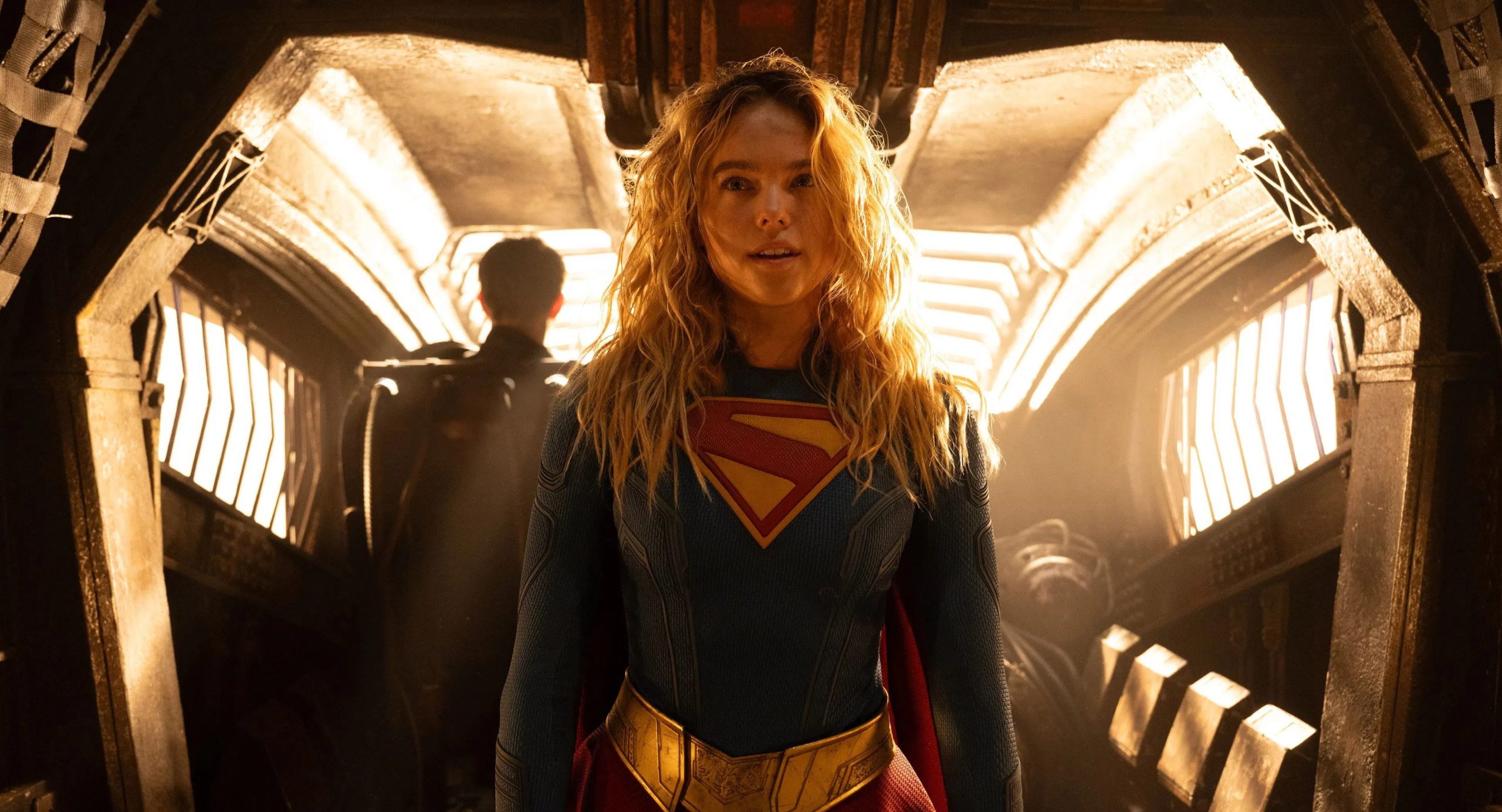
The second entry in the DC Universe boasts a noticeably different energy than audiences may expect from a character long associated with hope, optimism, and bright skies. Directed by Craig Gillespie and written by Ana Nogueira, Supergirl takes a more cosmic, rough-edged approach to introducing Kara Zor-El into the DCU. Rather than positioning her as simply a younger counterpart to Superman, the film presents someone shaped by loss, isolation, and years of emotional drift. The result is a superhero film that is frequently engaging, visually striking, and emotionally sincere—even if its storytelling never quite escapes the gravitational pull of familiar genre patterns.
Unlike previous cinematic interpretations of the character, this version of Kara begins from a place of instability. The opening act establishes her history with Krypton and Argo City in surprisingly somber fashion. Watching an entire civilization survive one apocalypse only to face a slower, crueler collapse creates a stronger emotional foundation than expected. The film spends meaningful time showing Kara’s upbringing and the tragedy that defines her relationship with home, giving weight to her later inability to fully connect with Earth.
That emotional setup proves important because this isn’t really a traditional origin story. Kara already has powers. She already knows who she is. What she lacks is direction.
When the story shifts into the present and follows her galaxy-hopping birthday celebrations alongside Krypto, Supergirl transforms into something closer to a space western mixed with a revenge adventure. This tonal shift is one of the movie’s biggest strengths. Rather than another Earth-bound superhero narrative built around saving cities from destruction, the film embraces strange planets, alien cultures, and dangerous corners of the universe.
Leading the film is Milly Alcock, and she delivers exactly the kind of performance the character needed. Alcock’s Kara feels messy, impulsive, restless, and emotionally guarded. She never plays the character as a flawless icon. Instead, she captures someone carrying years of unresolved grief while trying to distract herself through movement, adventure, and reckless freedom. Alcock balances sarcasm, vulnerability, anger, and quiet sadness in a way that gives the character dimension. Even when the script leans into familiar emotional territory, she keeps scenes feeling authentic. Her chemistry with Eve Ridley as Ruthye Marye Knoll becomes the film’s emotional engine.
Ruthye could have easily become another stock revenge companion, but Ridley gives her enough sincerity and conviction that the relationship develops naturally. Their dynamic shifts over time—from irritation to reluctant partnership to genuine understanding—and those interactions often provide the movie’s strongest moments. The film becomes less about defeating villains and more about what vengeance does to people who have already suffered enough.
That emotional thread gives Supergirl more resonance than its plot might initially suggest, and visually, the movie is consistently impressive.
Craig Gillespie and the visual effects team lean fully into the cosmic setting and largely make it work. The planets all feel distinct without becoming visually overwhelming. Bilqus stands out especially well, balancing beauty with danger. The movie embraces colorful alien environments while avoiding the overly polished digital aesthetic that can make some modern superhero films feel interchangeable. There’s a welcome sense of texture to many locations.
The action sequences also deserve recognition because they consistently maintain momentum and variety. Rather than endless beams of energy or collapsing skylines, the fights here feel physical and chaotic. Supergirl’s powers are used creatively, emphasizing speed, strength, improvisation, and movement rather than pure invincibility. Several set pieces stand out because they communicate character as much as spectacle.
The arrival of Jason Momoa as Lobo injects a completely different energy into the movie. Momoa appears to understand exactly what kind of character he’s playing and commits to the absurdity without losing credibility. He doesn’t dominate the story, but he adds unpredictability whenever he appears and offers a sharp contrast to Kara’s more emotionally burdened personality. Meanwhile, Matthias Schoenaerts delivers a solid performance as Krem of the Yellow Hills.
Krem works well enough as an antagonist because he represents selfish cruelty more than grand ideological conflict. Schoenaerts gives him enough presence to keep him memorable, even if the screenplay doesn’t explore him deeply beyond his narrative function. That simplicity points toward one of the film’s biggest weaknesses.
For all its visual ambition and character work, Supergirl follows an extremely recognizable structure. The revenge quest, reluctant partnership, moral dilemmas, personal growth, and eventual emotional revelations all unfold in ways that seasoned viewers will likely predict early. The movie introduces interesting ideas about grief, anger, and identity but rarely pushes them into unexpected places.
There’s a sense that the film is constantly approaching something more challenging but choosing accessibility instead. The pacing also becomes uneven in the middle section.
The opening establishes Kara effectively, and the final act delivers satisfying emotional payoff, but the journey between those points occasionally drags. Several sequences feel repetitive as the story moves from location to location, introducing obstacles that extend the runtime without significantly deepening character relationships. The film isn’t overlong, but sections of the adventure start to feel episodic.
There’s also a broader familiarity to the storytelling that prevents Supergirl from becoming truly exceptional. While the cosmic setting gives it personality, the emotional arc itself follows a path superhero audiences have seen many times before. The themes work because the performances sell them—not because the writing consistently finds new angles.
Even so, there’s something refreshing about a superhero movie that prioritizes emotion over universe-building obligations. The appearances from David Corenswet and supporting performances from David Krumholtz and Emily Beecham support the story without distracting from Kara’s journey. The film feels confident enough to let its protagonist remain the center of attention.
By the time the credits roll, Supergirl leaves a strong impression—not because it reinvents the superhero genre, but because it remembers that these stories work best when the characters matter as much as the powers.
It’s imperfect, occasionally predictable, and unevenly paced, but it succeeds where it matters most: making audiences care about Kara Zor-El.