Star Wars: The Mandalorian and Grogu – Film Review
Published May 23, 2026

Movie Details

It’s been seven years since the last time we travelled to a galaxy far, far away in the form of Star Wars: Episode IX – The Rise of Skywalker, which left an extremely sour taste in the mouths of millions of fans, myself included. We all knew that a new Star Wars movie one day would be inevitable but did it really need to be The Mandalorian and Grogu? Sure, The Mandalorian (particularly its first two seasons) were well-received by the masses, but virtually everything about this film seems confusing and its existence still didn’t feel justified by the time the credits rolled.
For a franchise built on mythmaking, wonder, and emotional resonance, Star Wars: The Mandalorian and Grogu feels surprisingly hollow. Directed by Jon Favreau and co-written alongside Dave Filoni and Noah Kloor, the long-awaited theatrical continuation of The Mandalorian attempts to transform the streaming series into a full cinematic adventure. Instead, it delivers a film that feels strangely small, overextended, and emotionally disconnected from the magic that once made this galaxy feel alive.
There is a certain novelty in seeing Din Djarin and Grogu back on the big screen. The audience’s affection for these characters still exists, largely because of the goodwill established over multiple television seasons. Pedro Pascal continues to bring weary charm to Din Djarin, even beneath the beskar helmet, and Grogu remains an undeniably marketable presence. Yet the film leans so heavily on audiences already loving these characters that it forgets to give them a compelling cinematic journey of their own.
What unfolds is essentially an overlong side quest stretched to feature length. The rescue mission involving Rotta the Hutt should, in theory, create opportunities for moral tension, political intrigue, and larger stakes within the fractured post-Empire galaxy. Instead, the screenplay treats the story like a sequence of disconnected errands. Din travels somewhere, fights somebody, escapes danger, receives new information, and repeats the process. The narrative momentum rarely builds because the film constantly resets itself after every action sequence.
The biggest issue is that the movie never truly justifies why this story needed a theatrical release rather than another few episodes of television. So much of the pacing resembles episodic storytelling, complete with repetitive encounters and abrupt tonal pivots. Scenes often feel structured like serialized content, where individual adventures are designed to fill weekly runtime rather than support a cohesive cinematic experience. That approach worked reasonably well on Disney+, but on the big screen it exposes how thin the plotting really is.
Jeremy Allen White’s performance as Rotta the Hutt is one of the film’s more interesting elements, mostly because the character introduces some welcome unpredictability. Rotta’s desire to escape Jabba’s shadow gives the movie a potentially compelling emotional thread. White injects personality into the role, balancing arrogance, insecurity, and desperation in ways that make Rotta more layered than expected. Unfortunately, the script never digs deeply enough into those ideas. Rotta spends most of the film moving from hostage to ally to target without much meaningful development between those transitions.
Sigourney Weaver fares even worse as Commander Ward. Weaver brings authority to nearly every role she touches, but the screenplay gives her painfully little to work with. Ward functions less like a character and more like a walking exposition machine, appearing whenever the story needs to redirect Din toward the next objective. The New Republic itself continues to feel frustratingly underdeveloped throughout Disney’s modern Star Wars storytelling, and this film does nothing to improve that problem.
Visually, the movie delivers occasional flashes of classic Star Wars imagery, but even those moments feel strangely muted. The gladiator arena on Shakari has some texture, and Nal Hutta’s grimy underworld atmosphere briefly evokes the franchise’s old-world sci-fi aesthetic. Still, much of the production has the glossy artificiality that has plagued several recent Disney-era Star Wars projects. Environments often resemble expensive soundstages rather than lived-in worlds.
That artificial feeling extends to the action sequences. There are plenty of fights, chases, monsters, explosions, and droid battles, but very little of it carries tension or excitement. Favreau directs the action competently enough, yet the choreography lacks imagination. Battles begin to blur together because they rarely reveal anything new about the characters involved. Even major confrontations feel mechanically assembled rather than emotionally driven.
One particularly frustrating aspect of the film is how little awe it inspires. Star Wars, even at its weakest, usually contains moments of mythic grandeur or emotional wonder. Whether it is the spiritual mysticism of the Force, the operatic heroism of the original trilogy, or the adventurous sweep of the better Disney-era entries, the franchise traditionally offers some sense of cinematic enchantment. The Mandalorian and Grogu lacks that magic almost entirely.
That absence becomes increasingly noticeable as the movie progresses. The Force feels reduced to a narrative convenience instead of something mystical or spiritually meaningful. The galaxy itself feels tiny rather than expansive. The emotional stakes never rise beyond surface level. Even John Williams’ musical legacy — echoed here through familiar thematic choices — cannot inject the film with the sense of adventure it desperately needs.
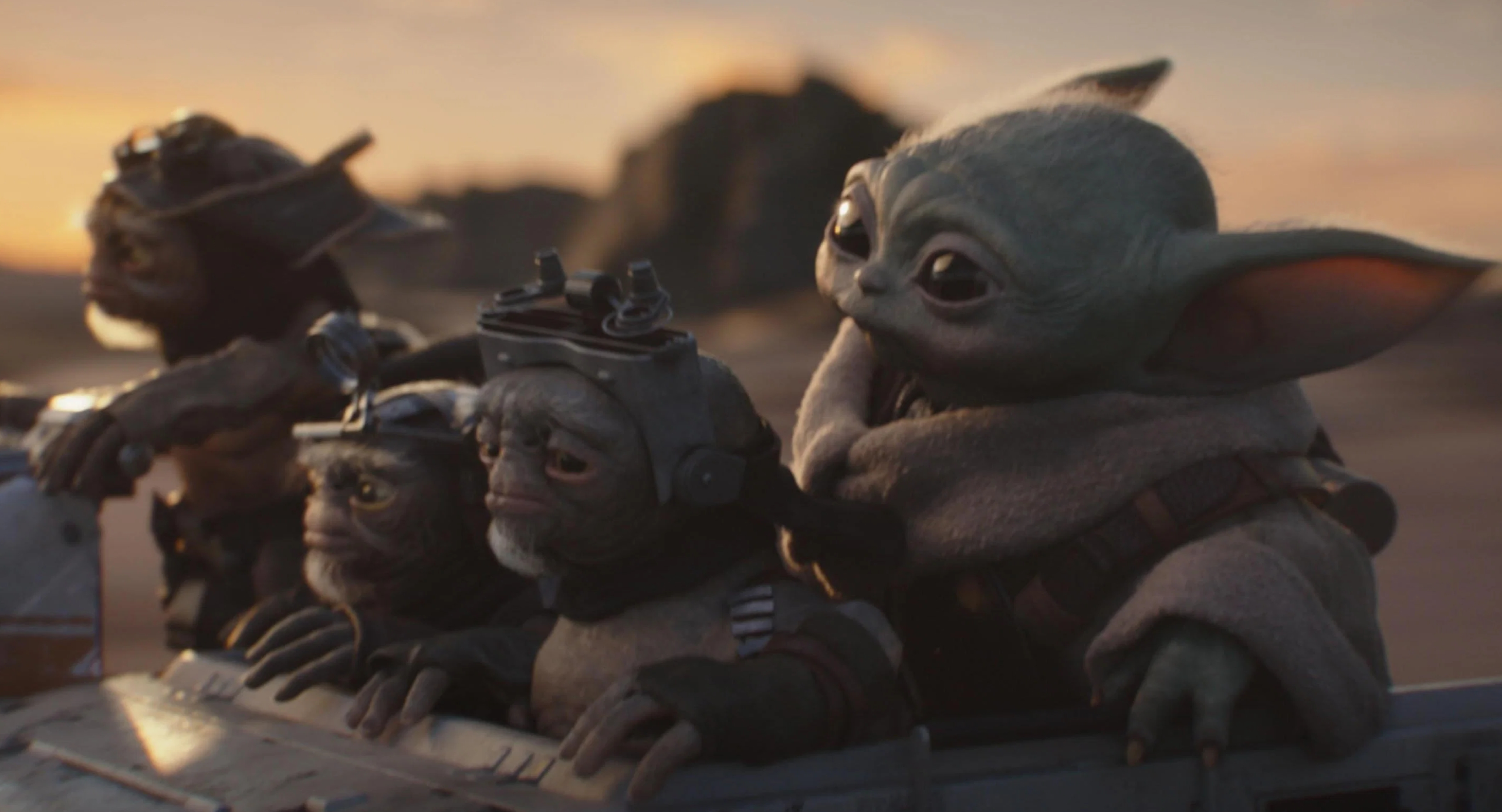
Grogu, once an instantly lovable phenomenon, also suffers from overexposure. The character worked best when used sparingly, but the film constantly leans on repetitive reaction shots and cute behavior in hopes of generating emotional investment. While Grogu still has charm, the movie weaponizes that charm so aggressively that it starts feeling calculated rather than sincere. Several scenes exist purely to remind audiences how adorable the character is instead of advancing the story.
The film’s villains are similarly underwhelming. Jonny Coyne’s Janu Coin never emerges as a memorable antagonist, largely because his motivations remain generic and his screen presence lacks menace. The Hutt Twins fare slightly better conceptually, but they are introduced so late and handled so simplistically that they never become intimidating. Star Wars villains traditionally thrive on iconic characterization, visual presence, or ideological conflict. These antagonists simply occupy space until the next action sequence arrives.
Martin Scorsese’s bizarre appearance is another distracting element. While some viewers may appreciate the unexpected casting choice, the cameo-like nature of his role pulls attention away from the film rather than adding to it. It becomes one more example of a movie that feels oddly unsure of its own identity.
To the film’s credit, there are occasional emotional beats that nearly work. Din’s protectiveness toward Grogu still carries warmth, and there are fleeting moments where the story gestures toward themes about loyalty, fatherhood, and chosen family. Longtime fans of the series may find enough comfort in spending more time with these characters to remain moderately entertained.
But comfort is not enough for a theatrical Star Wars event.
A film carrying the Star Wars name should leave audiences feeling transported. It should reignite imagination, inspire excitement, or provoke emotion. Instead, The Mandalorian and Grogu often feels like content assembled to maintain franchise momentum rather than a story driven by creative necessity. The movie is never offensively terrible, but its overwhelming mediocrity may actually be more disappointing. It settles for being passable when Star Wars should strive to be unforgettable.
By the time the credits roll, the film resembles a stretched-out streaming special masquerading as a blockbuster epic. Fans hoping for a triumphant cinematic return for Din Djarin and Grogu may leave feeling strangely detached from the adventure unfolding onscreen. There are moments of fun scattered throughout, but they are buried beneath sluggish pacing, weak villains, repetitive structure, and a shocking lack of wonder.
For a saga once defined by imagination, mythology, and heart, that missing magic becomes impossible to ignore.