Send Help – Film Review
Published January 30, 2026

Movie Details

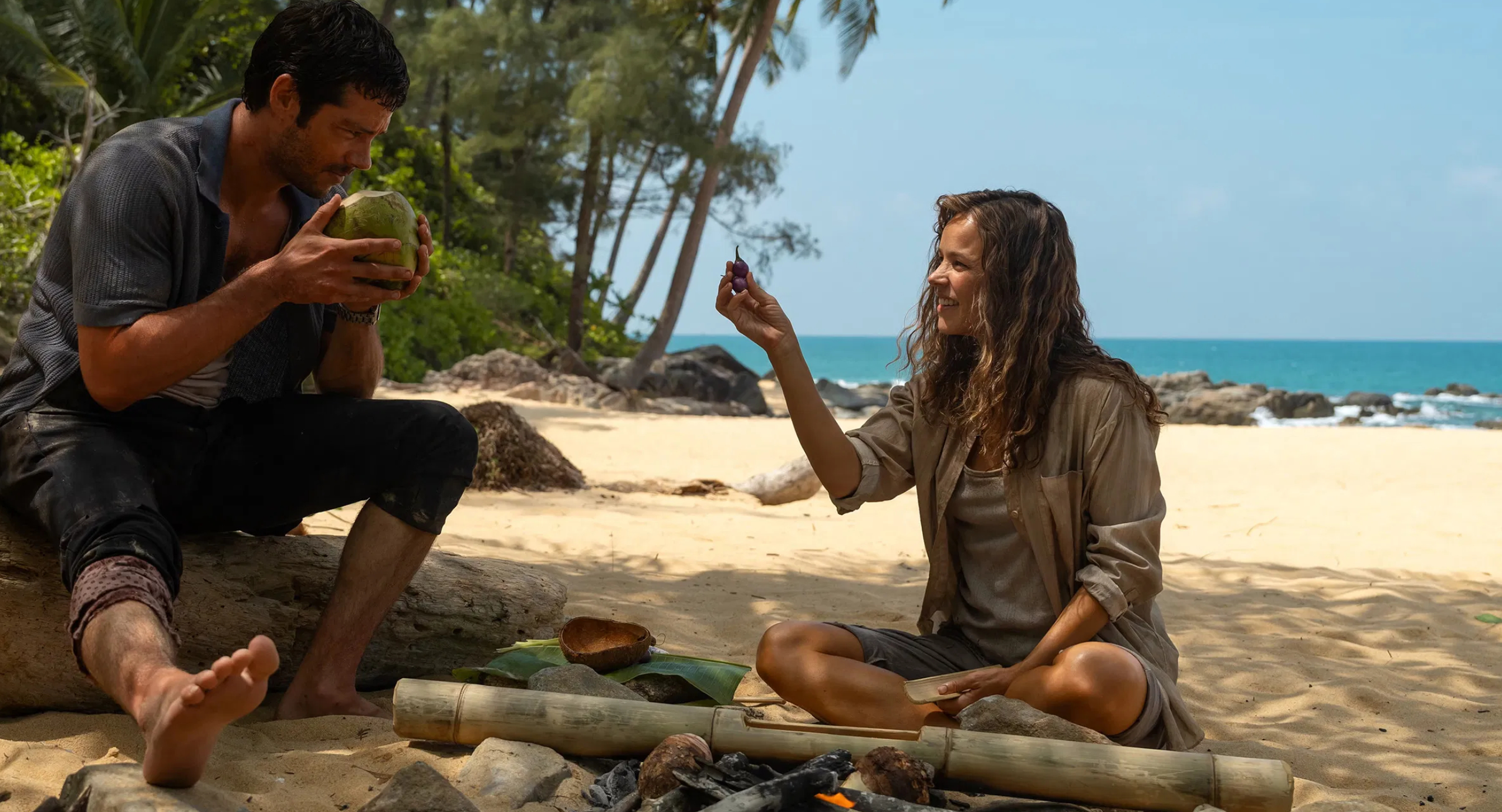
God bless Sam Raimi. The world right now is so bleak and we need to have a crazy fun time at the movies, and you can always count on Raimi to deliver the goods. His latest, Send Help, is the kind of psychological horror-thriller that crawls under your skin, sets up camp, and refuses to leave. Stripping the survival genre down to two people, one island, and a tidal wave of unresolved resentment, the film delivers a razor-sharp character study disguised as a castaway story. Anchored by ferocious performances from Rachel McAdams and Dylan O’Brien, this is a nerve-shredding descent into shifting power, buried rage, and the terrifying freedom that comes when social rules wash away with the tide.
From the outset, the film toys with audience expectations. What begins as a corporate drama—full of quiet humiliations, office politics, and class-coded cruelty—quickly mutates into something far more primal. The plane crash that strands Linda Liddle and her entitled boss Bradley Preston on a remote island is not treated as spectacle, but as rupture. Civilization doesn’t explode; it simply disappears. And in that vacuum, personality becomes destiny.
Raimi, co-producing and directing, brings a surprisingly restrained hand to the material. Known for kinetic camera work and operatic horror, he instead leans into stillness, long silences, and the oppressive presence of nature. The island is beautiful in the way a trap is beautiful—lush, open, and quietly indifferent. Sunlight becomes as menacing as darkness. The horror doesn’t come from the environment alone, but from watching two people renegotiate who they are when no one is watching.
Rachel McAdams delivers a career-best performance as Linda. She begins the film tightly wound, deferential, and visibly shrinking herself in professional spaces. McAdams never plays her as weak, though—only conditioned. Every glance downward, every hesitant sentence feels like learned behavior. When the setting shifts to survival mode, Linda’s practical knowledge and emotional endurance slowly surface, not as a triumphant makeover, but as a peeling away of social constraints. McAdams charts this evolution with chilling precision, making every step feel earned and slightly unsettling.
Opposite her, Dylan O’Brien gives Bradley layers that could have easily been flattened into caricature. Yes, he’s arrogant, dismissive, and used to power insulating him from consequences. But O’Brien lets flickers of fear, confusion, and wounded pride leak through. His performance captures a man watching the hierarchy he’s relied on dissolve in real time. The horror of Bradley isn’t that he’s a monster from the start—it’s that he’s an ordinary product of privilege who doesn’t know how to exist without it.
The script by Damian Shannon and Mark Swift is impressively disciplined. Rather than leaning on jump scares or external threats, the tension builds through conversation, silence, and small decisions that carry enormous emotional weight. Survival tasks—finding water, building shelter, gathering food—become battlegrounds for control. Who gives orders? Who needs whom more? The film understands that dependence is its own form of terror.
What makes Send Help exceptional is how it explores power without easy moral framing. The dynamic between Linda and Bradley doesn’t simply flip; it mutates. The film asks uncomfortable questions about what happens when someone who has been powerless suddenly holds all the leverage. Is survival the goal, or is it something else—validation, revenge, reinvention? The story resists turning either character into a clean hero or villain, instead showing how isolation magnifies traits already present.
Raimi’s direction emphasizes psychological unease over spectacle. The sound design is particularly effective: distant waves, buzzing insects, and long stretches of near-silence create an atmosphere where every word lands like a dropped glass. The camera often lingers just a beat too long on faces, forcing the audience to sit with micro-expressions—calculation, resentment, dawning realization. The result is tension that feels intimate rather than explosive.
Visually, the film plays with contrast. The bright tropical setting clashes with the increasingly dark emotional terrain, creating a sense of disorientation. Days blur together. Time feels elastic. Without the usual markers of society, identity becomes fluid, and the film’s pacing mirrors that drift. Scenes unfold slowly, but never slackly; the deliberate rhythm mirrors the psychological chess match between the two leads.
Thematically, Send Help taps into anxieties about workplace dehumanization, gendered expectations, and the masks people wear to survive professional environments. Stranded away from performance reviews and corporate optics, Linda and Bradley confront stripped-down versions of themselves—and each other. The film suggests that civility can be as much costume as character, a chilling idea that lingers long after the credits.
Yet despite its bleak undercurrents, the movie is undeniably entertaining. There’s dark humor threaded throughout, often in the absurdity of corporate power dynamics transplanted into survival situations. Raimi allows moments of irony to breathe, giving the audience brief releases of tension before tightening the screws again. It’s a careful balance that keeps the film from becoming emotionally exhausting.
The final act doesn’t rely on spectacle to land its impact. Instead, it doubles down on psychological fallout, identity reinvention, and the stories people tell—others and themselves—about what happened. The film’s closing movements feel less like an ending and more like a transformation, leaving viewers unsettled in the best possible way.
Send Help stands out in the horror-thriller landscape because it understands that the most frightening wilderness isn’t the island—it’s the human psyche when freed from consequence. With powerhouse performances, controlled direction, and a script that trusts its audience, the film earns its intensity rather than forcing it. It’s gripping, uncomfortable, and deeply thought-provoking. This is survival horror for the mind, not just the nerves—and it hits with the slow, inescapable force of a rising tide.
