Return to Silent Hill – Film Review
Published January 25, 2026

Movie Details

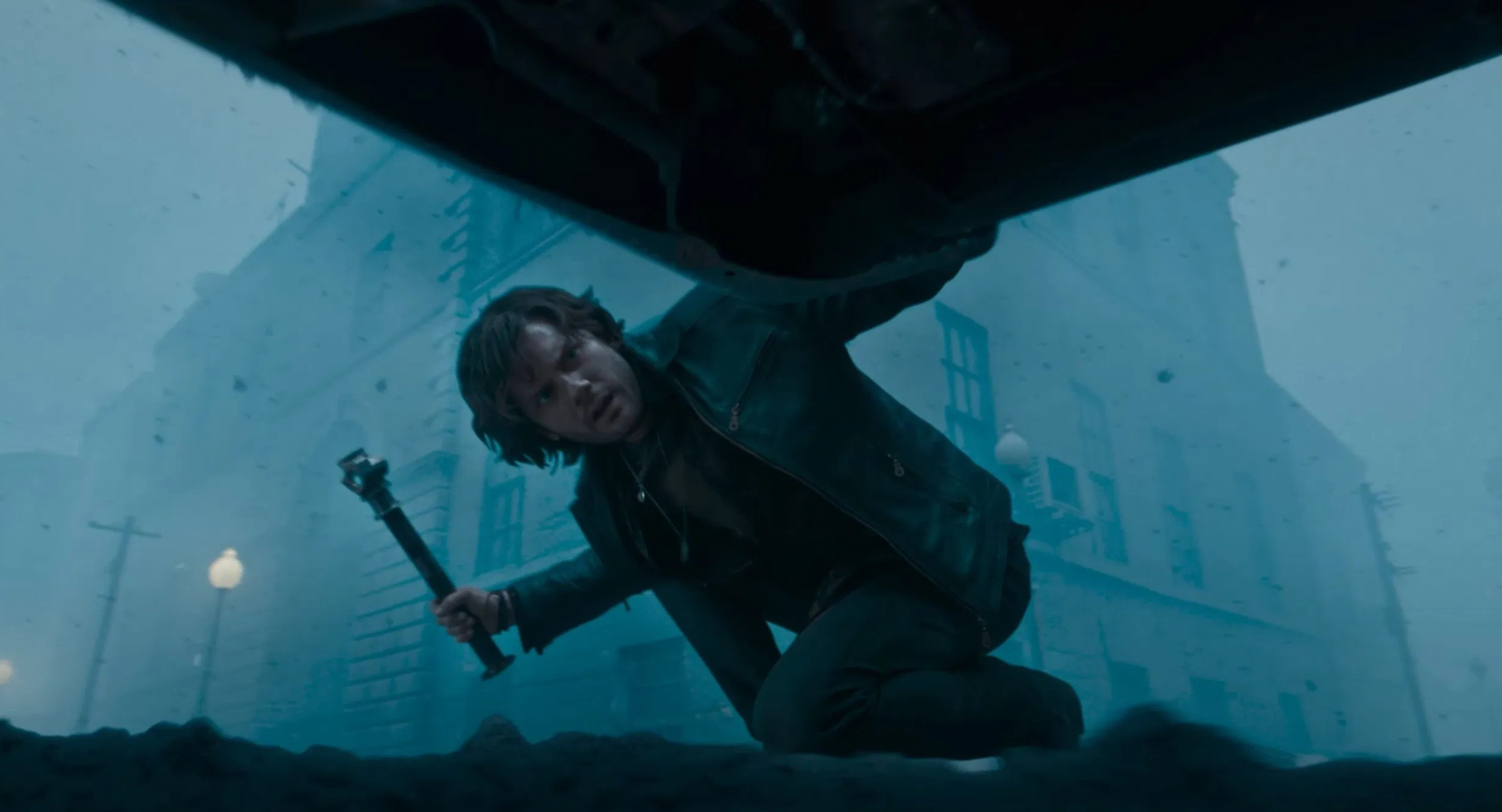
Christophe Gans returns to the fog-drenched nightmare he first brought to screens in 2006 with Return to Silent Hill, a reboot-slash-sequel that attempts to channel the psychological dread of Konami’s legendary Silent Hill 2. The ambition is obvious. This is a film that wants to be mournful, cerebral, and spiritually faithful to one of the most beloved survival horror games ever made. Unfortunately, what emerges is a film more invested in iconography than insight — a moody, visually committed adaptation that struggles to justify its own emotional weight. The result is an experience that looks the part but rarely feels it.
Jeremy Irvine stars as James Sunderland, a man shattered by loss and lured back to the ghostly town of Silent Hill by a mysterious letter from the woman he loved. It’s a premise loaded with psychological complexity, guilt, and unreliable perception — rich terrain for horror storytelling. Gans clearly understands the aesthetic language of the games: ash falls like snow, fog swallows streets whole, and environments rot into industrial nightmares without warning. Yet for all the atmosphere, the film feels dramatically inert, mistaking solemnity for substance.
The biggest issue is pacing. The film drifts rather than builds. Scenes unfold with long stretches of brooding silence, but they don’t accumulate tension — they stall momentum. Psychological horror relies on emotional escalation and internal unraveling. Here, James’ journey feels oddly flat, with his mental deterioration presented as a given rather than something we experience alongside him. Instead of being pulled into his psyche, we’re left observing from a distance.
That distance is compounded by the screenplay, co-written by Gans, Sandra Vo-Anh, and Will Schneider. The dialogue leans heavily into cryptic statements and mournful monologues, but rarely sounds like how people speak. Characters don’t converse — they deliver portentous fragments. This makes emotional connections difficult to form, especially when the narrative hinges on grief, guilt, and fractured love. The story gestures toward depth without earning it, presenting psychological themes in a blunt, explanatory manner that undercuts mystery.
Jeremy Irvine gives a committed performance, but he’s fighting against the script. His James is perpetually anguished, which becomes monotonous without variation. There’s little sense of who James was before his trauma, so his breakdown lacks contrast. Psychological horror needs emotional grounding; without it, despair becomes white noise. Irvine sells the pain, but the character feels more like a symbol than a person.
Hannah Emily Anderson shoulders multiple roles, and while she brings a fragile, eerie presence, the film’s handling of identity and doubling feels more confusing than profound. The movie leans on the idea of distorted memory and projection, but the execution lacks clarity. Instead of a slow, dreadful realization, revelations feel abrupt and overly literal, draining them of psychological impact.
The clear standout is Evie Templeton as Laura. She injects the film with a sense of unsettling unpredictability that the adults lack. Templeton walks a delicate line between innocence and eeriness, never overplaying either. Her performance feels natural yet disquieting, and she brings genuine emotional texture to scenes that might otherwise feel abstract. Whenever she’s on screen, the film feels more alive, more human, and more unnerving — a reminder of what the movie could have been with stronger character work.
Visually, however, the film often impresses. Cinematographer Pablo Rosso delivers surprisingly strong work, using shadow, texture, and contrast to give Silent Hill a tactile, decaying presence. Interiors feel damp and suffocating; exteriors are swallowed by oppressive whiteness. The transitions between “real” and nightmare spaces are fluid and visually inventive. Even when the storytelling falters, the imagery frequently holds attention. There’s a painterly quality to some compositions that evokes European horror more than Hollywood genre fare.
Production design also deserves credit. Locations like the apartments and hospital are layered with grime, rust, and unsettling detail. The film understands that Silent Hill is a place where memory and architecture bleed together. Unfortunately, this visual care isn’t matched by narrative discipline. The environments feel meaningful, but the film doesn’t fully explore their symbolic potential, using them mostly as backdrops for wandering and confrontation.
The monsters, including the return of Pyramid Head, are handled with reverence to the games’ designs, but their use feels more like obligation than storytelling necessity. They appear as icons, not extensions of psychology. In the source material, creatures embody inner torment. Here, they often feel like set pieces inserted because fans expect them. That disconnect weakens the horror — spectacle replaces meaning.
Sound design and music aim for oppressive dread, with metallic groans, distant echoes, and mournful scoring, yet the mix becomes numbing over time. Constant heaviness without variation dulls impact. Silence can be powerful in horror, but here it often feels like empty space rather than tension.
Perhaps the most frustrating aspect is how the film explains itself. Psychological horror thrives on ambiguity, but Return to Silent Hill repeatedly leans toward literal interpretations of guilt and trauma. By spelling out themes instead of letting them resonate, it shrinks the emotional experience. The story’s central tragedy should feel devastating; instead, it feels processed and remote.
There’s no denying Gans’ affection for the franchise. He recreates the tone, imagery, and mythic sadness of Silent Hill with sincerity. But sincerity alone isn’t enough. A successful adaptation needs to translate interactivity into cinematic psychology. This film recreates the surfaces of the game without fully capturing its emotional architecture.
In the end, Return to Silent Hill is a beautifully dressed ghost of a film — somber, visually rich, and reverent, yet dramatically undernourished. It wanders through grief and guilt without ever fully inhabiting them. Aside from Templeton’s excellent performance and Rosso’s striking cinematography, the film struggles to make its journey feel urgent or deeply affecting. Fans may appreciate the fidelity of the imagery, but as a psychological horror film, it never quite escapes the fog.