Psycho Killer – Film Review
Published February 22, 2026

Movie Details

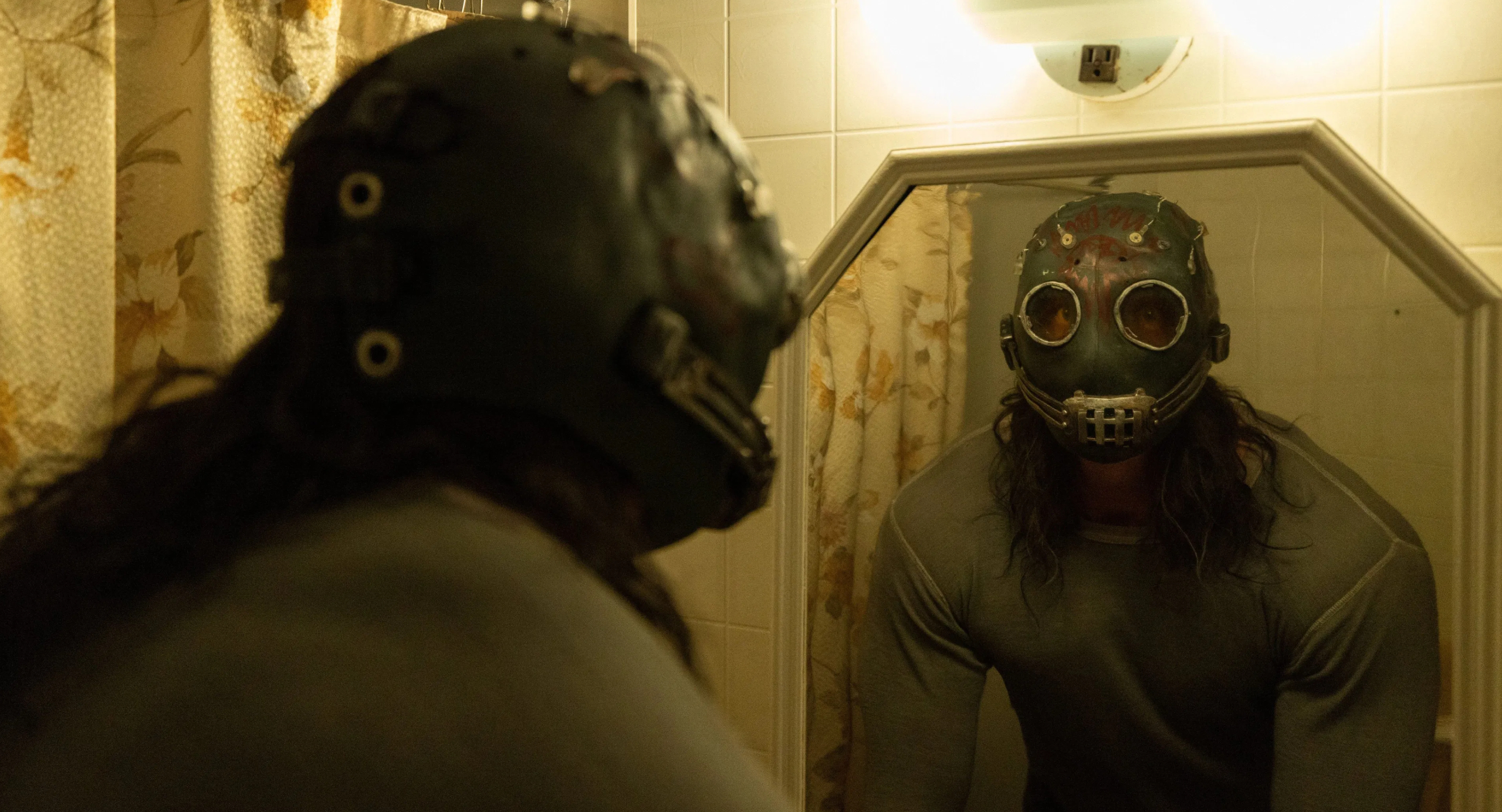
Horror-thrillers built around ritualistic serial killers live and die by atmosphere, tension, and psychological nuance. With Psycho Killer, director Gavin Polone makes his feature directorial debut from a script by Andrew Kevin Walker, a writer whose past work in the genre set a high bar for moral complexity and dread. Unfortunately, this grim tale of a grieving Kansas Highway Patrol officer hunting a self-styled Satanic murderer collapses under the weight of its own grim seriousness. Despite a committed lead performance from Georgina Campbell, the film feels derivative, tonally confused, and more interested in lurid provocation than meaningful suspense.
Jane Archer (Campbell), a state trooper, witnesses the brutal murder of her husband at the hands of a serial killer dubbed “the Satanic Slasher.” The media frenzy surrounding the case and the occult symbols left at crime scenes add a layer of cultural paranoia. As Jane embarks on a relentless pursuit across state lines, she discovers she is pregnant, deepening her emotional stakes. This setup could have fueled a tense, character-driven cat-and-mouse thriller. Instead, the film reduces Jane’s grief to a repetitive cycle of grim stares, ominous highway drives, and heavy-handed flashbacks.
Campbell does what she can with the material. She convincingly portrays a woman unraveling under trauma, and there are fleeting moments where her performance hints at a richer internal struggle. In quieter scenes—particularly when Jane processes her pregnancy—the film briefly gestures toward complexity. But the screenplay never allows her to evolve beyond a familiar archetype: the haunted cop chasing vengeance. The emotional beats are telegraphed so broadly that they lose impact long before the story reaches its climax.
The antagonist, Richard Joshua Reeves—played with grim relish by James Preston Rogers—is portrayed as a former preacher turned mass murderer with apocalyptic ambitions. His crimes are staged for maximum shock value: occult symbolism, grotesque ritualism, and escalating brutality. However, the film confuses excess with depth. Reeves’ supposed ideology is sketched in clichés about damnation and Hell, without meaningful exploration of belief, manipulation, or fanaticism. He becomes less a terrifying presence and more a walking bundle of genre tropes.
Rogers commits fully, delivering monologues with theatrical intensity and embodying Reeves with feral physicality. Yet the writing undercuts him at every turn. His motivations are spelled out in blunt exposition rather than unsettling ambiguity. Rather than allowing viewers to piece together his psyche, the film insists on explaining everything, stripping away mystery. What should have been a chilling portrait of delusion instead feels cartoonish.
Veteran actor Malcolm McDowell appears as Mr. Pendleton, a Satanist mansion owner whose presence initially suggests a dive into cult psychology. McDowell brings his trademark gravitas and sly menace, but the role is frustratingly underdeveloped. The mansion sequence teases a larger conspiracy or philosophical debate about faith and fanaticism, yet it functions merely as a narrative pit stop. Characters enter and exit with little consequence, and potential thematic threads are left dangling.
Stylistically, Polone leans heavily into grim, desaturated visuals and pounding, ominous score cues. The highways of the Midwest are shot with a cold sterility that becomes monotonous rather than evocative. While the cross-country chase could have emphasized isolation and vastness, the film rarely captures a sense of place. Locations blur together, and the journey feels geographically and emotionally flat.
The violence, meanwhile, is presented in a way that aims to shock but lacks suspense. Rather than building tension through suggestion or anticipation, Psycho Killer frequently cuts straight to aftermath or explicit brutality. This approach diminishes dread. When everything is heightened, nothing feels singularly horrifying. A more restrained hand might have allowed the audience’s imagination to do some of the work, but the film opts for blunt force instead.
One of the more intriguing narrative threads involves Jane’s pregnancy. The idea of pursuing a homicidal fanatic while carrying new life carries symbolic weight. It could have provided a counterpoint to the killer’s obsession with destruction. Unfortunately, this subplot is treated more as a plot complication than a meaningful emotional arc. Jane’s internal conflict—between self-preservation and obsession—is mentioned but rarely explored in depth.
The film’s pacing also proves problematic. The middle act drags, weighed down by repetitive investigative beats. Jane interviews witnesses, examines symbols, and narrowly misses Reeves again and again. Without fresh revelations or escalating psychological stakes, the pursuit becomes tedious. By the time the story shifts toward its larger apocalyptic ambition, the escalation feels abrupt rather than inevitable.
Thematically, Psycho Killer gestures toward questions about faith, trauma, and the seductive power of extremist ideology. However, it approaches these ideas superficially. Reeves’ apocalyptic mission is framed as a literal desire to “open the gates of Hell,” but the film never interrogates what that belief system means or how it manipulates followers. Similarly, Jane’s trauma is portrayed in predictable genre shorthand—nightmares, distant stares, clenched jaw determination—without deeper psychological insight.
There are moments when the film nearly finds its footing. A tense confrontation in a motel room showcases Campbell’s physical intensity and Polone’s ability to stage close-quarters suspense. For a brief stretch, the film feels urgent and dangerous. Yet these flashes are isolated, unable to compensate for the surrounding inertia.
Supporting performances from Logan Miller and Grace Dove offer minor sparks of energy, but their characters function more as plot devices than fully realized individuals. The world of the film feels sparsely populated with personalities; most figures exist to deliver exposition or become victims. This lack of dimensionality weakens the stakes. When danger looms, it rarely feels personal beyond Jane’s quest for vengeance.
The climax attempts to raise the stakes to catastrophic proportions, but the execution lacks tension. The build-up toward disaster unfolds with predictable beats and overemphasized urgency. Instead of tightening the screws, the film leans on spectacle and last-minute heroics. The result is a finale that feels perfunctory rather than cathartic.
Ultimately, Psycho Killer is a frustrating misfire. It borrows liberally from better serial killer thrillers without capturing their psychological nuance or atmospheric dread. Despite strong individual performances—particularly from Campbell—the film’s reliance on cliché, uneven pacing, and shallow thematic exploration prevent it from achieving real impact.
There is the skeleton of a compelling story here: a grieving officer confronting both a monstrous killer and her own unraveling psyche. But skeleton is the operative word. The flesh—character depth, narrative momentum, and genuine tension—is sorely lacking. For a genre that thrives on nerve-shredding suspense and moral complexity, Psycho Killer delivers mostly hollow shock and recycled ideas. As a debut feature for Polone, it suggests ambition but not yet mastery.