Pretty Lethal – Film Review
Published March 25, 2026

Movie Details

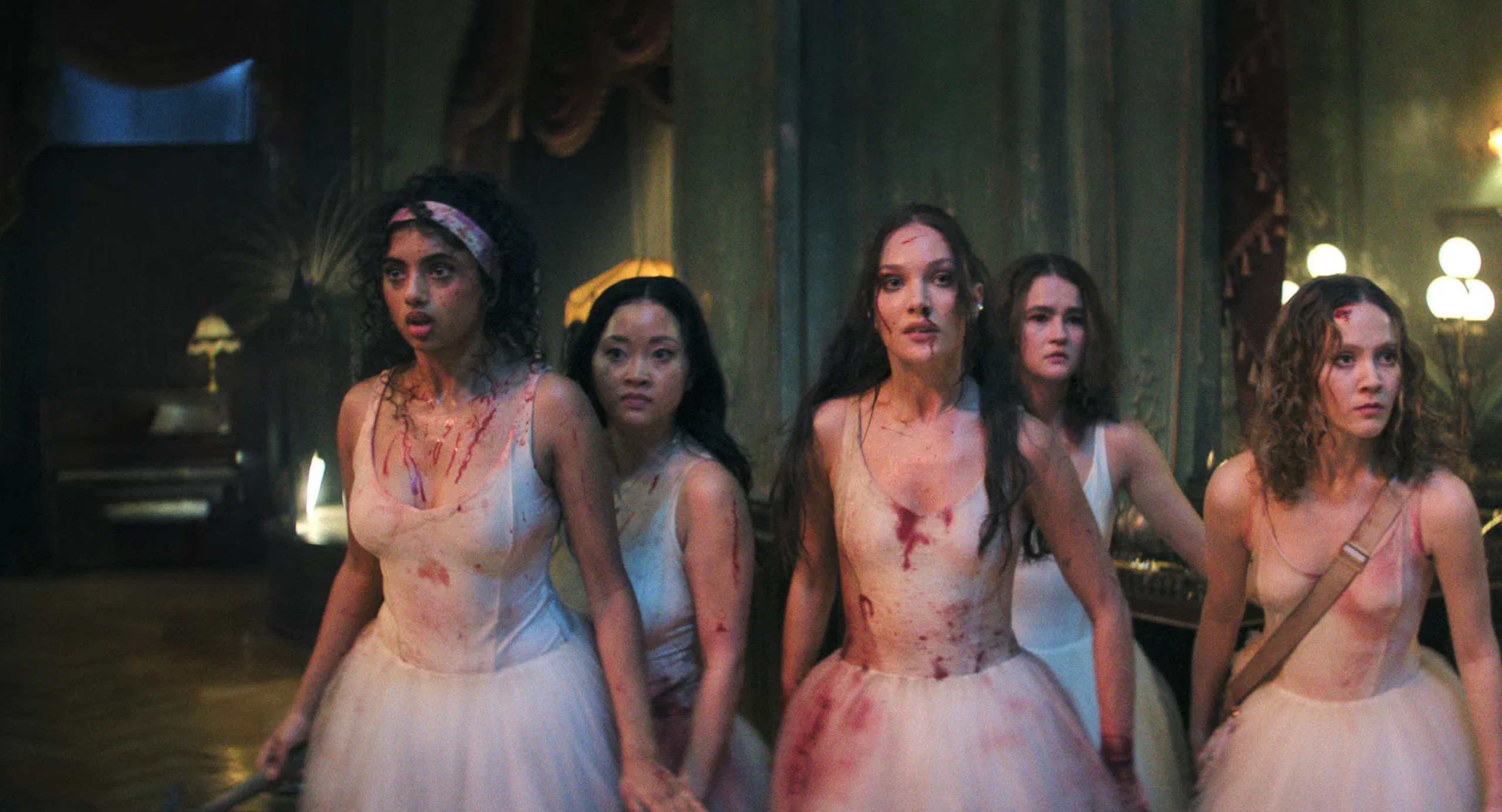
Pretty Lethal has a killer premise and an even sharper execution, blending the elegance of ballet with the brutal efficiency of an action thriller. Directed by Vicky Jewson and written by Kate Freund, the film takes what could have been a gimmick—a troupe of dancers fighting for survival—and transforms it into a tightly wound, stylish, and surprisingly emotional ride. The result is a film that balances poise and power, delivering both visceral action and character-driven drama.
The story follows a dysfunctional ballet troupe traveling to a high-stakes competition when their bus breaks down in a remote area. What begins as a logistical inconvenience quickly spirals into a life-or-death situation when a gang of armed men targets them. Stranded and outmatched on paper, the dancers must rely on their discipline, physicality, and trust in one another to survive. It’s a setup that leans into familiar thriller territory but distinguishes itself through its unique characters and the creative use of movement as combat.
At the center of the film is Maddie Ziegler as Bones, a hardened and emotionally guarded dancer whose past trauma informs both her leadership style and her reluctance to connect with others. Ziegler delivers a performance that is both physically impressive and emotionally grounded. She brings a quiet intensity to Bones, making her feel like someone who has learned to weaponize her body long before the events of the film. Her dance training translates seamlessly into the film’s action choreography, lending authenticity to every movement.
Opposite her is Lana Condor as Princess, a seemingly delicate but fiercely resilient member of the troupe. Condor adds layers to what could have been a stereotypical role, allowing Princess to evolve from a perceived weak link into one of the film’s emotional anchors. Her chemistry with Ziegler is a standout element, creating a dynamic that feels both tense and deeply supportive. Their relationship becomes one of the film’s strongest throughlines, grounding the chaos in something human and relatable.
The supporting cast is equally compelling. Iris Apatow brings a sharp edge to Zoe, whose cynicism masks vulnerability, while Millicent Simmonds offers a quietly powerful performance as Chloe, using expressive physicality to communicate volumes without dialogue. Avantika rounds out the core group as Grace, whose optimism and determination provide a necessary counterbalance to the group’s internal conflicts. Each character feels distinct, and the film takes care to give them moments to shine, both in combat and in quieter, character-driven scenes.
Then there’s Uma Thurman as Devora Kasimer, the film’s villain. Thurman leans into the role with a commanding presence, crafting a character who is as calculating as she is ruthless. Devora isn’t just a generic antagonist; she’s a force of nature, orchestrating the chaos with chilling precision. Thurman’s performance elevates the stakes, making every confrontation feel genuinely dangerous. Her scenes crackle with tension, especially when she shares the screen with Ziegler, creating a compelling clash of wills.
Jewson’s direction is one of the film’s greatest strengths. She understands the importance of rhythm, not just in the dance sequences but in the pacing of the film itself. The action scenes are choreographed with a balletic sensibility, blending grace and brutality in a way that feels fresh and inventive. Rather than relying on quick cuts and shaky cam, the film allows movements to play out in full, emphasizing the dancers’ control and precision. This approach not only highlights the performers’ physical abilities but also reinforces the film’s central idea: that dance and combat are not so different.
Visually, the film is striking. The contrast between the soft, ethereal aesthetic of ballet and the harsh, gritty environment in which the story unfolds creates a compelling visual tension. Costuming plays a key role here, with the dancers’ outfits evolving over the course of the film, becoming more practical and battle-worn as their situation deteriorates. The cinematography captures both the beauty and the brutality of the action, often framing fights in ways that mirror dance performances, turning moments of violence into something almost poetic.
The screenplay by Freund does an admirable job of balancing character development with action. While the film doesn’t delve deeply into every backstory, it provides enough context to make the characters feel real and their struggles meaningful. The dialogue is sharp and purposeful, avoiding unnecessary exposition and instead allowing relationships to develop organically. There are moments of humor that help to break the tension, but they never undermine the stakes, maintaining a consistent tone throughout.
Where the film truly excels is in its thematic exploration of discipline, resilience, and unity. The dancers’ training becomes their greatest asset, not just physically but mentally. Their ability to adapt, to trust one another, and to push through pain is what ultimately allows them to survive. The film doesn’t romanticize their situation, but it does highlight the strength that comes from perseverance and collaboration. These themes are woven seamlessly into the narrative, enhancing the story without feeling heavy-handed.
That said, the film isn’t without its flaws. Some of the plot developments feel slightly predictable, particularly in the way certain character arcs resolve. There are moments where the film leans a bit too heavily on familiar genre tropes, which can make parts of the story feel less surprising than they could have been. Additionally, while the villain is compelling, her motivations could have been explored in greater depth to add more complexity to the narrative.
Despite these minor shortcomings, Pretty Lethal remains a highly engaging and entertaining film. Its unique premise, strong performances, and inventive action sequences set it apart from other entries in the genre. It’s a film that understands the power of movement, using it not just as a visual spectacle but as a storytelling tool.
Pretty Lethal delivers a thrilling and emotionally resonant experience. It’s a film that embraces its concept fully, executing it with confidence and style. With standout performances from its cast, particularly Ziegler and Condor, and a commanding turn from Thurman, it leaves a lasting impression. For fans of action thrillers looking for something a little different, this is a performance worth watching.