Oh. What. Fun. – Film Review
Published December 4, 2025

Movie Details

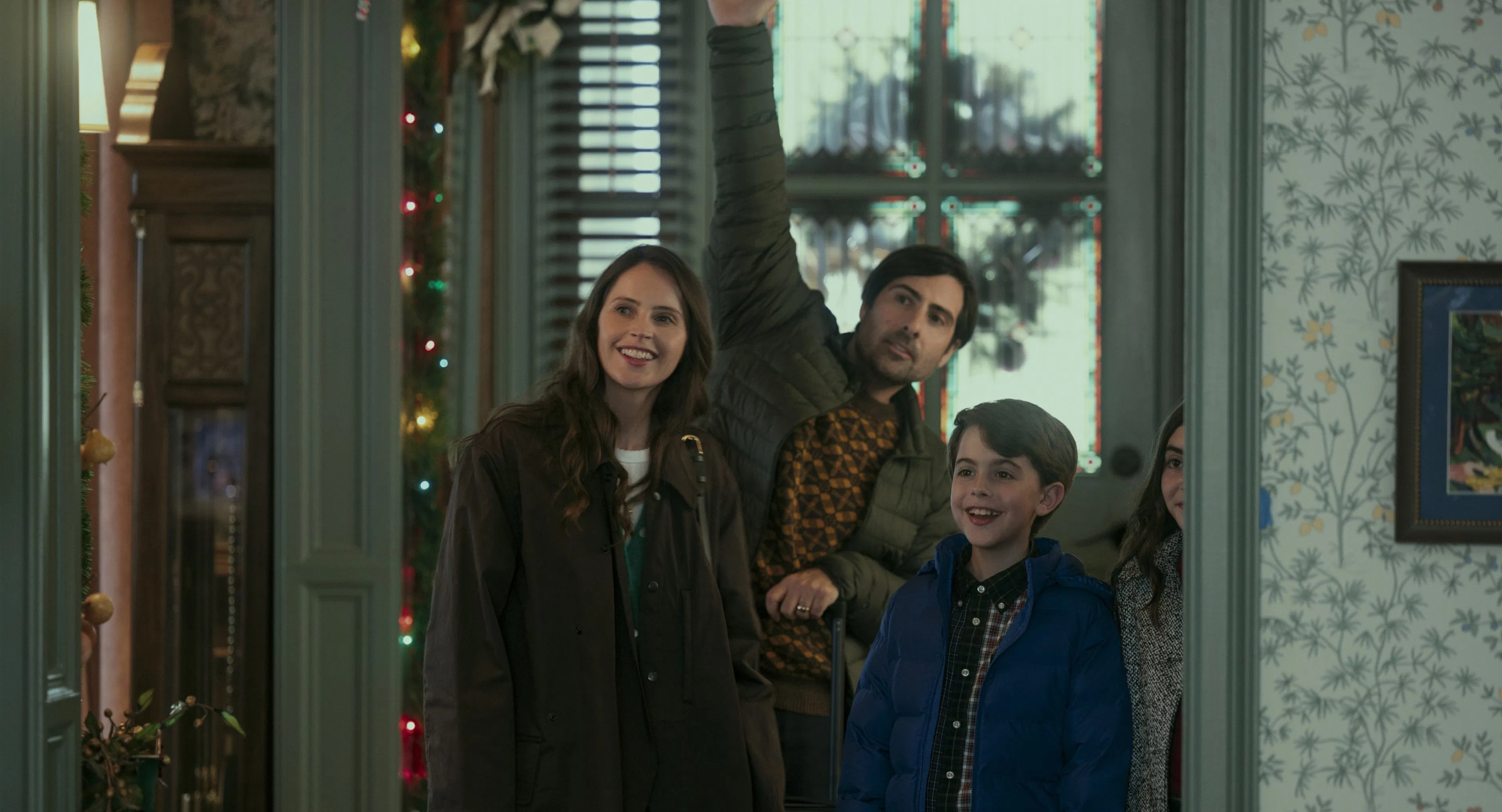
Directed by Michael Showalter and co-written by Showalter and Chandler Baker, Oh. What. Fun. sets out to be a warm, crowd-pleasing Christmas comedy anchored by Michelle Pfeiffer as the long-suffering family matriarch Claire Clauster. On paper, it has all the right ingredients: a veteran star playing an underappreciated mother, a multi-generational family ensemble, a sentimental holiday premise about gratitude and connection, and a glossy studio polish. In execution, however, the film’s goodwill is undermined by thin characterization, forced humor, and a narrative that mistakes familiarity for emotional depth. The result is a mildly pleasant but largely forgettable holiday entry that settles comfortably into background-noise territory rather than earning the annual rewatch status it clearly intends to achieve.
The premise is simple and relatable: Claire Clauster is the invisible engine behind her family’s Christmas. She plans the meals, coordinates the travel, assembles the decorations, and quietly smooths over everyone else’s chaos. Her children and grandchildren take this labor for granted—until she suddenly goes missing just days before the holiday. What follows is meant to be a comedic scramble that gradually becomes an emotional reckoning, as the family is forced to confront both the magnitude of her efforts and how much they’ve failed to truly see her. It’s a setup that echoes countless holiday dramas about overlooked caregivers, from sitcom episodes to more earnest seasonal tearjerkers. Unfortunately, Oh. What. Fun. never finds a fresh angle on that territory, relying instead on predictable beats and broad tonal swings that blunt its intended impact.
Pfeiffer’s Claire is, unsurprisingly, the film’s most grounded and watchable presence. She brings a succinct mix of warmth, exhaustion, and quiet resilience that suggests a fuller, far more interesting story than the screenplay ever allows her to express. Early scenes hint at a woman who has spent decades defining herself through service, suppressing her own desires in the process. Pfeiffer communicates this largely through expression and physicality rather than dialogue, which often works against the film’s tendency to over-explain everything verbally. Once Claire disappears from the narrative, though, the movie loses much of its emotional anchor, a risky structural choice that leaves the remaining ensemble scrambling to fill a void they’re not particularly equipped to handle.
As the Clauster children, Felicity Jones and Chloë Grace Moretz play the oldest and youngest daughters, respectively, sketching out familiar sibling archetypes rather than fully realized people. Jones’s Channing is the tightly wound overachiever who masks insecurity with control, while Moretz’s Taylor is the impulsive, emotionally reactive counterpoint. Both actresses do what they can with the material, but their arcs unfold in blunt, heavily signposted fashion. Their conflicts feel preprogrammed rather than organic, as if the film is checking off required emotional beats instead of letting the family dynamics naturally evolve. Denis Leary as the gruff but fundamentally soft-hearted husband Nick delivers his usual brand of cranky sarcasm, though even his sharper line readings can’t disguise how functionally written his role is within the larger story.
The supporting cast adds recognizable faces but little added dimension. Dominic Sessa, as the youngest son Sammy, provides the film’s most consistent source of innocent sincerity, though his role is largely reactive. Jason Schwartzman and Eva Longoria appear in side roles that feel more like casting ornaments than integral contributions, while Joan Chen is underserved by a script that never quite knows how to integrate her arc meaningfully into the central crisis. The ensemble has undeniable star power, yet the film rarely leverages that collective talent to build authentic interplay. Instead, scenes often play like a series of lightly connected comedic sketches tied together by the urgency of Claire’s absence.
Tonally, Oh. What. Fun. wavers between sitcom-style humor and sincerity, but it seldom blends the two effectively. The comedy leans on a mix of situational chaos—burned meals, botched travel plans, forgotten traditions—and quip-heavy exchanges that feel engineered for easy laughs rather than organic wit. Showalter, whose past work often balanced earnestness with awkward humor, seems restrained here by the expectations of a broad holiday audience. The jokes rarely land with real bite, and the film repeatedly opts for safe, inoffensive punchlines when sharper or more character-specific humor might have elevated the material. As a result, much of the movie coasts on geniality without ever achieving genuine comedic momentum.
Visually, the film embraces the glossy, made-for-streaming aesthetic that has become the hallmark of modern holiday comedies. Snow-dusted exteriors, warmly lit interiors, and a carefully curated palette of reds, golds, and greens create a postcard version of Christmas that is pleasant but sterile. There’s nothing visually offensive about Oh. What. Fun., yet there’s also nothing particularly distinctive. It looks like dozens of other recent Christmas films, and that visual anonymity mirrors the movie’s larger creative problem: it blends into the seasonal content crowd rather than standing apart from it. Even the musical cues, heavy on familiar holiday standards and softly manipulative orchestration, feel engineered rather than inspired.
Where the film stumbles most heavily is in its emotional honesty. The idea of an unpaid, emotionally invisible caregiver reaching a breaking point is fertile dramatic ground. Yet the script consistently shies away from exploring the darker or more uncomfortable implications of that dynamic. Claire’s disappearance is treated less as a serious rupture in family functioning and more as a device to cue a quick burst of guilt and reunion-driven growth. The family’s realizations about their neglect unfold with suspicious tidiness, each character arriving at their emotional destination right on schedule. Genuine reckoning is replaced with platitudes about appreciation, and the messy, long-term nature of family change is resolved in a single holiday turnaround.
Showalter’s direction is competent but overly cautious. He favors clean shot-reverse-shot compositions and conventional blocking, rarely pushing the visual language or pacing in ways that might deepen the film’s emotional texture. The comedic timing is serviceable but rarely inspired, and several potentially poignant moments are undercut by abrupt tonal shifts or overly sentimental score cues. The movie seems desperate to assure viewers that it is heartfelt, repeatedly underlining its own messages rather than trusting the audience to feel them naturally. This lack of restraint becomes especially noticeable in the third act, when the film stacks emotional payoff upon emotional payoff in a way that feels more obligatory than earned.
To be clear, Oh. What. Fun. is not a disastrous film. It is amiable, competently assembled, and intermittently watchable, particularly for viewers seeking low-stakes seasonal entertainment. Pfeiffer’s performance alone lends it a basic level of credibility, and there are a handful of gently amusing moments scattered throughout. But the film’s reluctance to challenge its own premise, push beyond familiar holiday formulas, or develop its characters with real complexity leaves it stranded in cinematic limbo: too polished to be charmingly scrappy, too safe to be truly moving, and too predictable to feel fresh.
Ultimately, Oh. What. Fun. exemplifies the current state of many studio-backed Christmas comedies—engineered for broad appeal, wrapped in cozy aesthetics, and content to coast on sentiment rather than earn it. Its central message about appreciating invisible labor is both timely and important, yet the film delivers that message with such caution and conventionality that it loses its emotional force. With sharper writing, more daring tonal choices, and a greater willingness to sit with discomfort, this could have been a quietly powerful holiday story. Instead, it settles for being a serviceable seasonal diversion that will likely fade from memory as soon as the decorations come down.