Normal – Film Review
Published April 20, 2026

Movie Details

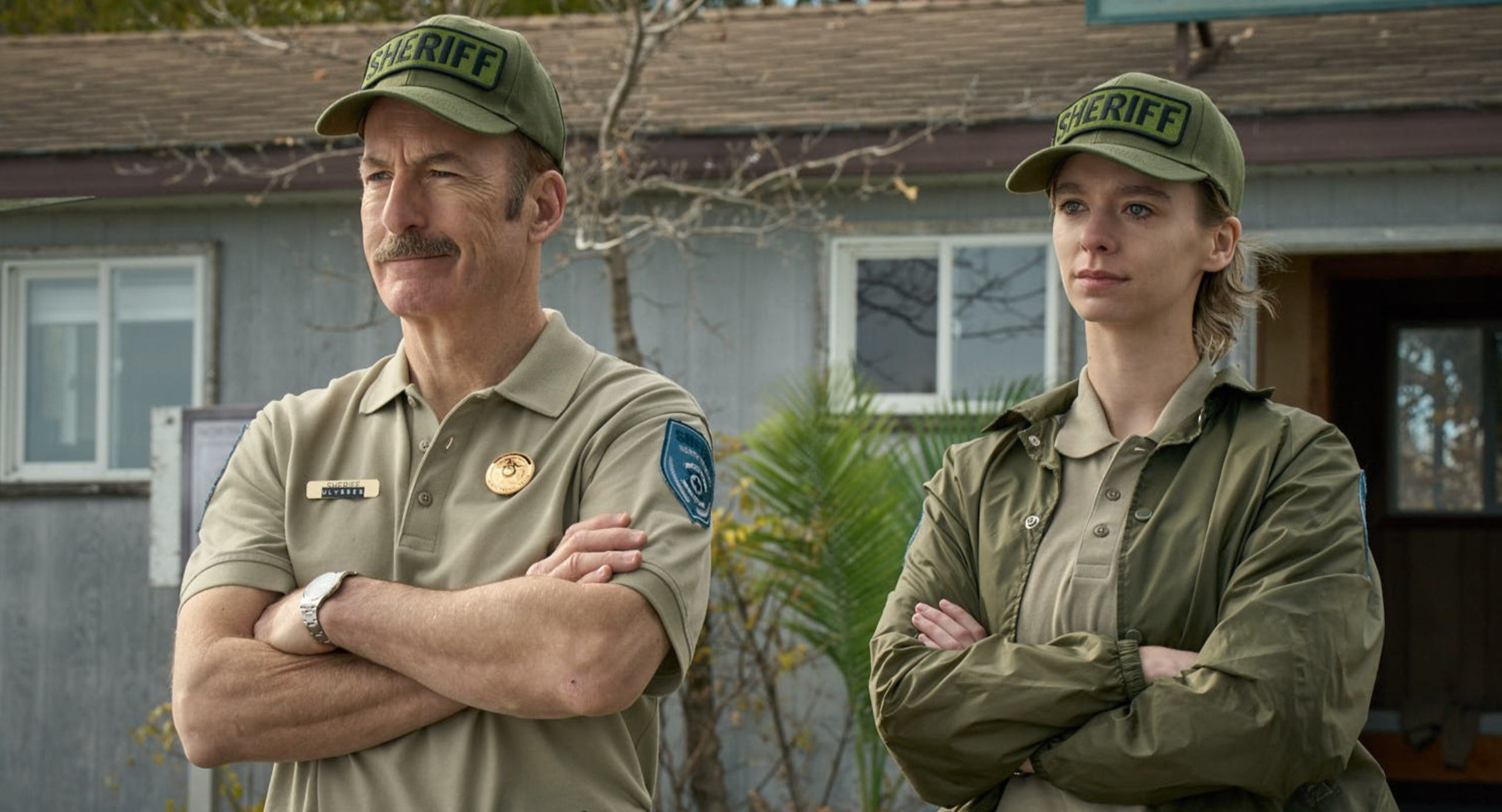
There’s a certain expectation that comes with a collaboration between director Ben Wheatley and writer Derek Kolstad—especially when the latter is best known for crafting the relentless, momentum-driven chaos of the John Wick franchise. Pair that with Bob Odenkirk, who proved in Nobody that he can convincingly anchor a brutal action vehicle, and Normal should, in theory, be a tightly wound, snow-drenched explosion of tension and violence. Instead, what we get is something far more subdued—and frustratingly inert.
Set in a remote Midwestern town blanketed in winter isolation, Normal builds an intriguing premise. A temporary sheriff arrives in a quiet community only to uncover something deeply wrong beneath its friendly exterior. It’s a setup that promises paranoia, escalating stakes, and a slow-burn unraveling that erupts into chaos. The problem is that the eruption never quite comes—or at least not with the force or frequency the film seems to be building toward.
Wheatley, known for his offbeat tonal sensibilities and genre subversions, appears more interested in atmosphere than propulsion here. That’s not inherently a flaw, but in a film marketed and structured as an action thriller, the imbalance becomes glaring. Scenes linger longer than they should, dialogue stretches thin material, and moments that should crackle with tension instead feel oddly muted. The result is a film that often feels like it’s idling when it should be accelerating.
The early portions of Normal are arguably its strongest. There’s a quiet unease in the way the town is introduced—friendly faces that seem just slightly off, conversations that carry an undercurrent of something unsaid. Odenkirk’s Ulysses is positioned as an outsider trying to integrate into a community that appears welcoming but subtly impenetrable. It’s compelling groundwork, and Wheatley’s direction leans into the discomfort effectively.
However, once the central conflict is introduced, the film struggles to maintain any real sense of urgency. What should be a turning point instead becomes another extended stretch of slow-moving exposition and cautious maneuvering. Characters spend more time talking about danger than actively confronting it, which saps the narrative of its energy.
This is where Kolstad’s script feels surprisingly restrained. Known for kinetic storytelling and clean, escalating stakes, his work here feels bogged down by detours and overextended beats. There’s a sense that the film wants to be both a character study and a high-stakes action piece, but it never fully commits to either. The tension dissipates instead of building, leaving long stretches where the story feels stuck in place.
If Normal has a consistent strength, it lies in its cast. Odenkirk once again proves he can carry a film with a combination of weary charm and underlying intensity. His performance is grounded and believable, even when the script doesn’t give him enough to do. He brings a quiet calculation to Ulysses that suggests a deeper history, hinting at layers the film never fully explores.
Lena Headey adds a welcome edge to the film, delivering a performance that balances warmth and menace. She’s particularly effective in scenes where her character’s true nature begins to surface, injecting tension that the film otherwise struggles to sustain. Headey has a knack for commanding attention even in quieter moments, and she uses that skill well here.
Meanwhile, Henry Winkler brings an understated presence that plays nicely against expectations. His performance leans into the film’s uneasy tone, offering a mix of geniality and ambiguity that keeps the audience guessing. Supporting players like Reena Jolly and Ryan Allen contribute solid work, though their characters often feel underdeveloped.
The cast does a lot of heavy lifting, compensating for a script that doesn’t always give them strong material. Even in scenes where the pacing drags, the performances keep things watchable, if not entirely engaging.
One area where Normal undeniably succeeds is in its cinematography. The film makes excellent use of its snowy setting, creating a stark, almost oppressive atmosphere. The wide shots of the town, buried under layers of white, reinforce the sense of isolation and entrapment. It’s a visually cohesive world that feels both beautiful and suffocating.
Wheatley and cinematographer Armando Salas lean into natural lighting and muted color palettes, giving the film a grounded, tactile quality. Interiors feel dim and claustrophobic, while exteriors emphasize the vast emptiness surrounding the town. This contrast works well thematically, even if the narrative doesn’t fully capitalize on it.
There are moments where the visual storytelling almost compensates for the lack of action. A lingering shot, a carefully framed composition, or a subtle camera movement can create tension that the script fails to deliver. It’s clear that a lot of thought went into crafting the film’s look, and that effort pays off.
For a film positioned as an action thriller, the most glaring issue is just how little action it actually contains. When bursts of violence do occur, they are often brief and not particularly dynamic. There’s a noticeable absence of the kind of inventive, tightly choreographed sequences that Kolstad’s name might lead audiences to expect.
Instead, the film opts for sporadic, unevenly spaced confrontations that never quite build into a satisfying rhythm. Long stretches pass with minimal physical conflict, and when the action finally arrives, it often feels rushed or underwhelming. This imbalance makes the film feel oddly lopsided, as though it’s constantly building toward something it never fully delivers.
The sluggish pacing only exacerbates this issue. Scenes stretch on without adding meaningful tension or development, making the film feel longer than it is. Momentum is repeatedly stalled, and by the time the story attempts to escalate, it struggles to regain the audience’s investment.
Another issue lies in the film’s tonal inconsistency. Wheatley’s penchant for dark humor and offbeat storytelling occasionally clashes with the more straightforward action elements. There are moments that feel intentionally absurd or ironic, but they don’t always land, creating a sense of disconnect.
This tonal uncertainty makes it difficult to fully engage with the film. Is it a bleak thriller, a darkly comedic satire, or a character-driven drama? It flirts with all three but never fully commits, resulting in a viewing experience that feels unfocused.
Normal is a film that has all the right ingredients but never quite figures out how to use them effectively. Strong performances from Bob Odenkirk, Lena Headey, and Henry Winkler provide a solid foundation, and the cinematography offers a visually compelling backdrop. Unfortunately, these strengths are undermined by a sluggish pace, a surprising lack of action, and a script that struggles to maintain momentum.
There’s a version of this film that works—a tighter, more focused thriller that leans into its premise and delivers on its potential. What we get instead is something far more uneven, a film that feels caught between intentions and execution.
For fans of the cast or Wheatley’s visual style, there’s enough here to warrant a watch. But for those expecting a gripping, action-packed experience, Normal is likely to feel like a long, cold wait for something that never quite arrives.