Mortal Kombat II – Film Review
Published May 9, 2026

Movie Details

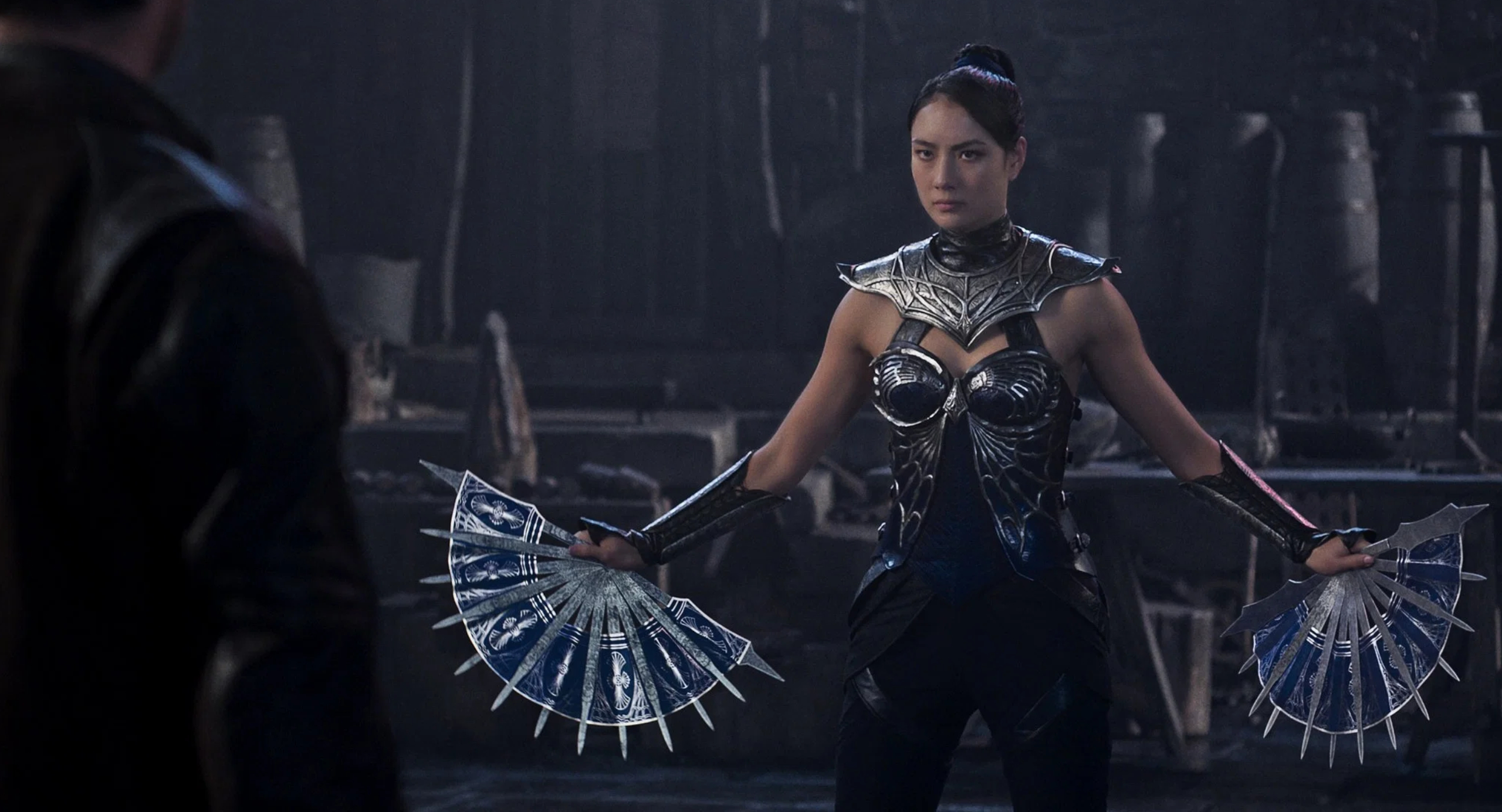
Video-game adaptations have come a long way from the awkward days of the 1990s, but the Mortal Kombat franchise still occupies a strange middle ground between campy fun and grim self-seriousness. Mortal Kombat II, directed once again by Simon McQuoid and written by Jeremy Slater, fully embraces the absurd mythology that longtime fans have been waiting to see on-screen. Bigger, bloodier, louder, and far more ambitious than its 2021 predecessor, the sequel finally delivers the actual tournament audiences expected the first time around. Unfortunately, while the film succeeds as spectacle-driven fan service, it struggles to balance its massive roster of characters, uneven tone, and overcrowded storytelling.
There is no denying that this sequel understands what viewers want from a Mortal Kombat movie. The fights are brutal, the fatalities are gloriously ridiculous, and the filmmakers lean heavily into the franchise’s bizarre fantasy lore without apology. For fans who grew up with the games, there is genuine excitement in watching beloved characters clash in elaborate arenas while magical powers, flying blades, and spine-crushing combat fill the screen. The movie often feels like someone mashed together several arcade endings into one giant cinematic event, and in the best moments, that chaotic energy works.
The biggest improvement over the 2021 film is confidence. The previous movie spent too much time setting up mythology and introducing new audiences to the rules of the universe. This sequel skips most of the exposition and dives directly into the interdimensional tournament that should have been the centerpiece all along. The pacing is far more aggressive, throwing audiences from one set piece to another with barely any time to breathe. While that creates issues later on, it does make the opening hour surprisingly entertaining.
The smartest decision the film makes is centering much of its momentum around Karl Urban as Johnny Cage. Urban slides into the role with effortless charisma, delivering exactly the kind of cocky, self-aware humor the franchise desperately needs. Johnny Cage has always been one of the most entertaining characters in the games because he exists as both a parody of action stars and a legitimate hero, and Urban understands that balance perfectly.
His introduction injects life into the movie almost immediately. Cage spends much of the film acting as the audience surrogate, reacting to the insanity around him with disbelief and sarcasm while slowly discovering genuine courage. Urban gives the movie personality whenever it threatens to become too consumed by lore and exposition. Even when individual scenes drag, his screen presence keeps things moving.
Josh Lawson also continues to be an unexpected highlight as Kano. The first film wisely realized that Kano’s loudmouth personality could carry entire scenes, and the sequel doubles down on that idea. Kano’s morally flexible allegiance becomes one of the film’s most entertaining running gags, and Lawson’s comedic timing once again stands out amid the otherwise grim tone. The banter between Kano and Johnny Cage gives the movie some much-needed levity.
Meanwhile, Adeline Rudolph makes a strong impression as Kitana. The character has often been difficult to adapt because she walks a thin line between regal warrior and emotional outsider, but Rudolph handles both sides effectively. Kitana’s internal conflict adds a little emotional weight to a film otherwise focused on nonstop combat. Her scenes with Johnny Cage are among the more engaging character interactions because they provide brief pauses from the relentless violence.
As entertaining as the action can be, the film eventually becomes overwhelmed by its own scale. The screenplay introduces so many characters, alliances, betrayals, and mythology-heavy plot developments that emotional investment becomes increasingly difficult. The movie constantly rushes from one confrontation to another without allowing quieter moments to develop naturally.
Several returning characters suffer because of this overcrowding. Lewis Tan as Cole Young still feels strangely underdeveloped despite once being positioned as the franchise’s central figure. Ludi Lin brings sincerity and intensity to Liu Kang, but the script rarely slows down long enough to fully explore his emotional journey. Jessica McNamee continues to make Sonya Blade compelling, though much of her role revolves around pushing the plot forward rather than evolving as a character.
The film’s structure often resembles a checklist of iconic game moments instead of a cohesive narrative. Familiar characters appear simply so audiences can cheer their entrances before the movie quickly moves on to the next battle. Fans may appreciate seeing beloved fighters finally receive live-action attention, but casual viewers could easily feel lost amid the avalanche of lore references and shifting alliances.
This becomes especially noticeable during the middle portion of the film, where the pacing begins to wobble under the sheer amount of story being crammed into the runtime. Subplots involving ancient relics, resurrection, betrayals, and alternate realms pile on top of each other until the movie starts feeling bloated. Instead of building tension naturally, the screenplay often resorts to constant escalation.
Thankfully, the fight choreography remains strong enough to compensate for many of the film’s storytelling shortcomings. The action scenes are larger and more visually inventive than those in the previous installment, even if the editing occasionally becomes too frantic. The filmmakers clearly understand that Mortal Kombat should feel savage, exaggerated, and unapologetically over-the-top.
Fans of the games will likely appreciate how faithfully many of the signature moves and fatalities are recreated. The movie leans heavily into audience recognition moments, but unlike some fan-service-heavy blockbusters, many of those callbacks genuinely land. There is excitement in finally seeing certain matchups unfold on-screen with full studio resources behind them.
The visual effects, however, remain inconsistent. Some sequences look genuinely impressive, particularly the supernatural environments and magical combat effects. Others suffer from murky lighting and overly artificial CGI backgrounds that make the film resemble an expensive cutscene rather than a fully cinematic experience. The Netherrealm scenes especially alternate between visually striking and distractingly synthetic.
Still, McQuoid deserves some credit for giving the film a distinct visual identity. The production design embraces the franchise’s fantasy elements much more confidently this time, allowing Outworld and its various arenas to feel grander and more imaginative. The movie occasionally captures the heightened comic-book insanity that makes the games so appealing.
Where Mortal Kombat II ultimately succeeds is in understanding its audience. This is not prestige filmmaking, nor is it attempting to reinvent blockbuster storytelling. The movie exists primarily to deliver outrageous battles, recognizable characters, and crowd-pleasing moments for longtime fans. On that level, it often works.
The problem is that the film wants to be both a mythology-heavy fantasy epic and a fast-paced martial arts spectacle, and it never fully reconciles those competing identities. Emotional arcs are rushed, character motivations sometimes feel thin, and the constant barrage of exposition occasionally becomes exhausting. The movie introduces intriguing ideas about destiny, corruption, and loyalty, but rarely explores them beyond surface level.
Yet despite its flaws, there is still fun to be had here. The energy remains high throughout, the performances are committed, and the movie embraces the inherent ridiculousness of the source material without embarrassment. For every clunky exposition dump or underdeveloped subplot, there is usually another entertaining fight sequence or crowd-pleasing character moment waiting around the corner.
Fans seeking deep storytelling or layered emotional drama may walk away disappointed, but viewers hoping for an unapologetically chaotic fantasy action movie filled with brutal combat and video-game nostalgia will probably leave satisfied. Mortal Kombat II may not achieve a flawless victory, but it earns a respectable win through sheer enthusiasm alone.