Masters of the Universe – Film Review
Published June 6, 2026

Movie Details

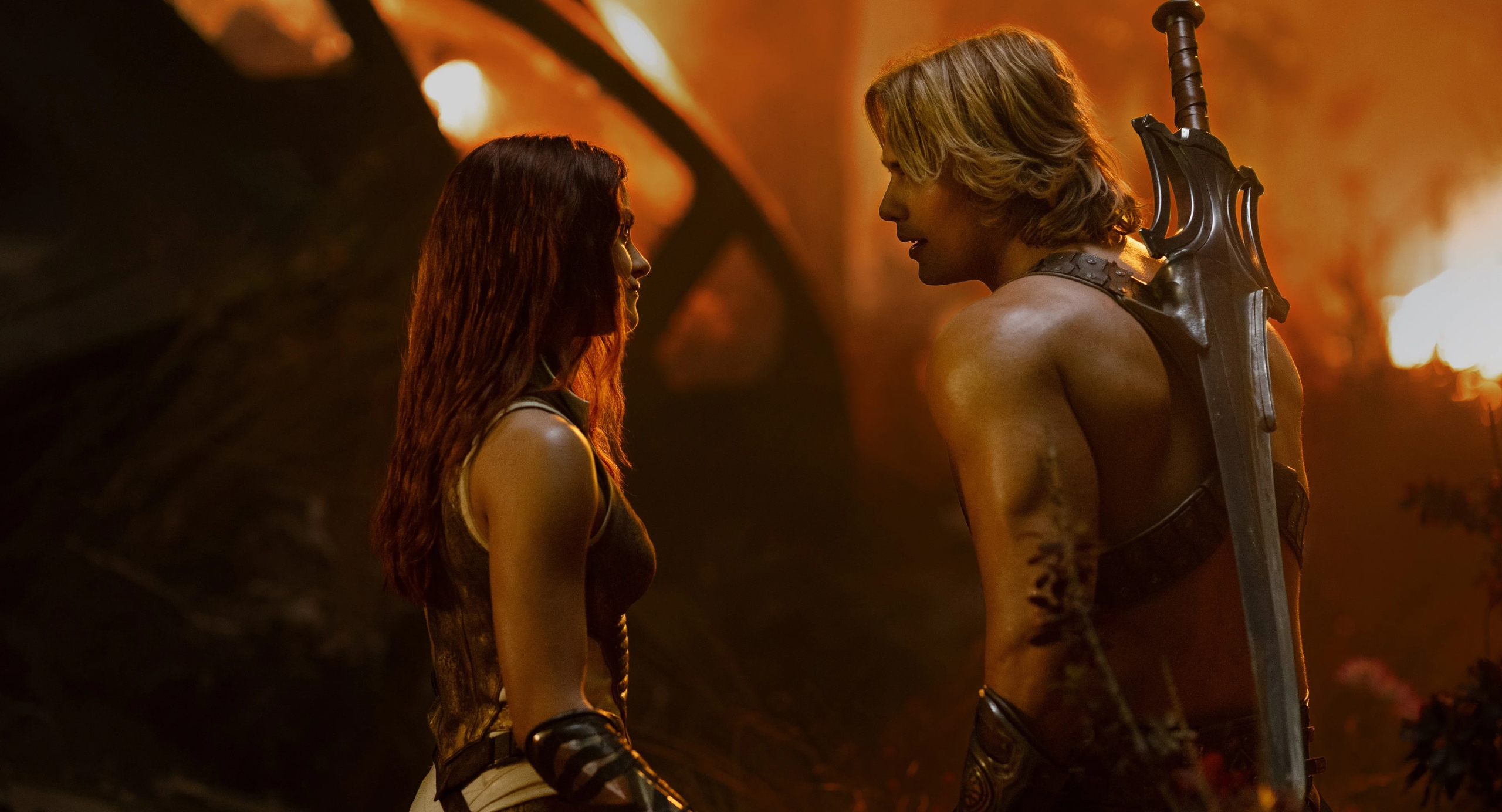
For decades, Masters of the Universe has occupied a unique place in pop culture. What began as a toy line evolved into an animated phenomenon that introduced generations of fans to Eternia, Castle Grayskull, Skeletor, and the mighty He-Man. After years of development struggles and failed attempts to revive the property in live-action form, director Travis Knight finally brings the franchise back to theaters with a new adaptation that aims to modernize the mythology while remaining faithful to its fantasy roots. The result is a film that looks spectacular and occasionally delivers the epic adventure fans have been waiting for, but one that is also weighed down by uneven pacing, weak comedy, and lengthy stretches where the excitement fades away.
Knight clearly understands the visual appeal of the source material. From the opening scenes in Eternia, the film embraces the colorful sword-and-sorcery aesthetic that has always defined the franchise. The world feels massive, lived-in, and distinct from the countless fantasy universes that dominate modern blockbuster filmmaking. Whether exploring the shining grandeur of Eternos, the mystical presence of Castle Grayskull, or the sinister atmosphere of Snake Mountain, the production design consistently impresses.
The film’s strongest asset may be its willingness to lean into fantasy without apology. Rather than grounding everything in realism, Masters of the Universe embraces giant warriors, magical powers, robotic allies, and bizarre creatures. It feels refreshingly confident in its identity, creating a universe that often resembles a live-action fantasy comic book brought to life. The visual effects team deserves significant credit for realizing these iconic locations and characters in a way that feels both modern and recognizable.
Nicholas Galitzine proves to be a strong choice for Prince Adam and his heroic alter ego. He successfully balances Adam’s uncertainty with the confidence expected from He-Man. The screenplay positions Adam as someone disconnected from his heritage and destiny, forcing him to rediscover who he truly is. Galitzine sells that emotional journey convincingly, making Adam more than simply a muscular hero swinging a sword.
His performance works particularly well because he avoids playing the role with excessive seriousness. There is a sense of vulnerability throughout much of the film that makes his eventual rise feel earned. When the story focuses on Adam’s struggle to embrace responsibility, the movie finds some of its most effective dramatic moments.
Camila Mendes is equally impressive as Teela. While many adaptations risk reducing supporting characters to background players, Mendes ensures Teela remains a compelling presence throughout the narrative. She brings confidence, determination, and charisma to every scene, often providing the emotional drive necessary to keep the story moving. The chemistry between Mendes and Galitzine gives the film a stronger foundation than the script sometimes deserves.
The supporting cast delivers mixed results. Idris Elba brings gravitas to Duncan, also known as Man-At-Arms, helping elevate material that occasionally falls into familiar fantasy tropes. Alison Brie provides an intriguing interpretation of Evil-Lyn, giving the character more complexity than audiences might expect. Jared Leto‘s Skeletor is visually striking and appropriately theatrical, though the screenplay never fully develops him beyond being a fairly conventional villain obsessed with ultimate power.
One area where the film succeeds consistently is its action. Travis Knight demonstrates a strong understanding of how to stage large-scale fantasy combat while maintaining visual clarity. Too many modern blockbusters rely on frantic editing and chaotic camerawork, but Masters of the Universe generally allows viewers to appreciate the choreography and geography of its battles.
Several sword fights stand out as highlights, particularly when Adam begins embracing the power associated with his destiny. The confrontations feel energetic and impactful without becoming incomprehensible. The filmmakers wisely emphasize practical movement and physical performance whenever possible, helping the action retain a sense of weight and excitement.
The larger battle sequences are similarly effective. Whether featuring armies clashing across Eternia or heroes facing overwhelming odds against Skeletor’s forces, these moments showcase the film at its most entertaining. The action is fun, well-shot, and visually engaging, providing the kind of crowd-pleasing spectacle that audiences expect from a property of this scale.
Unfortunately, the film struggles significantly when it isn’t delivering action or exploring its mythology. At well over two hours, Masters of the Universe often feels longer than necessary. The pacing becomes one of the movie’s biggest problems, particularly during the middle portion of the story.
There are numerous scenes devoted to exposition, world-building, and character conversations that slow the momentum to a crawl. While some of this material is necessary to establish Eternia and its various factions, the film frequently spends too much time explaining concepts rather than finding more engaging ways to present them. As a result, the narrative occasionally loses urgency.
The pacing issues become even more noticeable because of the lengthy stretches where very little excitement occurs. After strong opening and action sequences, the film repeatedly settles into extended periods of setup and dialogue that lack dramatic tension. These slower moments are not inherently problematic, but many fail to deepen the characters or significantly advance the story.
The humor also proves surprisingly ineffective. Modern blockbusters often feel obligated to inject comedy into nearly every scene, and Masters of the Universe falls into the same trap. Unfortunately, much of the humor lands with a thud.
Several jokes feel awkwardly inserted, disrupting moments that would have benefited from a more serious approach. The fish-out-of-water comedy involving Adam’s time on Earth generates only a handful of genuine laughs, while other comedic exchanges feel forced and overly familiar. Rather than enhancing the adventure, the humor often undercuts the film’s emotional stakes.
This tonal inconsistency creates another challenge. The movie wants to be an epic fantasy adventure, a coming-of-age story, a family drama, and a comedy simultaneously. While balancing multiple tones is certainly possible, Masters of the Universe never fully finds the right equilibrium. Some scenes carry genuine emotional weight, only to be interrupted by jokes that lessen their impact.
Even so, there remains something undeniably enjoyable about seeing this world brought to life on such a grand scale. Fans who have waited decades for a faithful live-action return to Eternia will likely appreciate the effort invested in honoring the mythology. The film clearly respects the source material, and that passion is visible throughout the production.
The impressive visuals, committed performances from Nicholas Galitzine and Camila Mendes, and entertaining action sequences help compensate for many of the screenplay’s shortcomings. Whenever the movie embraces its fantasy identity and focuses on adventure, it becomes genuinely engaging.
However, the sluggish pacing, extremely weak humor, and long stretches lacking excitement prevent it from reaching the heights suggested by its premise and production values. What could have been a truly memorable fantasy epic instead settles into the realm of a respectable but uneven adaptation.
Masters of the Universe ultimately succeeds as a visually ambitious introduction to a beloved universe, but it never consistently captures the sense of wonder and excitement necessary to become the definitive version of He-Man’s story. Fans will likely find plenty to enjoy, while newcomers may appreciate the spectacle even if they remain unconvinced by everything surrounding it.