Hoppers – Film Review
Published March 11, 2026

Movie Details

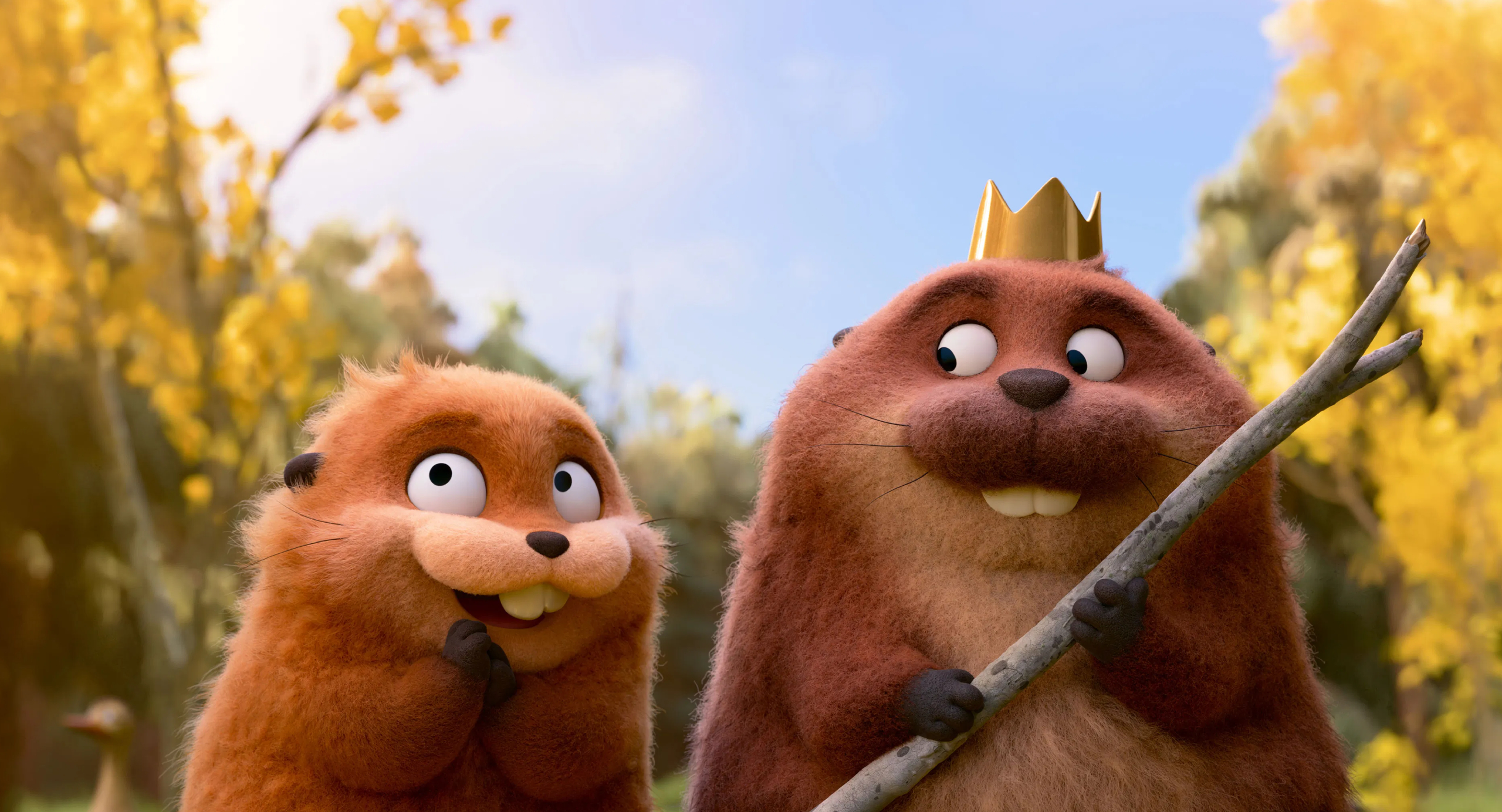
For decades, Pixar Animation Studios has built a reputation for creating animated films that blend imaginative concepts with emotional storytelling. With Hoppers, produced for Walt Disney Pictures, the studio once again explores a playful yet thoughtful premise—this time through a story about technology, wildlife, and the surprising consequences of good intentions. Directed by Daniel Chong and written by Jesse Andrews, the film balances science fiction absurdity with environmental themes and heartfelt character growth. The result is an entertaining and surprisingly layered animated comedy that captures much of Pixar’s classic charm while forging its own quirky identity.
The story follows Mabel Tanaka, voiced with energy and warmth by Piper Curda, a passionate animal lover who grows up exploring a forest glade outside the fictional city of Beaverton. Inspired by her grandmother’s appreciation for nature, Mabel develops a lifelong commitment to protecting wildlife. When the city’s mayor announces plans to replace the forest with a freeway, Mabel’s determination to save the habitat leads her to take a drastic step—using experimental technology that allows humans to transfer their consciousness into robotic animals.
This premise alone gives Hoppers a distinctive tone. The idea of “hopping” into mechanical animal bodies creates endless comedic opportunities while also allowing the film to explore the divide between humans and the natural world in clever ways. Once Mabel transfers her mind into a robotic beaver, she suddenly finds herself navigating the social structure of animal society, trying to convince the creatures of the glade to work together to save their home.
Pixar has long excelled at taking unusual concepts and grounding them in relatable emotion, and Hoppers continues that tradition. Mabel’s mission begins with noble intentions but quickly spirals into chaos as she becomes entangled in the politics of the animal kingdom. The animals, who believe Mabel is one of their own, operate within a surprisingly complex hierarchy that includes councils, monarchs, and alliances between species. This world-building adds an unexpected layer of satire to the film, poking fun at both human bureaucracy and the instinctive rivalries that can exist even among animals.
One of the film’s greatest strengths is the dynamic between Mabel and King George, the well-meaning but somewhat insecure beaver monarch voiced by Bobby Moynihan. Moynihan brings a delightful mix of authority and awkwardness to the character, creating a comedic foil for Mabel’s earnest activism. Their evolving friendship becomes one of the emotional anchors of the story, particularly as George begins to trust Mabel’s guidance despite not fully understanding her motivations.
The supporting voice cast also elevates the film considerably. Jon Hamm lends his distinctive voice to Mayor Jerry Generazzo, a character who could easily have been a one-note antagonist but instead carries shades of complexity. Hamm plays him with a mixture of charm and smugness that makes his political maneuvering both funny and frustrating. Meanwhile, Kathy Najimy delivers a grounded performance as Dr. Samantha “Sam” Fairfax, the scientist behind the Hoppers technology, providing a thoughtful counterbalance to Mabel’s impulsive choices.
Perhaps the most entertaining performance comes from Dave Franco as Titus, the ambitious insect leader whose presence introduces a more chaotic energy to the film. Franco’s vocal performance leans into the character’s eccentricity, adding a touch of unpredictability that keeps the narrative lively.
Visually, Hoppers is another triumph for Pixar’s animation team. The film contrasts two very different worlds: the bustling human city and the lush, intricate ecosystem of the forest glade. The natural environments are rendered with remarkable detail, from the shimmering water around beaver dams to the tiny movements of insects and amphibians hidden among the leaves. The perspective shift created by Mabel inhabiting a beaver’s body allows the animators to explore the environment from ground level, giving the forest a sense of scale and texture that feels immersive.
The robotic animals themselves are cleverly designed. Rather than looking overly mechanical, they strike a balance between realism and subtle technological cues, reinforcing the film’s central concept without disrupting the natural aesthetic. Watching Mabel adapt to life in this unfamiliar body provides many of the movie’s funniest visual moments, especially when she struggles with instincts and abilities she never expected to have.
Beyond the humor and spectacle, Hoppers also carries themes about environmental responsibility and the unintended consequences of activism. Mabel’s passion for protecting wildlife is admirable, but the film doesn’t shy away from showing how her impulsive actions can create new problems. This approach adds nuance to the narrative, encouraging viewers to consider the complexity of conservation and cooperation rather than presenting a simple good-versus-evil scenario.
At the same time, the film maintains a playful tone that keeps it accessible for younger audiences. The animal characters are packed with personality, and their interactions often lean into absurd comedy. Whether it’s rival species arguing over territory or animals misunderstanding human behavior, the script consistently finds humor in the cultural gap between humans and wildlife.
The pacing, however, occasionally feels a bit uneven. Hoppers introduces a large number of characters and plot threads as Mabel navigates the animal kingdom, and the story sometimes rushes through these ideas before fully exploring them. Certain supporting characters appear briefly but hint at interesting backstories that the film doesn’t have time to develop. While the central narrative remains engaging, some viewers may feel the movie could have benefited from a slightly longer runtime to flesh out these elements.
Despite this minor issue, the film’s emotional payoff remains effective. Pixar’s best films often build toward moments of reflection and personal growth, and Hoppers follows that tradition. Mabel’s journey gradually shifts from simply trying to “fix” a problem to learning how cooperation, humility, and understanding can create lasting change.
The humor also deserves special mention. Unlike some modern animated comedies that rely heavily on rapid-fire jokes, Hoppers blends situational comedy with character-driven humor. Many of the funniest scenes emerge from Mabel’s attempts to navigate animal customs or explain human ideas in ways that animals can understand. These moments feel organic and often reveal something deeper about the characters involved.
Another notable strength is the film’s willingness to embrace imaginative science fiction within an otherwise grounded setting. The Hoppers technology raises fascinating questions about identity, empathy, and perspective. Experiencing the world through another creature’s senses becomes a metaphor for understanding viewpoints different from one’s own, giving the story a thoughtful undercurrent beneath its comedic surface.
Ultimately, Hoppers stands as a creative and entertaining addition to Pixar’s filmography. It may not reach the emotional heights of the studio’s most celebrated classics, but its inventive premise, strong voice performances, and striking animation make it a memorable adventure.
By blending environmental themes with a quirky science fiction concept and a cast of charming animal characters, Hoppers offers a lively reminder that even the smallest creatures—and the most unexpected ideas—can make a big difference. For audiences looking for a fun, thoughtful animated film with plenty of heart and humor, this imaginative tale is well worth the hop.