Good Luck, Have Fun, Don’t Die – Film Review
Published February 16, 2026

Movie Details

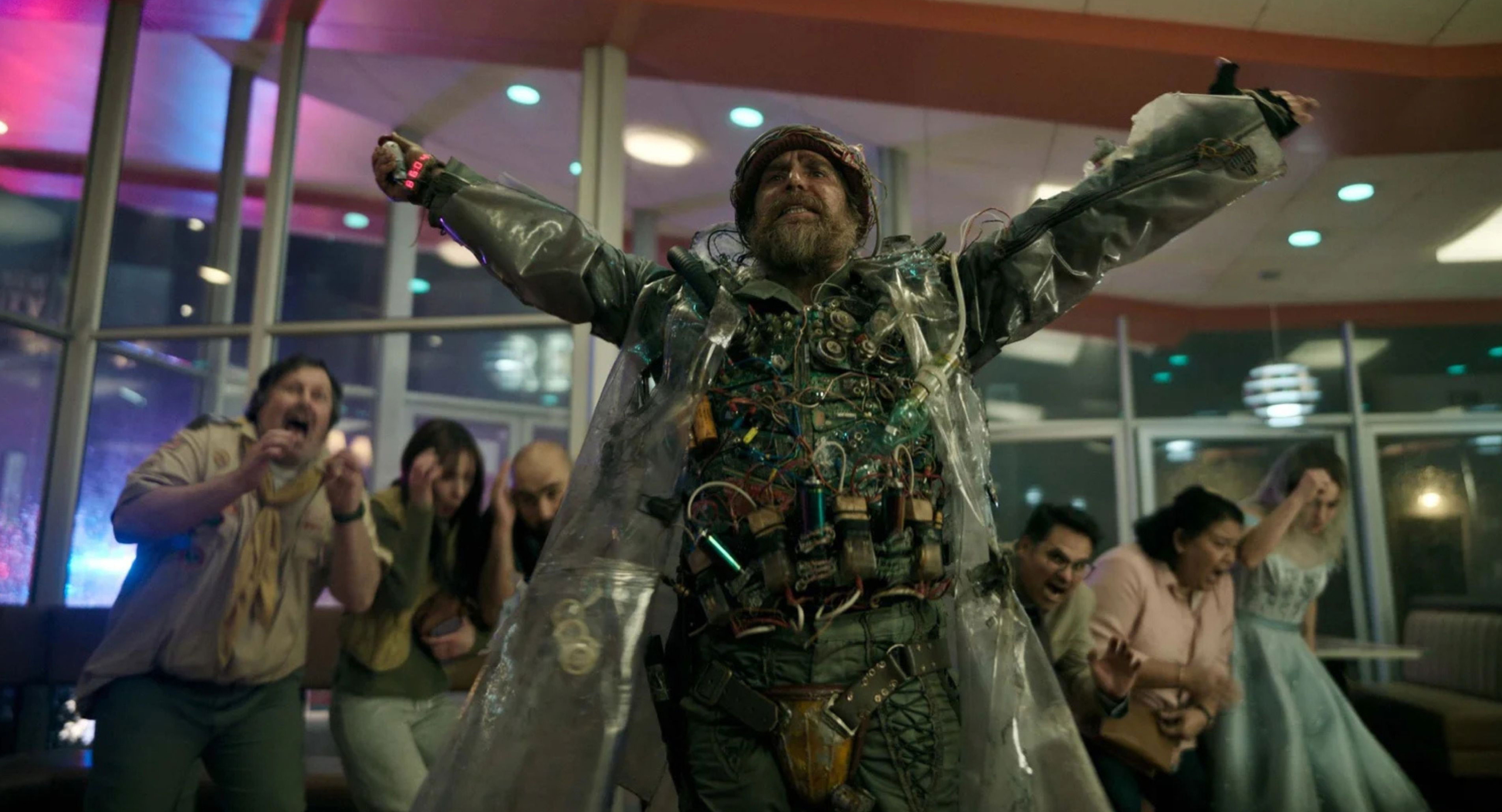
Good Luck, Have Fun, Don’t Die is the kind of high-concept studio gamble that rarely gets made anymore. Directed by Gore Verbinski and written by Matthew Robinson, this sci-fi action-adventure comedy blends time loops, artificial intelligence paranoia, and existential dread into something that feels both wildly entertaining and uncomfortably plausible. It’s chaotic, darkly funny, and occasionally messy—but it sticks the landing with enough style and thematic bite.
Verbinski has always gravitated toward spectacle with a strange edge, and this film continues that tradition. From its opening scene—set in a fluorescent-lit Los Angeles diner at exactly 10:10 p.m.—the film establishes a mood that’s equal parts absurd and ominous. When a disheveled man bursts in announcing he’s from the future and on his 117th attempt to save the world, the premise sounds like the setup for a joke. What follows is anything but simple.
The screenplay cleverly weaponizes repetition. The time-traveling protagonist, played with jittery magnetism by Sam Rockwell, claims that only a precise combination of diner patrons can help him prevent a technological apocalypse. He doesn’t know which combination is correct, and previous attempts have ended in catastrophe. That ticking-clock desperation fuels the film’s manic energy.
Rockwell thrives in this mode. His “Man from the Future” is part prophet, part guilt-ridden wreck. He oscillates between sardonic humor and raw panic, convincing enough to sway a handful of skeptical strangers into joining him. Rockwell’s performance carries the film through its more exposition-heavy stretches, grounding wild sci-fi mechanics in a very human sense of regret and self-blame.
The diner sequence quickly escalates into a siege, with police surrounding the building and masked pursuers lurking in the periphery. Verbinski stages the action with restless camera work and sharp tonal pivots—jokes land one moment, gunfire erupts the next. The pacing is relentless, but never incomprehensible.
While the premise belongs to Rockwell’s time traveler, the emotional gravity rests largely with Haley Lu Richardson as Ingrid. Ingrid’s “allergy” to electronics and Wi-Fi initially reads like comic eccentricity, but Richardson imbues the role with aching vulnerability. Her backstory—losing a partner to an all-consuming virtual reality obsession—adds unexpected poignancy to the film’s broader commentary on technological dependence.
Michael Peña and Zazie Beetz, as Mark and Janet, bring warmth and sharp comic timing to their roles as teachers grappling with students who are disturbingly glued to their devices. Their storyline walks a delicate line between satire and horror, capturing the uncanny way groupthink can turn mundane technology into something menacing.
As Scott, Asim Chaudhry delivers several of the film’s best deadpan reactions, functioning as the audience surrogate amid escalating absurdity. Meanwhile, the supporting cast—including Juno Temple—fleshes out the ensemble with distinct personalities that prevent the group from becoming generic archetypes.
Verbinski gives each character room to breathe through flashbacks that explore grief, guilt, and the seductive pull of artificial solutions to human pain. These sequences slow the film’s breakneck momentum just enough to deepen its emotional stakes.
What elevates Good Luck, Have Fun, Don’t Die above standard time-travel fare is its portrayal of AI not as a cackling villain but as a seductive promise. The future apocalypse described by Rockwell’s character isn’t born of malice—it’s born of obsession. Virtual worlds become so immersive, so preferable, that humanity willingly retreats into them while the physical world withers.
The script smartly avoids heavy-handed preaching. Instead, it dramatizes how small conveniences and emotional shortcuts can snowball into existential danger. A cloned child behaving “almost” like the original. A virtual AI companion that feels more comforting than reality. Students responding to a phone like it’s a hive-mind beacon. Each idea builds toward a chilling possibility: what if the end doesn’t arrive with explosions, but with quiet compliance?
Verbinski visualizes this theme with eerie flair. Scenes featuring phone-entranced teenagers are shot like zombie outbreaks, their blank stares and synchronized movements deeply unsettling. The production design contrasts grimy, tangible environments with sleek, sterile digital spaces, underscoring the tension between physical reality and artificial escape.
Stylistically, the film is a rollercoaster. Verbinski’s signature kinetic energy is everywhere—whip pans, elaborate tracking shots, and bursts of stylized violence that feel heightened without tipping into parody. The action sequences are inventive, particularly those involving improvised anti-technology devices and claustrophobic suburban battlegrounds.
Yet the film isn’t without flaws. Its ambitious structure occasionally strains under its own weight. With multiple backstories, time-loop mechanics, and philosophical debates woven together, the middle act feels slightly overstuffed. Some character arcs resolve abruptly, and certain emotional beats could have benefited from a few extra quiet moments.
Still, the tonal balancing act is impressive. The comedy never undercuts the stakes, and the darker revelations don’t smother the film’s playful energy. The title’s ironic cheerfulness—“Good luck, have fun, don’t die”—becomes a thematic refrain, capturing the absurdity of facing extinction with gallows humor.
The final stretch of the film leans heavily into psychological sci-fi territory, raising unsettling questions about manipulation, perception, and whether victory is ever as clear-cut as it seems. Without revealing specifics, the closing movements reframe earlier events in a way that’s both clever and disquieting.
Richardson shines in these moments, delivering a performance that anchors the film’s philosophical twists in personal emotion. Rockwell, too, brings unexpected tenderness to his character’s cyclical burden. Their dynamic—part mentor, part mystery—gives the narrative a human throughline amid its speculative chaos.
If there’s a lingering weakness, it’s that the film’s biggest idea may be too ambitious for a single installment. The implications of its proposed “solution” to humanity’s technological addiction are provocative, but not fully explored. That said, the open-endedness feels intentional rather than careless, inviting debate long after the credits roll.
Good Luck, Have Fun, Don’t Die is a bold, strange, and surprisingly heartfelt sci-fi adventure that blends dark comedy with genuine existential dread. Verbinski’s maximalist style and Robinson’s layered script create a film that’s both entertaining and unsettling. Anchored by standout performances from Sam Rockwell and Haley Lu Richardson, it manages to make its time-loop chaos feel emotionally urgent.
It’s not perfectly streamlined, and its thematic density may overwhelm viewers seeking a lighter romp. But for audiences willing to embrace its genre-blending ambition, the film delivers spectacle with substance. Funny, frantic, and thought-provoking, it’s a rare studio sci-fi that dares to ask uncomfortable questions about where our digital dependencies might lead—and whether we’d even want to stop them.