Fallout – Season 2 Review
Published February 5, 2025

Movie Details

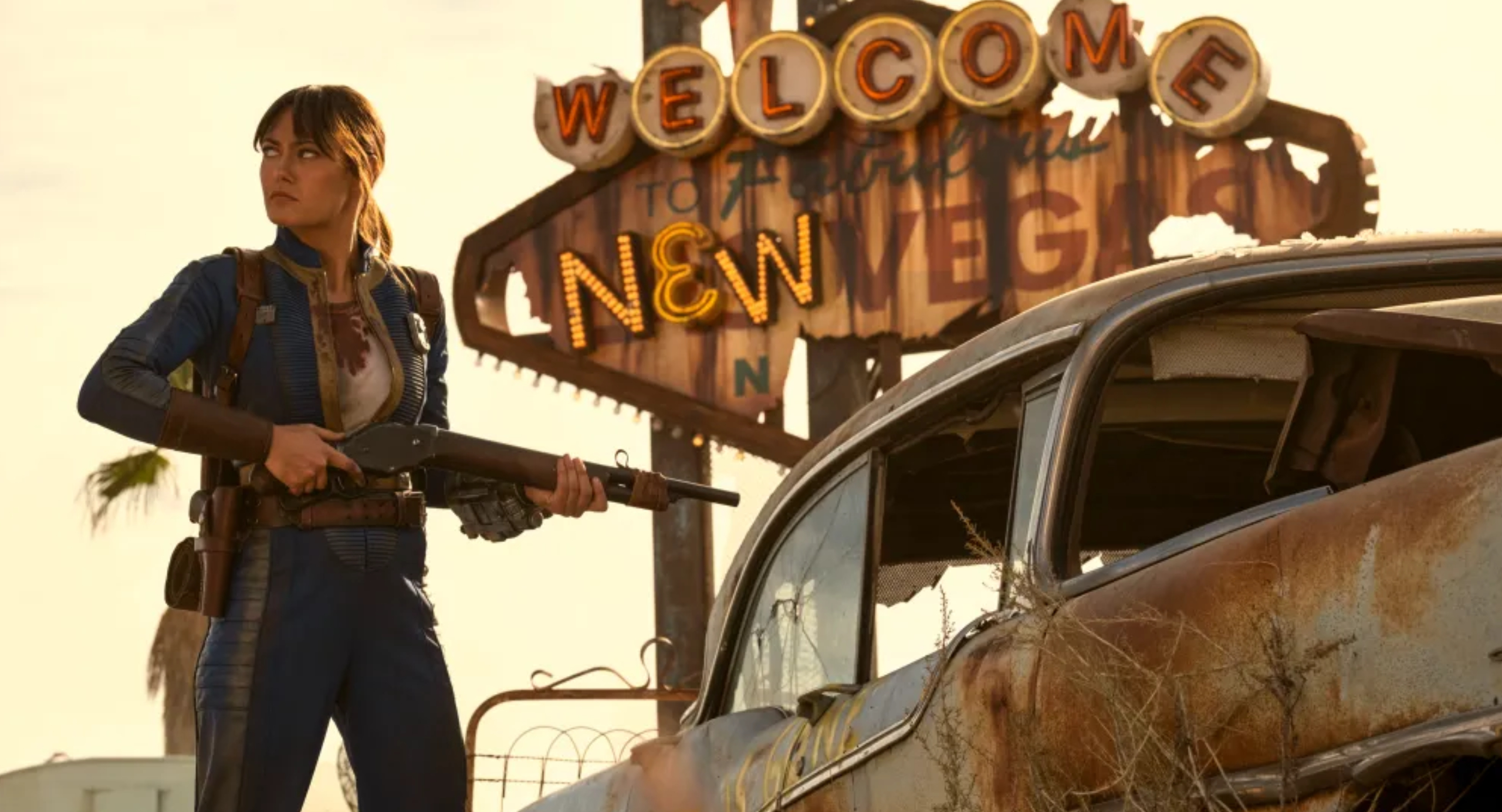
Adapting Fallout beyond a single-season novelty always felt like a high-risk quest. The first season surprised nearly everyone by capturing the games’ deranged humor, retro-futuristic style, and moral ugliness without feeling like cosplay. Season two doesn’t quite hit those same heights, but it expands the world in ambitious, fascinating ways that make it one of the most compelling genre shows on television right now. This is messier Fallout—more political, more sprawling, and more openly tragic—yet still powered by sharp writing, strong character work, and a willingness to get weird.
The show continues to juggle multiple timelines and factions, and the scale this year is noticeably larger. The story stretches across the wasteland, the Vaults, and the lingering ghosts of pre-war America, layering conspiracy upon conspiracy. Instead of just exploring survival, season two digs deeper into control—who has it, who thinks they have it, and who gets crushed under it. That thematic expansion gives the narrative more weight, even if the tighter focus of season one sometimes feels missed.
Visually and tonally, the series remains a knockout. The production design still nails that cheerful 1950s optimism rotting under nuclear ruin. Shiny corporate tech sits beside rusted-out horror, and the contrast never gets old. Action sequences are bigger and more chaotic this season, but the show doesn’t lose its streak of pitch-black comedy. Limbs fly, morals crumble, and someone inevitably cracks a dry joke in the middle of disaster. That balance between absurdity and bleakness continues to define the show’s identity.
Ella Purnell’s Lucy remains the emotional anchor, and I’ll say it plainly: she’s my favorite actress of all time, and her performance here is phenomenal. Lucy’s journey this season pushes her into morally murkier territory, and Purnell sells every shift without losing the character’s essential humanity. You can see the internal tug-of-war on her face—hope wrestling with hard lessons from the wasteland. It’s a layered, physical performance that makes Lucy’s evolution feel earned rather than forced.
Walton Goggins, meanwhile, deepens the tragic, sardonic presence of Cooper Howard/The Ghoul. Season two peels back more emotional history while letting Goggins lean into both menace and vulnerability. He’s still the show’s wild card, drifting between ally and threat, but there’s a growing sadness beneath the swagger. His dynamic with Lucy becomes more complicated, charged with conflicting goals and uneasy trust, and those scenes crackle with tension.
Aaron Moten’s Maximus also benefits from the expanded scope. His storyline dives into power structures and ideology, examining what happens when loyalty clashes with conscience. Moten plays him with a mix of earnestness and simmering frustration, making his choices feel like the product of real pressure rather than plot convenience. As the political landscape of the wasteland grows more volatile, Maximus becomes a crucial lens into how institutions justify themselves.
The supporting cast adds texture across every corner of the narrative. Kyle MacLachlan brings a slippery, unsettling quality to Hank, embodying the smiling face of something deeply wrong. Moisés Arias gives Norm an anxious intelligence that makes the Vault-focused threads more than just side stories. Frances Turner, Annabel O’Hagan, and the wider ensemble help sell the sense that every faction believes it’s the hero of its own story, even when the evidence says otherwise.
Season two’s structure is more complex, sometimes to its own detriment. With so many plotlines unfolding at once—corporate secrets, faction rivalries, personal vendettas—the pacing occasionally wobbles. Some episodes feel dense with exposition, while others linger in character beats that, while well-acted, slow momentum. Season one had a cleaner forward drive; here, the narrative sometimes feels like it’s juggling too many side quests at once.
Still, the ambition is admirable. The series digs deeper into the pre-war world, showing how the apocalypse didn’t start with bombs but with decisions made in boardrooms and back channels. The satire of corporate power and technological control becomes sharper, giving the sci-fi elements real bite. Rather than just using the wasteland as a backdrop for adventure, the show treats it as the logical endpoint of unchecked systems.
Emotionally, this season is heavier. Consequences linger longer, and the sense of safety—even relative safety—erodes. Characters are forced to confront who they really are when survival conflicts with ethics. That tonal shift makes the story more mature, but also less breezy than the first season’s blend of shock and novelty. The fun is still there; it’s just edged with more dread.
The action and creature design remain highlights. Encounters with the dangers of the wasteland are staged with creativity and just enough horror to keep things tense without tipping into pure misery. The show understands that spectacle works best when tied to character stakes, and most of the big set pieces serve emotional turning points rather than existing just to look cool.
If there’s a central weakness, it’s that the mystery elements don’t feel as fresh the second time around. Part of season one’s magic came from discovering how this version of Fallout would interpret familiar lore. Now that the framework is established, revelations have to work harder to surprise. Some twists land hard; others feel more like extensions of groundwork already laid.
Even so, season two succeeds where it matters most: it makes the world feel alive, dangerous, and worth investing in. The moral questions grow knottier, the alliances shakier, and the emotional costs steeper. Combined with Purnell’s standout performance, Goggins’ layered turn, and a creative team unafraid to swing big, the season delivers gripping television that sticks with you.
It may not be quite as strong as season one, but a slightly less dazzling Fallout is still better than most shows at the top of their game. Season two proves the series wasn’t a one-hit wonder—it’s a long campaign, and this chapter, flaws and all, is well worth playing through.