Crime 101 – Film Review
Published February 18, 2026

Movie Details

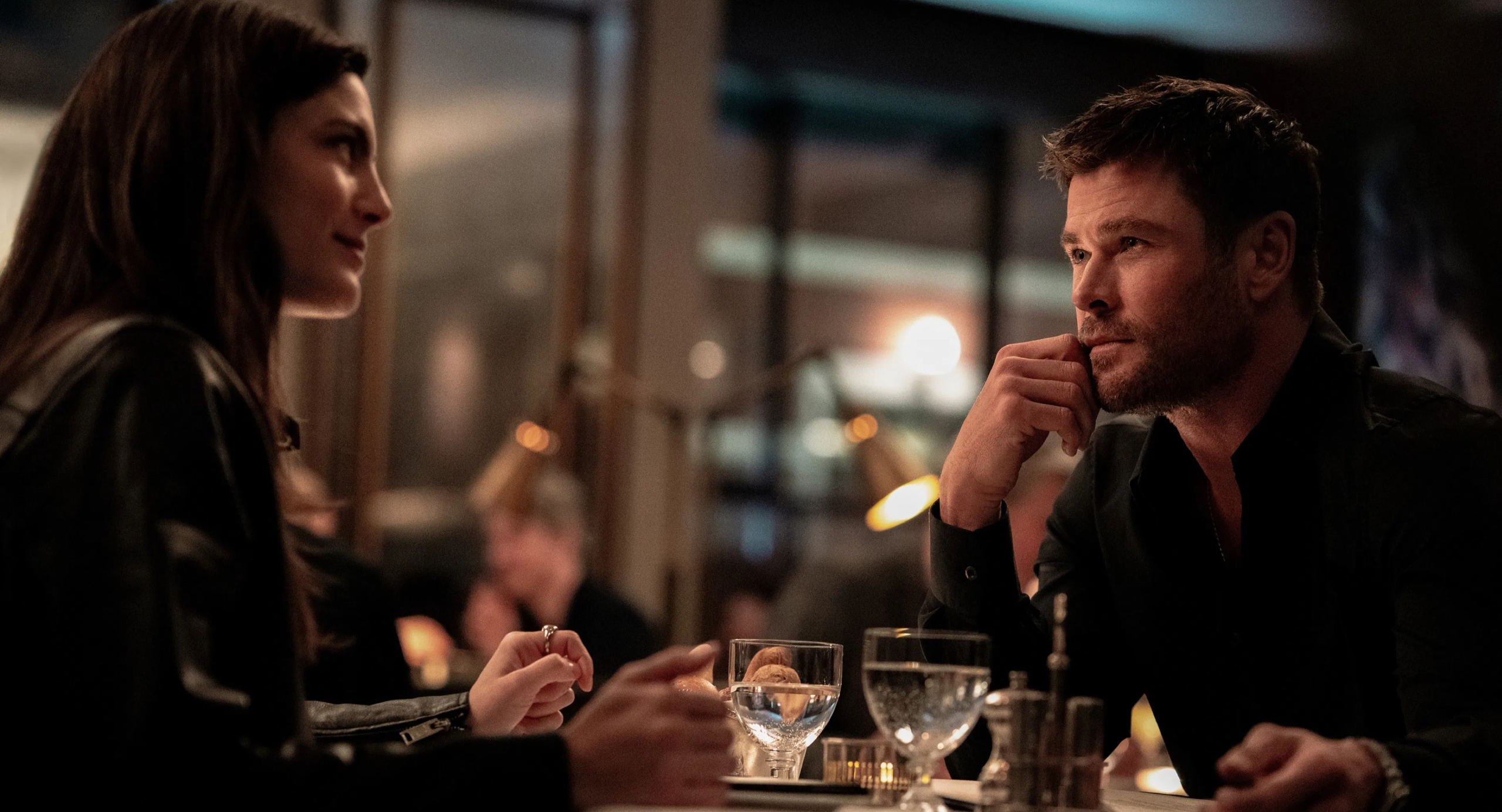
A crime thriller adapted from a novella by Don Winslow, written and directed by Bart Layton, and led by an A-list ensemble including Chris Hemsworth and Mark Ruffalo, Crime 101 is the kind of project that suggests heat, tension, and moral complexity—and for the most part, it delivers. Leaning into character psychology more than explosive set pieces, the film plays like a sun-bleached chess match between a disciplined thief and a weary detective, unfolding along the long stretch of California asphalt that gives the story its name.
Rather than reinventing the heist genre, Crime 101 refines it. It’s a film about systems—criminal, corporate, and institutional—and the individuals trying to bend them. With strong performances and an understated but persistent sense of tension, it becomes an absorbing, if occasionally uneven, entry into the modern crime canon.
Mike Davis (Hemsworth) is not your typical movie thief. He is meticulous, almost ritualistic, adhering to a strict personal code: no violence, no DNA, no unnecessary risk. He robs high-end jewelry shipments along U.S. Route 101 and disappears without a trace, leaving law enforcement baffled. Hemsworth plays Mike with a cool restraint that subverts his usual action-hero persona. There’s no swagger here. His physical presence is undeniable, but it’s muted, coiled inward rather than projected outward. It’s one of his more controlled performances, and it works.
Layton directs the early robbery sequences with surgical calm. The camera lingers on gloved hands, carefully timed movements, and the quiet hum of anticipation. The tension doesn’t come from chaos, but from precision. When something does go wrong—when an unexpected bullet grazes Mike—the moment lands not as bombast, but as disruption. It shakes the character’s sense of control, and the film smartly lets that tremor ripple outward through the rest of the story.
In parallel, Detective Lou Lubesnick (Ruffalo) begins assembling a theory that one man is behind a string of jewel thefts. Lou is dismissed by colleagues who prefer easier narratives and cleaner paperwork. Ruffalo brings a weary intelligence to the role, portraying Lou as sharp but perpetually sidelined. His performance is textured: a mix of professional frustration, moral stubbornness, and creeping disillusionment with the department he serves.
The film expands beyond the cat-and-mouse dynamic by introducing a web of secondary players, each complicating Mike’s careful order. Barry Keoghan’s Ormon is the most volatile presence in the film—a young biker recruited to carry out a robbery Mike backs out of. Keoghan injects Ormon with twitchy unpredictability, a contrast to Mike’s discipline. He’s reckless where Mike is methodical, and that difference fuels much of the film’s escalating tension.
Halle Berry’s Sharon, a high-end insurance broker overlooked at her firm, adds another compelling layer. Berry gives Sharon a simmering frustration that never tips into caricature. She’s ambitious and intelligent, and her professional stagnation becomes a believable motivator. When she’s drawn into Mike’s orbit, the dynamic isn’t about seduction or manipulation—it’s about mutual opportunity. Their exchanges feel transactional yet charged, built on calculation rather than trust.
Monica Barbaro’s Maya offers something different: a glimpse of emotional vulnerability in Mike’s otherwise isolated life. Their relationship begins almost by accident and develops with quiet restraint. Barbaro brings warmth without naïveté, and her chemistry with Hemsworth lends the film a human counterbalance to its procedural machinery.
Meanwhile, Jennifer Jason Leigh, Corey Hawkins, Nick Nolte, and others fill out the world with textured supporting turns. No character feels wasted, though some could have benefited from more breathing room. The film juggles multiple threads with competence, but occasionally at the expense of deeper exploration.
One of the film’s strongest elements is its use of Los Angeles. This isn’t the neon-drenched LA of glossy thrillers. Layton’s city feels expansive and impersonal—sunlit highways, sterile offices, opulent hotel suites. The Beverly Wilshire Hotel becomes a symbolic intersection point for wealth, power, and desperation, a gleaming façade behind which everyone is negotiating something.
The cinematography emphasizes clean lines and open spaces, reinforcing the theme of visibility versus invisibility. Mike’s ability to disappear contrasts with the conspicuous excess of the elite clients he robs. There’s an undercurrent of critique here—of wealth accumulation, corporate complacency, and institutional corruption—but it never becomes preachy. The film trusts the audience to draw connections.
What elevates Crime 101 beyond a straightforward procedural is its interest in moral ambiguity. Both Mike and Lou operate within codes they believe in. Mike avoids violence and views himself as a professional rather than a predator. Lou, frustrated by departmental politics, clings to his version of justice even when it isolates him.
The tension between them isn’t simply cop versus criminal—it’s about control, pride, and the stories men tell themselves about what they’re owed. Ruffalo excels in conveying Lou’s internal conflict. There’s a simmering dissatisfaction beneath his calm exterior, and as the case tightens, that dissatisfaction becomes increasingly personal.
The film’s climax—set during a high-stakes diamond exchange—delivers the suspense the narrative has been steadily building toward. Layton stages the confrontation with clarity and restraint, avoiding overblown theatrics. The sequence crackles not because of spectacle, but because of character stakes. When alliances shift and masks drop, the emotional impact lands harder than any gunshot.
Importantly, the film resists tidy resolutions. Choices have consequences, but not always the expected ones. The final stretch leaves viewers with lingering questions about justice and compromise, rather than easy catharsis.
Despite its strengths, Crime 101 occasionally feels overextended. At just over two hours, the pacing sags slightly in the middle act, particularly as subplots stack up. Some narrative turns feel more functional than organic, as though adapted too faithfully from the source material without enough streamlining.
There’s also a coolness to the film that may distance some viewers. While the restraint is often a virtue, it can make the story feel emotionally muted. Moments that could have hit harder—particularly in Mike’s personal life—are handled with such subtlety that they risk underplaying the drama.
Crime 101 is a sleek, intelligent crime thriller that prioritizes character over spectacle. Bart Layton’s direction is controlled and confident, allowing tension to simmer rather than explode. Chris Hemsworth delivers one of his most nuanced performances, shedding bombast for quiet calculation, while Mark Ruffalo anchors the film with moral complexity and lived-in gravitas.
Though the pacing falters at times and some supporting arcs could have been richer, the film’s atmosphere, performances, and thematic ambition carry it through. It’s less about the mechanics of the heist and more about the psychology of the people orchestrating—or pursuing—it.