Billie Eilish – Hit Me Hard and Soft: The Tour (Live in 3D) – Film Review
Published May 11, 2026

Movie Details

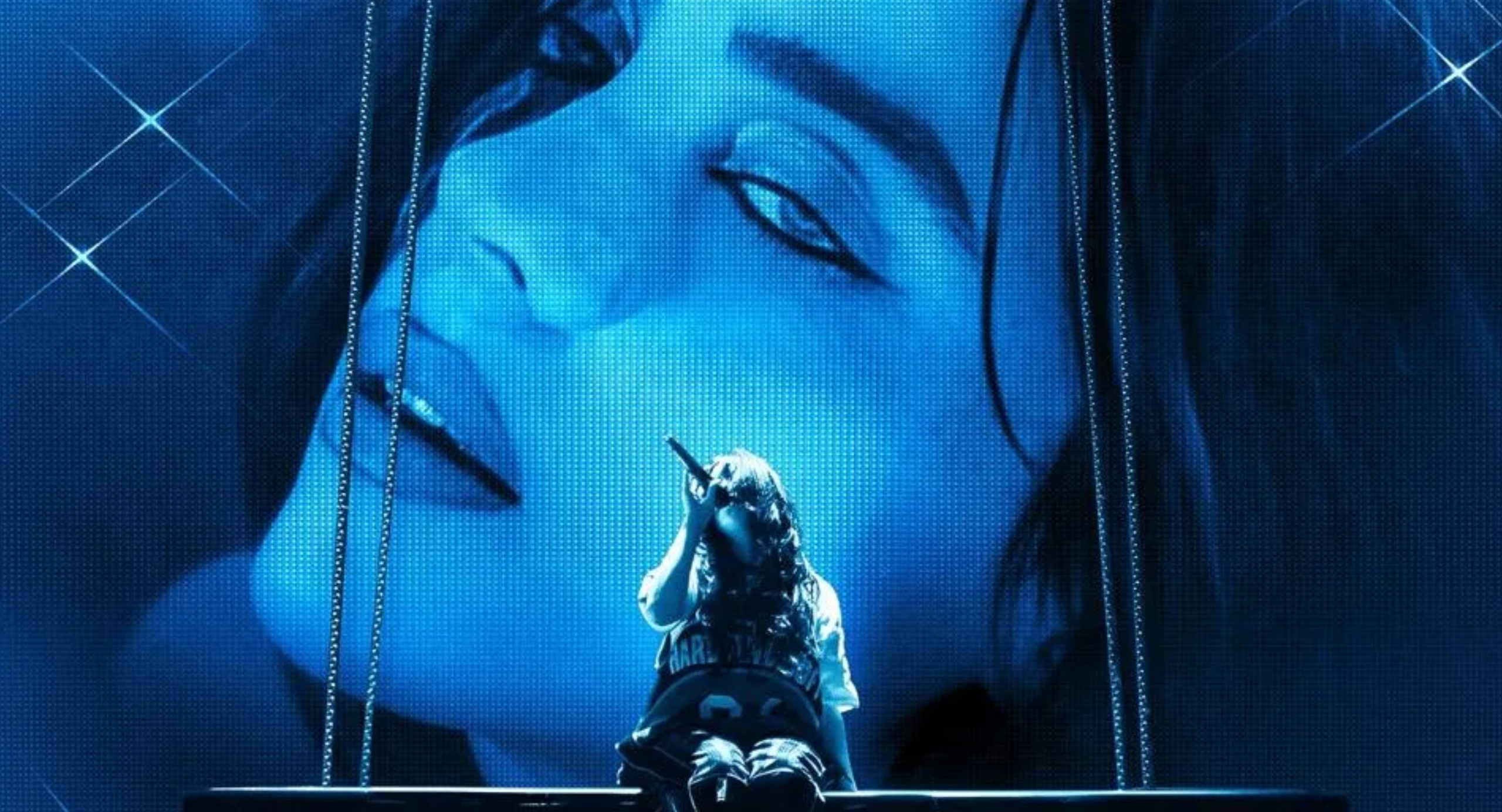
Concert films have become increasingly ambitious over the last decade, evolving far beyond simple recordings of live performances. With Billie Eilish – Hit Me Hard and Soft: The Tour (Live in 3D), filmmaker James Cameron and pop phenomenon Billie Eilish attempt to push the format into blockbuster territory. The result is an overwhelming sensory experience that often feels less like sitting in a theater and more like standing directly inside one of Eilish’s arena shows. While the film occasionally struggles beneath its own ambitious editing style and extended runtime, it remains a thrilling showcase for one of modern pop music’s most magnetic performers.
Shot during Eilish’s Hit Me Hard and Soft tour stop in Manchester, the concert film captures the singer at a fascinating point in her career. She has already established herself as one of the defining artists of her generation, yet this performance radiates the confidence of someone still experimenting and evolving. Rather than presenting a polished, emotionally distant spectacle, the film embraces chaos, intimacy, and spontaneity. The crowd screams every lyric with such intensity that the arena frequently sounds like it might collapse under the noise.
The biggest selling point is undoubtedly the 3D presentation, and surprisingly, it is not a gimmick. Cameron’s involvement immediately signals that the film intends to treat 3D as an essential storytelling device instead of a novelty added during post-production. For much of the runtime, the effect genuinely enhances the immersion. Lights stretch into the audience like glowing tunnels, lasers burst across the screen with startling depth, and wide crowd shots create a convincing sense of scale. During several songs, Eilish appears to leap directly off the screen as the camera follows her frantic movement around the stage.
The visual design of the tour itself translates beautifully into the format. Massive LED walls pulse with abstract imagery, shifting colors, and dreamlike textures that surround the audience in every direction. Some sequences resemble a science-fiction experience more than a traditional concert movie. The stage lighting, smoke effects, and kinetic camerawork combine to create an atmosphere that feels alive and unpredictable. Cameron clearly understands how to photograph large-scale visual environments, and his experience with immersive filmmaking elevates the material considerably.
Eilish’s stage presence is another major reason the film works so well. She commands the arena with astonishing ease, effortlessly transitioning between whispery vulnerability and explosive bursts of energy. Even during quieter moments, she maintains total control over the audience. The camera repeatedly captures subtle expressions and gestures that reveal how deeply connected she is to the performance. Unlike some concert films that rely heavily on spectacle to compensate for lack of charisma, this one thrives because Eilish herself is endlessly watchable.
Her physicality on stage also contributes enormously to the experience. She sprints across platforms, jumps into the crowd’s energy, and constantly engages with fans in ways that make the performance feel immediate and human. The 3D format amplifies this movement, making every sprint toward the camera feel more dynamic. There is a rawness to her performance style that prevents the film from feeling overly manufactured, even when the production surrounding her becomes enormous in scale.
The setlist is packed with highlights from Hit Me Hard and Soft while also weaving in earlier fan favorites that ignite the crowd. Songs from the newer album benefit tremendously from the theatrical presentation. The emotional ballads gain intimacy through close-up camerawork, while the heavier tracks explode with pulsating lights and thunderous sound design. The audio mix deserves special praise for balancing arena-sized intensity with surprising clarity. Every vocal layer, synth pulse, and bass drop lands with force without drowning out the audience reactions.
Several musical moments stand out as unforgettable visual centerpieces. One sequence transforms the arena into a glowing ocean of blue light while Eilish performs beneath swirling projections that stretch across the ceiling. Another number uses rapid strobe lighting and rotating camera movements to create an almost dizzying sense of momentum. These scenes demonstrate how carefully constructed the film is from a technical standpoint. Cameron and Eilish are clearly interested in creating a cinematic experience rather than merely documenting a concert.
The direction often succeeds because it understands rhythm. The camera cuts frequently, but most transitions feel motivated by the music itself. Sweeping crane shots are balanced with handheld close-ups that place viewers directly beside Eilish as she sings. Some of the best moments occur when the film pauses long enough to simply observe her interacting with the audience. These scenes capture the emotional relationship between performer and fans, reinforcing why Eilish has developed such a passionate following worldwide.
Still, the film is not without problems. At just about two hours, the runtime eventually becomes exhausting. Even visually inventive concert films can struggle to maintain momentum for that length, and Hit Me Hard and Soft: The Tour (Live in 3D) occasionally loses steam in its second half. Some songs begin to blur together, especially when the visual style remains relentlessly intense for extended stretches. A slightly leaner cut could have strengthened the pacing significantly.
The editing choices are also inconsistent at times. While many transitions are exhilarating, others feel strangely disjointed. Certain sequences interrupt the flow of songs with abrupt visual shifts or rapid-fire montage editing that becomes distracting. There are moments when the camera cuts so quickly between angles that viewers barely have time to absorb the scale of the choreography or stage production. In a film designed around immersion, these fractured editing patterns occasionally work against the experience.
There are also a few stylistic flourishes that feel overdesigned. Some digital effects layered over the performances look unnecessary compared to the natural spectacle already unfolding on stage. The strongest moments are often the simplest ones: Eilish standing beneath a spotlight, the crowd singing in unison, or the camera lingering on her face during a vulnerable lyric. The film occasionally forgets that the performer herself is compelling enough without excessive visual embellishment.
Even so, the emotional authenticity of the performances keeps the movie engaging throughout. Eilish never appears detached or robotic. She laughs with the audience, pauses between songs to speak candidly, and occasionally looks genuinely overwhelmed by the scale of the response surrounding her. Those quieter interactions help balance the overwhelming audiovisual assault of the larger production numbers.
What makes the film especially impressive is how successfully it bridges the gap between intimate artistry and arena-sized spectacle. Many modern concert films lean too heavily toward one side or the other, either becoming emotionally sterile visual showcases or simplistic recordings lacking cinematic ambition. This movie frequently finds a compelling middle ground. It allows fans to experience the communal excitement of a live concert while also embracing the possibilities of immersive filmmaking technology.
For longtime Billie Eilish fans, the film will likely feel like a celebration of everything that has made her such a defining artist for younger audiences: vulnerability, unpredictability, emotional openness, and creative ambition. For casual viewers, the technical craftsmanship alone makes it worth seeing on the biggest screen possible. The combination of 3D visuals, booming sound design, and Eilish’s undeniable charisma creates an experience that demands theatrical viewing.
Billie Eilish – Hit Me Hard and Soft: The Tour (Live in 3D) may occasionally become overlong and stylistically messy, but it remains an undeniably electrifying concert film. With inventive direction from James Cameron, stunning 3D presentation, and a powerhouse performance from Billie Eilish herself, the movie transforms a live show into something immersive and cinematic. Even when the pacing falters, the sheer energy pouring from the screen makes it difficult to look away.
