Avatar: Fire and Ash – Film Review
Published December 20, 2025

Movie Details

With Avatar: Fire and Ash, James Cameron delivers not only the most emotionally ferocious chapter of the Avatar saga so far, but also its most thematically ambitious. Expanding the mythos of Pandora while deepening its characters and moral conflicts, Fire and Ash stands as a towering achievement in epic science fiction filmmaking. This is a sequel that refuses to coast on spectacle alone, instead forging a bold, often devastating meditation on grief, faith, colonialism, and spiritual evolution. The result is a rare blockbuster that feels both colossal and intimate.
Picking up after the events of Avatar: The Way of Water, the film places Jake Sully and his family in a fragile emotional state. Loss hangs heavily over the narrative, shaping every decision and fueling every conflict, yet Cameron wisely avoids turning the film into a somber dirge. Instead, grief becomes the catalyst for transformation. Characters respond to trauma in wildly different ways—some with rage, others with introspection, and still others with dangerous ambition. This emotional fragmentation gives Fire and Ash its driving tension, allowing the story to feel personal even as it sprawls across continents, oceans, and skies.
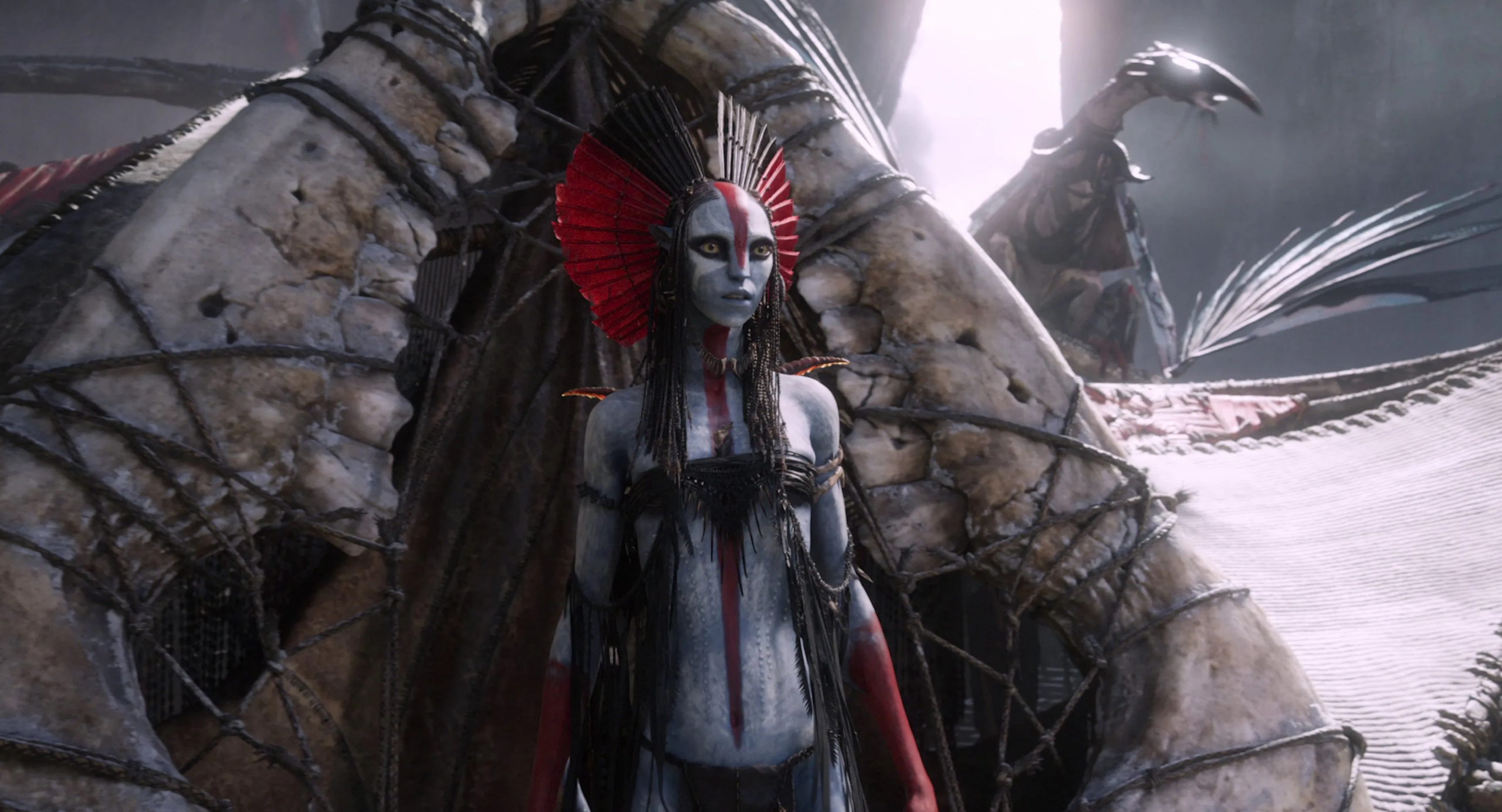
What truly distinguishes this installment is its introduction of new cultures within Pandora. The Mangkwan—often referred to as the Ash People—are among the most striking additions to the franchise. Their volcanic environments, scorched aesthetics, and militant worldview provide a sharp counterpoint to the lush blues and greens audiences associate with Pandora. Cameron and his collaborators never reduce them to simple antagonists; instead, they are portrayed as a people shaped by scarcity, fire, and survival. Their philosophy clashes violently with the spiritual harmony of Eywa, creating one of the richest ideological conflicts the series has explored.
This is where Varang emerges as one of the film’s most compelling figures—and unequivocally one of my favorite characters. Portrayed with commanding intensity by Oona Chaplin, Varang is neither villain nor hero in the traditional sense. She is a leader forged by hardship, whose pragmatism and fury feel tragically understandable. Every scene featuring her crackles with menace and intelligence, and the film wisely allows her agency to exist independently of human interference. Varang represents what Pandora could become if balance is replaced by domination, making her presence feel thematically essential rather than narratively convenient.
Equally captivating is Kiri, once again played with astonishing sensitivity by Sigourney Weaver. Kiri’s arc is the spiritual backbone of Fire and Ash, pushing the series deeper into metaphysical territory. Her connection to Eywa evolves in ways that are awe-inspiring, unsettling, and profoundly moving. Kiri embodies the idea that Pandora itself is changing, adapting to the existential threats it faces. She is my other favorite character in the film, not just because of her power, but because of her empathy. Where others react with violence, Kiri responds with understanding—sometimes to terrifying effect.
Sam Worthington delivers his strongest performance as Jake Sully to date. No longer simply a warrior-leader, Jake is a man wrestling with fear, guilt, and the crushing responsibility of command. The film interrogates his instincts toward sacrifice and control, forcing him to confront whether leadership means protection or trust. Zoe Saldaña’s Neytiri is given even more emotional weight this time, channeling raw pain into a portrayal that is both ferocious and heartbreaking. Neytiri’s journey is one of the most emotionally resonant aspects of the film, exploring how love and hatred can dangerously intertwine.
Stephen Lang’s Miles Quaritch continues to evolve into one of modern sci-fi’s most fascinating antagonists. Fire and Ash deepens his complexity without absolving him of his sins. He remains a symbol of human imperialism and obsession, but the film allows him moments of self-awareness that make his presence unpredictable. This moral instability keeps the narrative charged with tension, as alliances feel temporary and trust is constantly in flux.
Technically, Avatar: Fire and Ash is nothing short of astonishing. Cameron once again redefines what is possible in visual effects, seamlessly blending performance capture with environments of staggering realism. The volcanic regions, ash-filled skies, and molten landscapes feel tactile and alive. Fire becomes a visual motif throughout the film—not just as destruction, but as rebirth and transformation. The action sequences are impeccably staged, yet never feel empty; each battle is motivated by character and consequence rather than spectacle alone.
Simon Franglen’s score deserves special mention, weaving tribal percussion with sweeping orchestral themes that echo both sorrow and hope. The sound design, particularly in scenes involving fire and airborne combat, is immersive to a degree that demands theatrical viewing. This is a film that rewards scale, pulling the audience into Pandora with almost hypnotic force.
What makes Fire and Ash truly exceptional, however, is its confidence. Cameron does not rush revelations or simplify moral questions. The film trusts its audience to engage with complexity, to sit with discomfort, and to recognize that survival often comes at a cost. It expands the franchise’s spiritual mythology in meaningful ways, hinting at a Pandora that is not just a world, but a vast, interconnected consciousness.
By the time the credits roll, Avatar: Fire and Ash feels less like a sequel and more like a turning point. It reshapes the emotional and philosophical landscape of the series, setting the stage for future chapters while standing firmly on its own. Anchored by unforgettable characters—especially Kiri and Varang—this is blockbuster filmmaking with purpose, passion, and vision.
James Cameron has once again proven that when he returns to Pandora, it is not simply to entertain, but to challenge, provoke, and inspire. Avatar: Fire and Ash burns brighter than any entry before it—and leaves an indelible mark on the soul of the franchise.