Mother Mary – Film Review
Published April 24, 2026

Movie Details

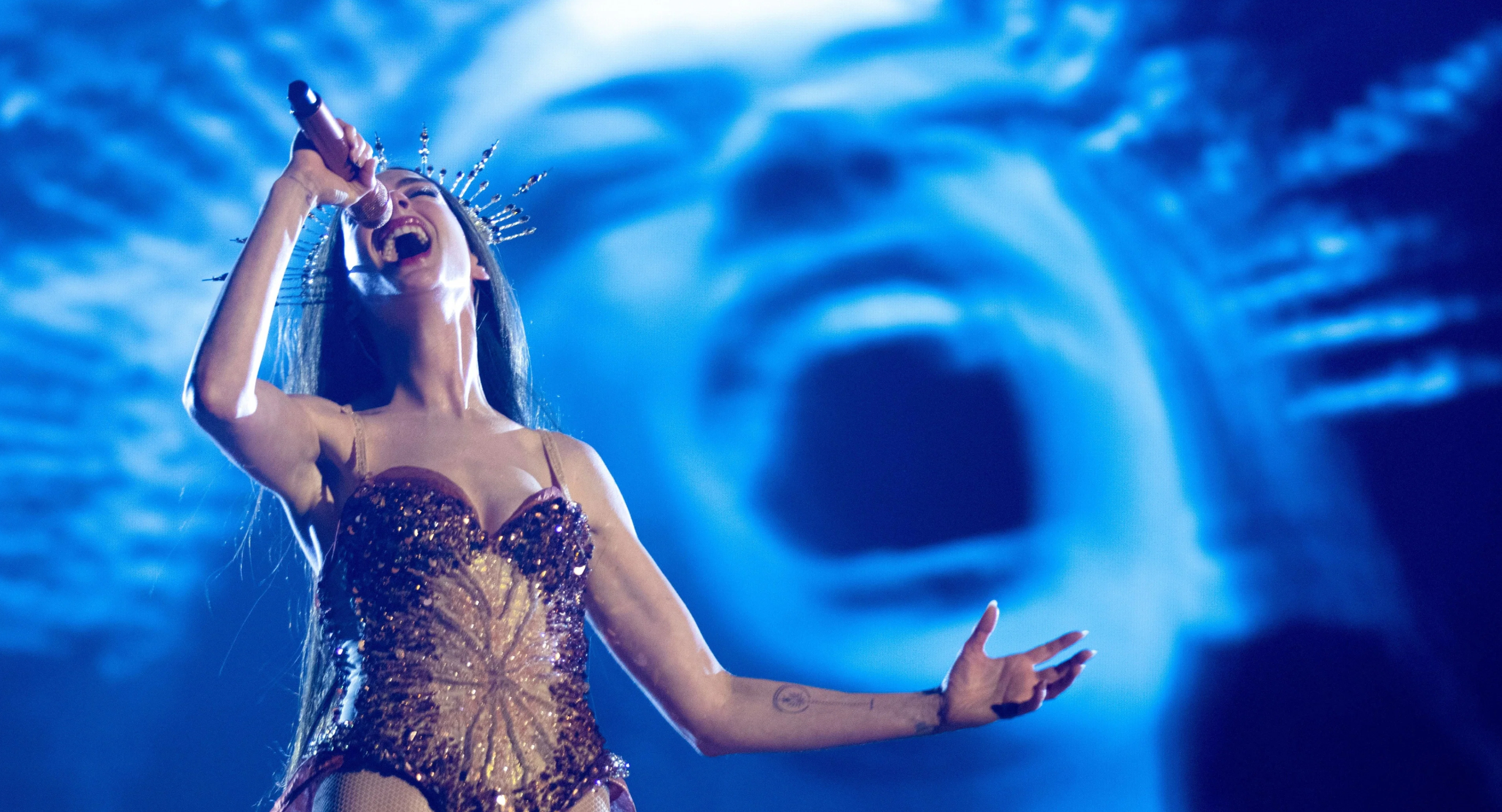
Mother Mary is the kind of film that feels less like a traditional narrative and more like an emotional séance—an eerie, intimate summoning of ego, artistry, and buried resentment. Written and directed by David Lowery, this psychological drama-thriller leans heavily into atmosphere and performance, constructing a suffocating two-hander that oscillates between reverence and hostility. Anchored by towering turns from Anne Hathaway and Michaela Coel, the film is as mesmerizing as it is frustrating—a bold, often cryptic exploration of identity that doesn’t always cohere but rarely loses its grip.
Hathaway plays Mother Mary, a pop icon in self-imposed exile, grappling with a crisis that is both artistic and deeply personal. Her return to the spotlight hinges on something deceptively trivial: a dress that doesn’t feel like her. That seemingly minor detail becomes the catalyst for a psychological spiral, leading her to reconnect with Sam Anselm (Coel), a once-celebrated fashion designer now living in isolation in the English countryside. What follows is less a reunion and more a slow-burning psychological duel, where past wounds are reopened and power dynamics shift with unnerving fluidity.
Lowery’s direction is steeped in ambiguity. He resists the urge to clarify motivations or neatly define the relationship between Mary and Sam, instead allowing their interactions to unfold like fragments of a shared dream—or nightmare. The countryside setting, captured in muted tones and suffocating interiors, becomes a character in itself. It’s a space detached from time, where the outside world barely exists, and where both women are forced to confront versions of themselves they’ve long tried to suppress.
Hathaway delivers one of the most daring performances of her career. Her Mother Mary is not a straightforward depiction of celebrity fragility; she’s mercurial, often contradictory, shifting from vulnerability to arrogance in the span of a single scene. Hathaway leans into the character’s theatricality, embodying someone who has spent so long performing for the world that she no longer knows where the performance ends. There’s a palpable sense of desperation in her portrayal, particularly as Mary begins to relinquish control to Sam in ways that feel both voluntary and inevitable.
Coel, however, is the film’s most commanding presence. Her Sam Anselm is enigmatic and quietly menacing, a woman whose bitterness has calcified into something almost mythic. Coel plays her with a controlled intensity that makes every line delivery feel loaded with subtext. Sam’s resentment toward the industries that cast her aside is never spelled out in expository detail, but it lingers in every glance and gesture. As the film progresses, she becomes less a person and more a force—an embodiment of artistic integrity twisted by neglect and betrayal.
The dynamic between Hathaway and Coel is electric, even when the film around them falters. Their scenes crackle with tension, driven by an undercurrent of mutual dependency and unspoken rivalry. Lowery frames their interactions with a deliberate intimacy, often trapping them in close quarters that amplify every emotional beat. It’s in these moments that Mother Mary truly comes alive, finding a rhythm that is both hypnotic and unsettling.
Supporting performances, including Hunter Schafer as Hilda, add texture but are ultimately underutilized. Schafer brings a quiet, almost spectral presence to her role, serving as a kind of observer within the film’s increasingly surreal world. Yet her character feels more symbolic than fully realized, a recurring issue in a film that often prioritizes mood over narrative clarity.
That emphasis on mood is both Mother Mary’s greatest strength and its most significant weakness. Lowery crafts sequences that are undeniably striking—moments where sound, image, and performance converge to create something genuinely haunting. The film frequently blurs the line between reality and hallucination, particularly as Mary and Sam’s relationship becomes more volatile. Their shared past begins to manifest in abstract, almost mystical ways, suggesting a deeper connection that transcends simple friendship or rivalry.
However, this approach can also feel indulgent. The film’s refusal to ground its more abstract elements in a coherent framework may leave some viewers adrift. There are stretches where the narrative seems to stall, circling the same emotional territory without offering new insight. While this repetition can be interpreted as intentional—mirroring the cyclical nature of trauma and artistic obsession—it also risks diminishing the film’s impact.
Thematically, Mother Mary grapples with the intersection of art and identity, particularly the ways in which public personas can consume private selves. Mary’s struggle to reclaim her voice is mirrored by Sam’s desire to assert her relevance, creating a dynamic where both women are simultaneously creator and creation. The film suggests that true artistic expression requires a level of vulnerability that can be both liberating and destructive.
There’s also a pointed critique of the entertainment and fashion industries, though it remains largely implicit. Sam’s bitterness hints at a system that discards talent once it no longer serves a commercial purpose, while Mary’s crisis reflects the pressures of maintaining a carefully curated image. Yet Lowery avoids overt commentary, choosing instead to explore these ideas through character and atmosphere rather than direct exposition.
Visually, the film is stunning. Lowery’s use of light and shadow creates a constant sense of unease, with scenes often bathed in a dim, almost otherworldly glow. The costume design—unsurprisingly central to the narrative—is both elaborate and symbolic, reflecting the characters’ evolving identities. The titular dress becomes more than just an outfit; it’s a manifestation of Mary’s internal conflict, a physical representation of who she is versus who she believes she should be.
The score, featuring contributions from FKA Twigs, adds another layer of complexity. It oscillates between ethereal and dissonant, reinforcing the film’s shifting tone. Music is not just a backdrop but a narrative device, underscoring Mary’s connection to her art and the emotional stakes of her return.
Despite its flaws, Mother Mary is undeniably compelling. It’s the kind of film that invites interpretation, encouraging viewers to engage with its themes on a personal level. Not every choice lands, and its pacing can be uneven, but there’s a boldness to Lowery’s vision that commands attention. He’s less interested in providing answers than in posing questions—about identity, control, and the cost of creation.
Ultimately, Mother Mary is worth a watch through sheer ambition and performance. Hathaway and Coel elevate the material, transforming what could have been an opaque exercise in style into something emotionally resonant. It’s a film that lingers, not because it neatly resolves its ideas, but because it refuses to. Like the characters at its center, it exists in a state of constant tension—unfinished, searching, and impossible to fully define.