They Will Kill You – Film Review
Published March 30, 2026

Movie Details

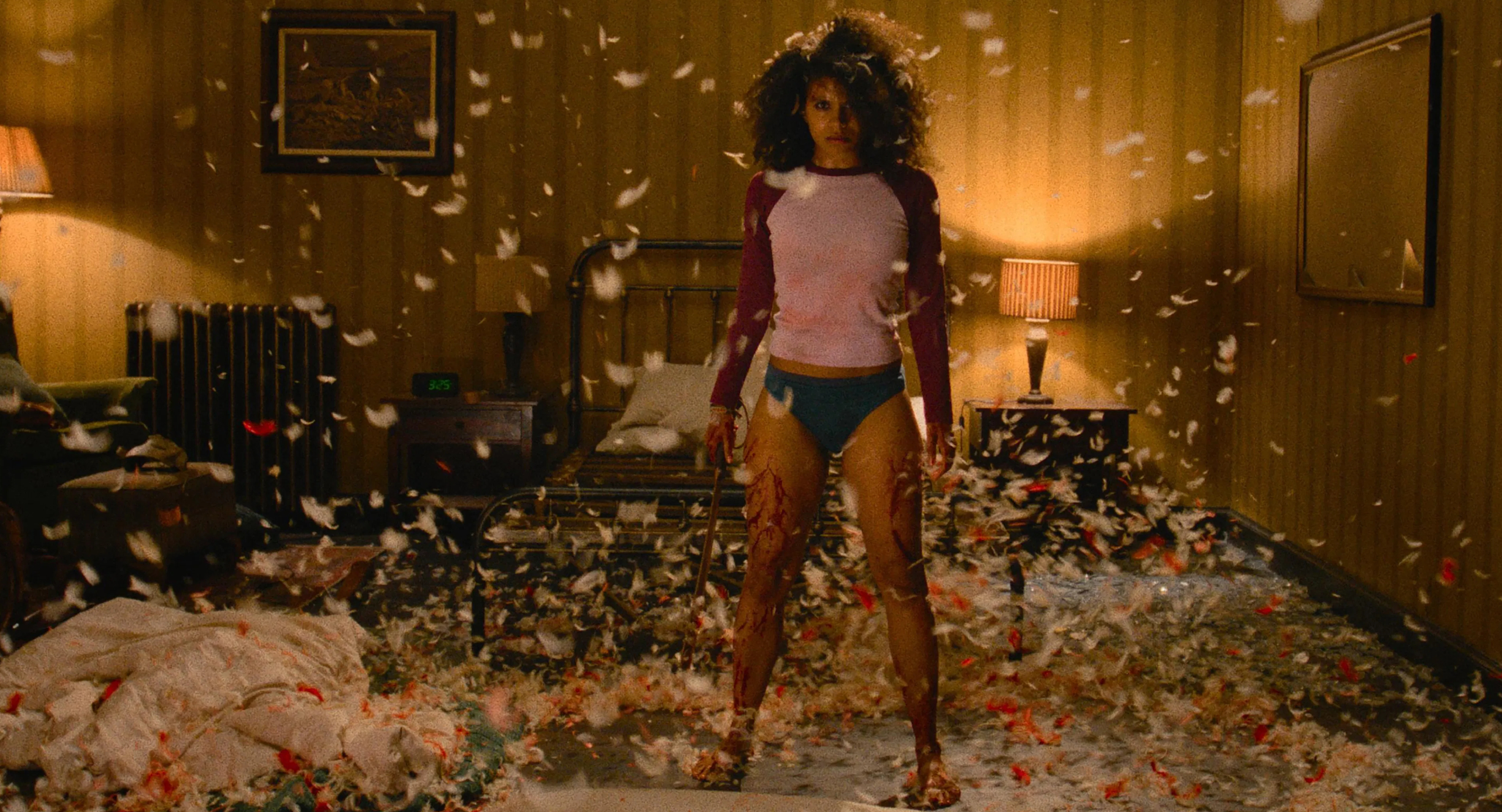
Kirill Sokolov’s They Will Kill You arrives with a premise that practically begs for cult-classic status: an ex-con infiltrates a sinister high-rise populated by wealthy elites harboring dark, supernatural secrets. It’s the kind of genre-blending setup that promises slick action, biting satire, and plenty of horror-infused chaos. For a while, the film delivers on that promise with confidence and flair. But as it barrels toward its finale, it collapses under the weight of its own ambitions, resulting in a film that feels as frustrating as it is entertaining.
Led by Zazie Beetz and Myha’la, They Will Kill You juggles action, comedy, and horror with an uneven but often compelling rhythm. Sokolov, working from a script co-written with Alex Litvak, clearly has a strong visual sensibility and a knack for staging kinetic, memorable sequences. However, the film’s tonal inconsistencies and increasingly absurd narrative choices prevent it from fully capitalizing on its strong foundation.
The film wastes no time establishing its grim emotional stakes. Asia Reaves’ backstory is brutal and effective, setting her up as a hardened survivor rather than a conventional action hero. When she arrives at the ominous Virgil building, the tone shifts into something more mysterious and unnerving. The high-rise itself becomes a character—cold, labyrinthine, and dripping with menace.
Sokolov excels in these early stretches, building tension through atmosphere and visual storytelling. The building’s sterile luxury contrasts sharply with the violence lurking beneath the surface, and the film finds a nice groove balancing intrigue with bursts of shocking brutality. There’s a dark sense of humor woven into the violence as well, giving the film a slightly off-kilter personality that feels distinct.
When the first major action sequence erupts, it’s a standout moment. The choreography is tight, the editing is sharp, and Beetz commands the screen with a physicality that feels grounded and believable. It’s here that the film hints at greatness, blending horror and action in a way that feels both stylish and visceral.
A major reason the film works as well as it does—at least initially—is its cast. Zazie Beetz delivers a compelling performance as Asia, grounding the film with a sense of emotional authenticity. She brings a quiet intensity to the role, making Asia feel like someone shaped by trauma but driven by purpose. Even when the script veers into questionable territory, Beetz remains a steady anchor.
Myha’la provides an interesting counterbalance as Maria, though her character is somewhat underdeveloped. There’s a fascinating dynamic between the sisters that the film hints at but never fully explores. Their relationship should be the emotional backbone of the story, yet it often feels sidelined in favor of spectacle.
The supporting cast adds flavor, even if their characters lean into archetypes. Paterson Joseph brings a weary charm to Ray, while Tom Felton and Heather Graham chew the scenery with varying degrees of success. Patricia Arquette also makes an impression, though her role feels somewhat underutilized given her talent.
Sokolov’s direction is undeniably stylish. He has a clear eye for composition and movement, crafting sequences that are both visually striking and narratively engaging. The use of the building’s architecture—tight corridors, hidden passageways, and vertical spaces—adds a dynamic quality to the action.
However, the film struggles to maintain tonal consistency. It swings wildly between horror, comedy, and action, sometimes within the same scene. While genre-blending can be a strength, here it often feels like the film isn’t entirely sure what it wants to be. The humor, in particular, can undercut moments that should carry more weight, making it difficult to fully invest in the stakes.
The script also leans heavily on exposition in the second act, slowing the momentum that the first act builds so effectively. The mystery of the Virgil is intriguing, but the way it’s revealed feels clunky and overly explained, robbing it of some of its impact.
The idea of a secretive, immortal elite living within a luxury high-rise is rich with thematic potential. There are hints of commentary on wealth, power, and exploitation, but the film never fully commits to exploring these ideas. Instead, they remain surface-level, serving more as background texture than meaningful subtext.
This lack of depth becomes more noticeable as the film progresses. What starts as a tightly focused survival story gradually expands into something much larger and more convoluted. New elements are introduced at a rapid pace, and while some are intriguing, others feel unnecessary or underdeveloped.
The pacing also becomes increasingly uneven. Moments that should feel tense or climactic are rushed, while less important scenes are given too much time. This imbalance contributes to a sense that the film is losing control of its own narrative.
It’s impossible to discuss They Will Kill You without addressing its final act, which is where the film truly falters. What begins as a relatively grounded (albeit heightened) genre piece spirals into something so insanely dumb and goofy that it undermines everything that came before.
The escalation of supernatural elements feels abrupt and poorly integrated, and the film’s attempt to outdo itself results in a climax that is more bewildering than exciting. The tonal issues that were present earlier become overwhelming here, as the film leans heavily into absurdity without earning it.
Instead of delivering a satisfying payoff, the finale feels like a chaotic jumble of ideas thrown together without much consideration for coherence or emotional impact. It’s the kind of ending that might work in a more self-aware or deliberately campy film, but here it clashes with the more serious tone established earlier.
They Will Kill You is a film of striking highs and frustrating lows. For a significant portion of its runtime, it’s an engaging, stylish blend of action and horror with a strong central performance from Zazie Beetz. The premise is compelling, the direction is confident, and there are moments of genuine excitement and creativity.
But the film ultimately undermines itself with inconsistent tone, underdeveloped themes, and a third act that veers into outright ridiculousness. It’s the kind of movie that leaves you thinking about what could have been—a sharper script and a more disciplined approach might have turned it into something truly special.
As it stands, They Will Kill You is a messy but intermittently entertaining ride. It’s worth watching for its performances and early momentum, but be prepared for a finale that feels like it belongs to a completely different movie.